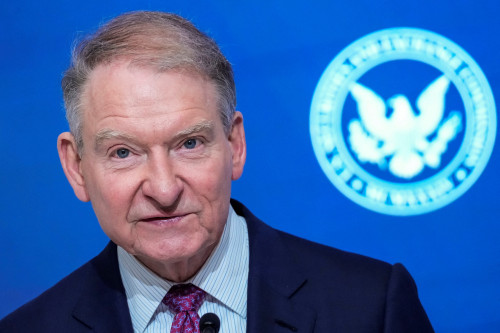
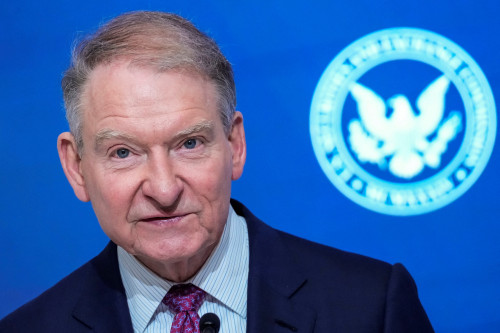
WASHINGTON, Feb 17 (Reuters) – Fewer top corporate executives could be subject to extensive investor disclosures about their compensation under pending regulatory reforms, Wall Street’s top regulator said Tuesday.
The remarks from Paul Atkins, chair of the U.S. Securities and Exchange Commission, foreshadowed coming proposals aimed at substantially reducing the burden companies face in complying with regulations for public companies, part of a general shift in the balance of power away from investors and back towards companies.
“I agree…that we should reconsider the number of executives for whom compensation information is provided,” Atkins said, according to a copy of prepared remarks.
In a regulatory agenda unveiled in September, the SEC said it planned to overhaul regulations on corporate disclosure. And in his remarks on Tuesday, Atkins said possible changes included ways to simplify measures of executive pay versus performance and recategorizing some personal security as a necessity rather than an executive “perk.”
Among other possible changes, Atkins also suggested narrowing the circumstances in which companies have to report transactions involving companies with ties to executives’ families.
“The rule makes no distinction based on the closeness or continuity of a relationship,” said Atkins. “Perhaps a more workable standard for ‘immediate family members’ is whether the executive has shared a Thanksgiving meal with them in the past year.”
Since taking over the role in April, Atkins has laid out plans that embrace the cryptocurrency sector and while the White House, which has asserted direct control over the SEC, has also called for an end to quarterly reporting, opens new tab and reforms to shareholder disputes.
With support from some corporate leaders, Atkins and other Republicans have taken aim at pay disclosure rules, including those put in place after the 2008 financial crisis, meant to give investors a clearer picture of managers’ incentives. Democrats have argued for pay disclosures and limits they say are needed to reduce risky behavior.
(Reporting by Douglas Gillison in Washington)