
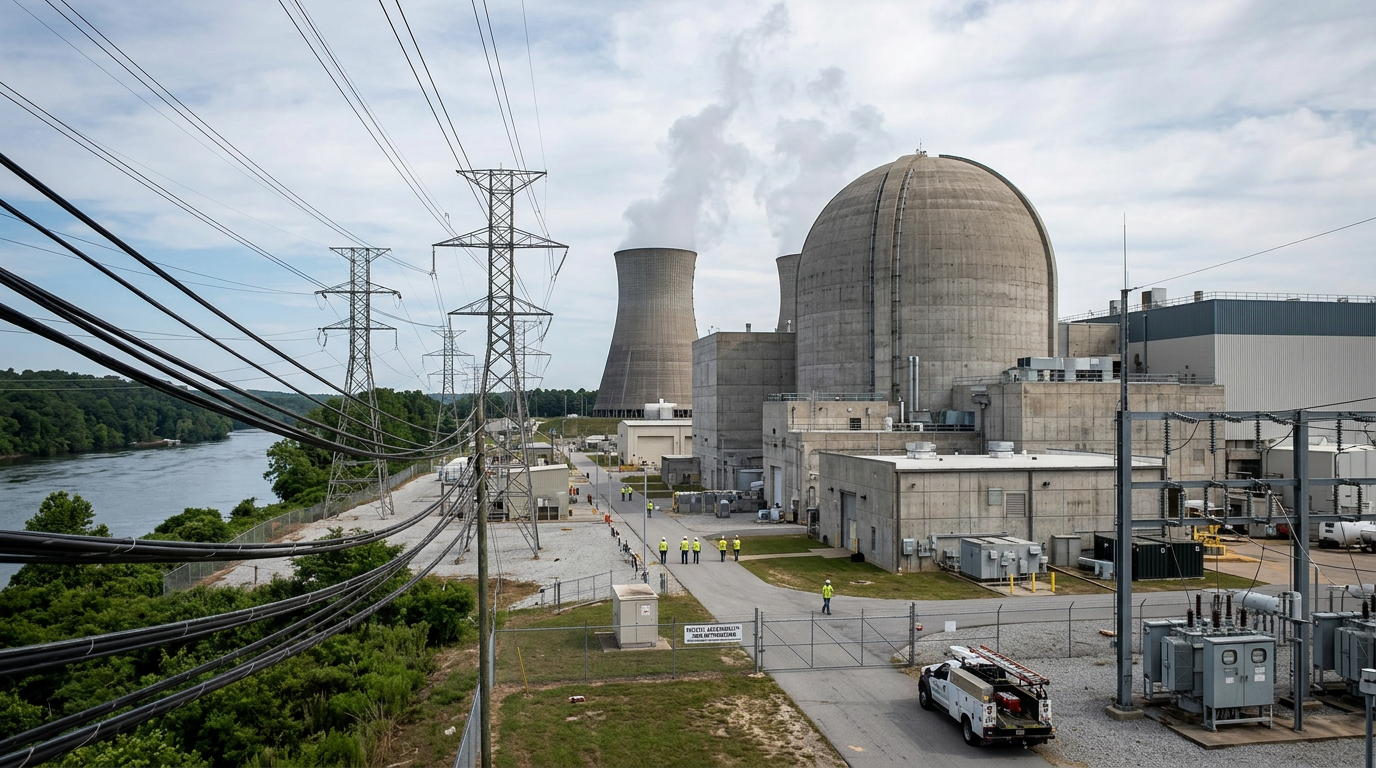
For the better part of three years, nuclear energy was a story investors told themselves at conferences. Compelling slides, long timelines, speculative multiples. That phase is over. As of May 2026, nuclear power has crossed the threshold from narrative to measurable cash flow – and the market is only beginning to reprice the sector accordingly.
What Changed and When
The inflection point was not a single catalyst. It was a convergence. Data center operators – led by hyperscalers running AI workloads at unprecedented power densities – signed long-term power purchase agreements directly with nuclear operators beginning in late 2024. By Q1 2026, contracted nuclear capacity tied to technology sector offtake agreements exceeded 14 gigawatts across North America and Western Europe, according to energy research firm Wood Mackenzie.
That demand signal reached uranium markets first. The spot price for U3O8 has held above $92 per pound through most of 2026, compared to sub-$50 levels in 2022. Producers with long-term contract books are locking in margins that did not exist 18 months ago.
The Stocks Attracting Institutional Flow
- Cameco (CCJ) – The largest publicly traded uranium producer outside of state-owned entities. Q1 2026 revenue came in at $721 million, up 38% year-over-year. EPS beat consensus by $0.11. Analysts at BMO revised their 12-month price target to $68 from $54 following the print.
- Oklo (OKLO) – The Sam Altman-backed small modular reactor developer filed its updated NRC license application in February 2026. No revenue yet, but order backlog disclosures have driven institutional accumulation. Short interest has declined 14 percentage points since January.
- Constellation Energy (CEG) – The largest nuclear operator in the United States. Q1 2026 EBITDA reached $1.4 billion. The Microsoft power agreement and subsequent deals with two additional hyperscalers have extended contracted revenue visibility through 2035.
The Forward Setup
The sector faces real risks: regulatory timelines for new builds remain long, construction cost overruns are structurally endemic to nuclear projects, and any high-profile safety event resets public sentiment quickly. Those risks are known. What the market may be underpricing is the compounding effect of sovereign energy policy alignment – the EU’s formal reclassification of nuclear as a sustainable energy source under its taxonomy rules has unlocked pension and ESG-mandated capital that was previously restricted from the sector.
This is not about saving the planet. It is about who owns the electrons that run the next generation of compute infrastructure – and how much those electrons are worth under a 20-year fixed contract.