
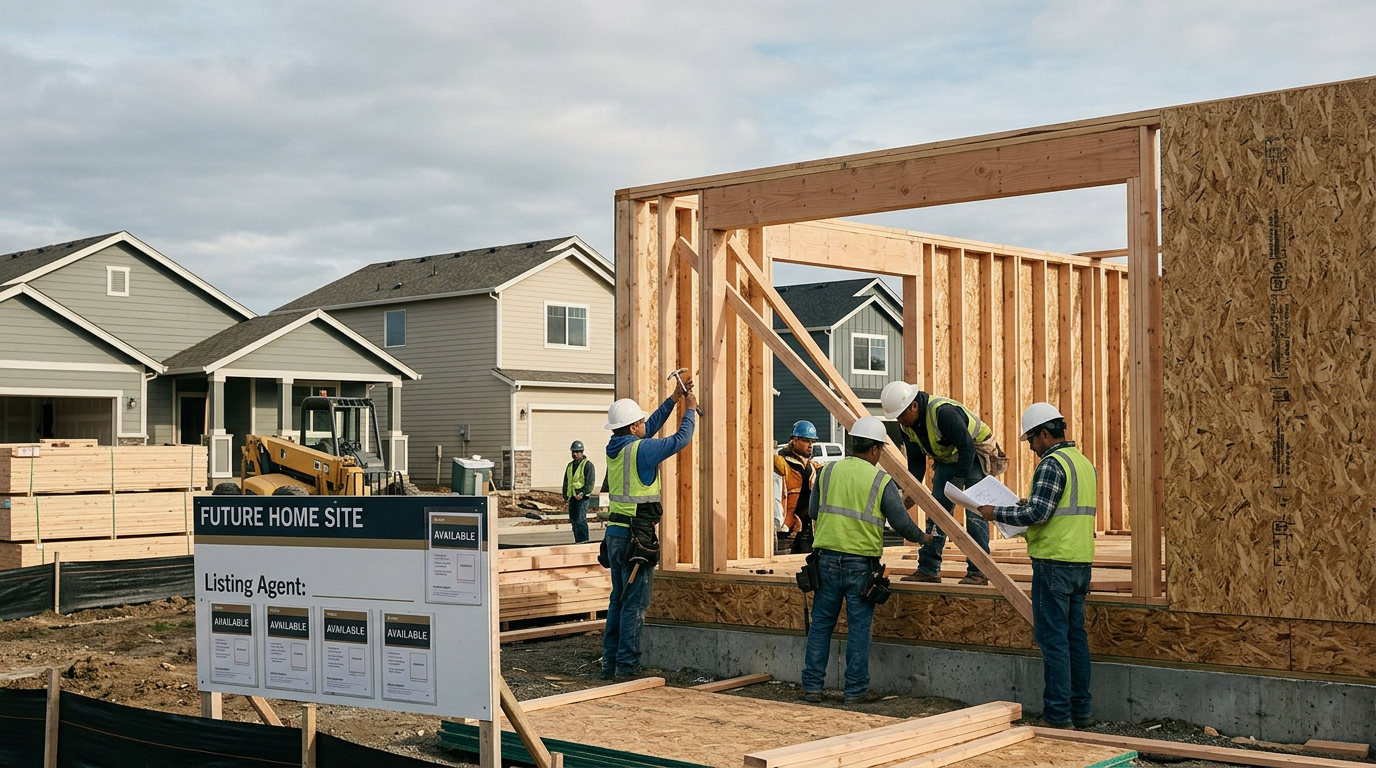
The Trade the Market Has Been Avoiding Is Starting to Work
For the better part of eighteen months, homebuilder stocks have traded like interest rate hostages. Every Fed communication moved the sector in lockstep with the 10-year Treasury yield, leaving fundamental investors frustrated and momentum traders indifferent. That dynamic is quietly breaking down in May 2026 – and the repricing is attracting institutional attention.
DR Horton (DHI), Lennar (LEN), and NVR (NVR) are among the most searched tickers on financial platforms this week, as a combination of softer rate language from the Federal Reserve, persistent housing undersupply, and stronger-than-expected new home sales data for April are colliding in a single directional catalyst.
The Structural Case Has Never Been Stronger
The U.S. housing deficit is now estimated at 4.5 million units by multiple independent research firms. That number does not resolve in a single cycle. What it means for builders with land-light models and aggressive community count expansion is a sustained demand floor that existing home inventory simply cannot fill.
- DHI – Consensus price target range: $145–$172 | Current: ~$138
- LEN – Consensus price target range: $158–$185 | Current: ~$151
- NVR – Premium multiple, asset-light model, least rate-sensitive of the group
What Investors Should Watch
The June Federal Reserve meeting is the next binary event for this sector. A pause confirmation without hawkish guidance would likely accelerate the current move. Mortgage application data released weekly by the MBA is the most immediate leading indicator – two consecutive weeks of volume improvement would validate the thesis at the consumer level.
Gross margin stability is the internal metric that separates the winners. Incentive pressure from builders in oversupplied Sun Belt submarkets has been the primary earnings risk. Watch for commentary on incentive normalization in upcoming management presentations at industry conferences scheduled for mid-June.
Bottom Line
Homebuilders are not a rate call anymore – they are a supply gap call with a rate catalyst as the accelerant. The investors rotating into this sector now are not betting on a Fed pivot. They are betting the structural undersupply is too large to ignore regardless of where the 10-year settles.
For informational purposes only.