
September 1, 2026
Discount-rate minutes expose a wider hawkish base than the 9-3 dissent tally, and the 2s/30s spread may not be done repricing before Warsh speaks Friday.
Before you read Warsh’s Jackson Hole keynote Friday morning, read Tuesday’s discount-rate minutes. They tell you something about the Fed’s internal center of gravity that the official 9-3 vote did not.
What Happened
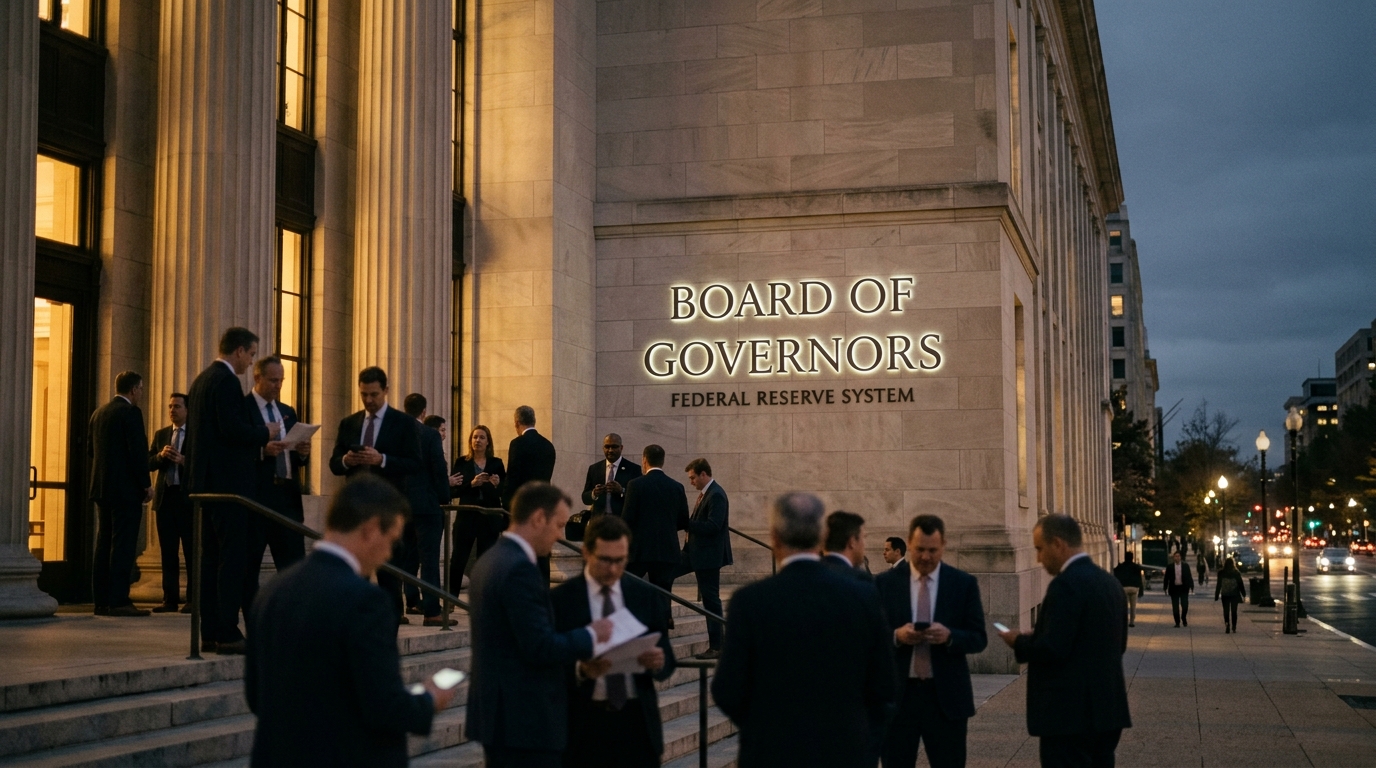
Directors at four of the Fed’s twelve regional banks voted to raise the primary credit rate ahead of July’s FOMC meeting, where the policy rate was ultimately held at 3.5% to 3.75% in a 9-3 vote. Three of those banks, Dallas, Cleveland, and Minneapolis, were the same ones whose presidents formally dissented at the FOMC itself. The fourth was Kansas City, whose president Jeff Schmid does not hold a policy vote this year, meaning his view would not otherwise have been visible.
Fed bank directors are not policymakers and do not determine the Fed’s interest rate, but they do meet regularly with their respective Fed presidents, and the discount-rate minutes are one of the few public places those director votes show up. That institutional link is exactly why the discount-rate process matters as a positioning tell. It is a leading indicator of presidential conviction, not a lagging one.
Anthropic’s Project Glasswing: The AI “Too Dangerous” for the Public
Anthropic’s Project Glasswing gives a select group of companies early access to an advanced form of AI that has been deemed “too dangerous” for the public. With this in their arsenal, these companies could become the most powerful businesses in the world this year.
Why It Matters for Rate Markets
The FOMC dissent count told you three hawks. The discount-rate minutes tell you four. That reinforces the picture from the July FOMC minutes, that many participants thought additional tightening could be warranted if inflation failed to cool, and adds to the case that the Fed’s rate path remains genuinely contested rather than settled at a hold.
Front-end pricing, however, has been moving in the other direction. CME FedWatch has been showing roughly one-in-three odds of a September 16 rate hike, a level that bakes in a patient chair and reflects the recent run of softer data: the PCE price index saw a 0.1% decline for June, though the annual rate was still at 3.7%, and nonfarm payrolls fell by 23,000 in July even as the unemployment rate dropped to 4.1%.
The long end is telling a different story. The implied probability of a hike at the September 16 meeting has fallen since late July, yet over that same stretch the 30-year Treasury yield climbed to about 5.31%, its highest level since 2007. A front end priced for patience alongside a long end selling off is not a coherent picture of a Fed that has finished its work. It is a curve that suspects the hold was temporary.
Hidden in Tesla’s Filing: A $12 Billion “Super Startup”
Pull up Tesla’s most recent SEC filing. Page 5.
And you’ll see a single line showing $12 billion in revenue from a brand-new “super startup” Elon Musk has been quietly incubating inside Tesla.
This new “super startup” has nothing to do with cars or robots or space or AI…
But it sits at the center of what Blackstone calls “a $23 trillion investment opportunity.”
And on October 21, Elon is expected to pull back the curtain and reveal exactly what he’s building.
But Adam O’Dell already knows… and he reveals it all in this urgent video.
How Professionals Are Reading This
Disciplined fixed-income traders will note the asymmetry heading into Friday. Warsh’s keynote lands 19 days before the September 16 FOMC decision, and a week of soft economic data has cut September hike odds to roughly one-in-three, with the August jobs report and August CPI still arriving in between. That data runway gives the chair room to stay non-committal, and most positioning reflects that expectation.
But the discount-rate minutes complicate the consensus. Markets may focus on whether Warsh emphasizes the broader macro outlook or offers guidance for the September-to-December policy path. A speech that even mildly validates the four-bank hawkish bloc would land against a 2-year yield that has not fully priced that risk. The 2s/30s steepener, already driven by term premium rather than near-term rate expectations, could accelerate if the front end is forced to catch up.
What Comes Next
Warsh has launched a set of outside-led reviews of several areas of Fed practice and policy, and he has said he hopes to get recommendations by year-end. His keynote theme is officially payments infrastructure, but the actual question on every trading desk is simpler: is the hiking cycle paused or finished?
Watch the 2-year yield and September fed funds futures in the hour after Warsh begins speaking at 10 a.m. ET Friday. A hawkish signal, or even a refusal to endorse the one-in-three odds, should reprice the front end faster than the long end moves. That spread compression is the trade the discount-rate minutes set up, if Warsh gives it the catalyst.
The Trader’s Lesson
The official vote count is a floor, not a ceiling. Discount-rate meeting minutes are one of the few places where Fed officials who lack a current policy vote still leave a verifiable record of their views. When that record shows broader hawkish conviction than the headline dissent tally suggests, the burden of proof shifts onto front-end pricing, not onto the hawks. Know where to look for the signal before it moves the market, not after.