
September 2, 2026
Bonus Content: Brent Hit $95 After Two Saudi Supertankers Were Struck. Chevron Just Made a New High.
New to Trading Options? Try This
A Straightforward Options Strategy for Beginners:
Get the strategy + the ticker — at no cost

✓ How the 11-Hour Options Strategy works — explained in plain English, from A to Z.
✓ The three things you need to start trading options today.
✓ Why this focused trading window offers more efficiency than monitoring charts all day — and lets you stay active in the market without restructuring your schedule.
✓ A simple 3-question filter to help you evaluate a position before placing a trade.
✓ The specific “rinse and repeat” ticker applied in nearly 900 trades, with a 95.3% historical win rate — included to get you started.
Send me my copy of the 11-Hour Options for Beginners Guide — no charge
To your trading success,
Dave Aquino
Base Camp Trading
Brent Hit $95 After Two Saudi Supertankers Were Struck. Chevron Just Made a New High.
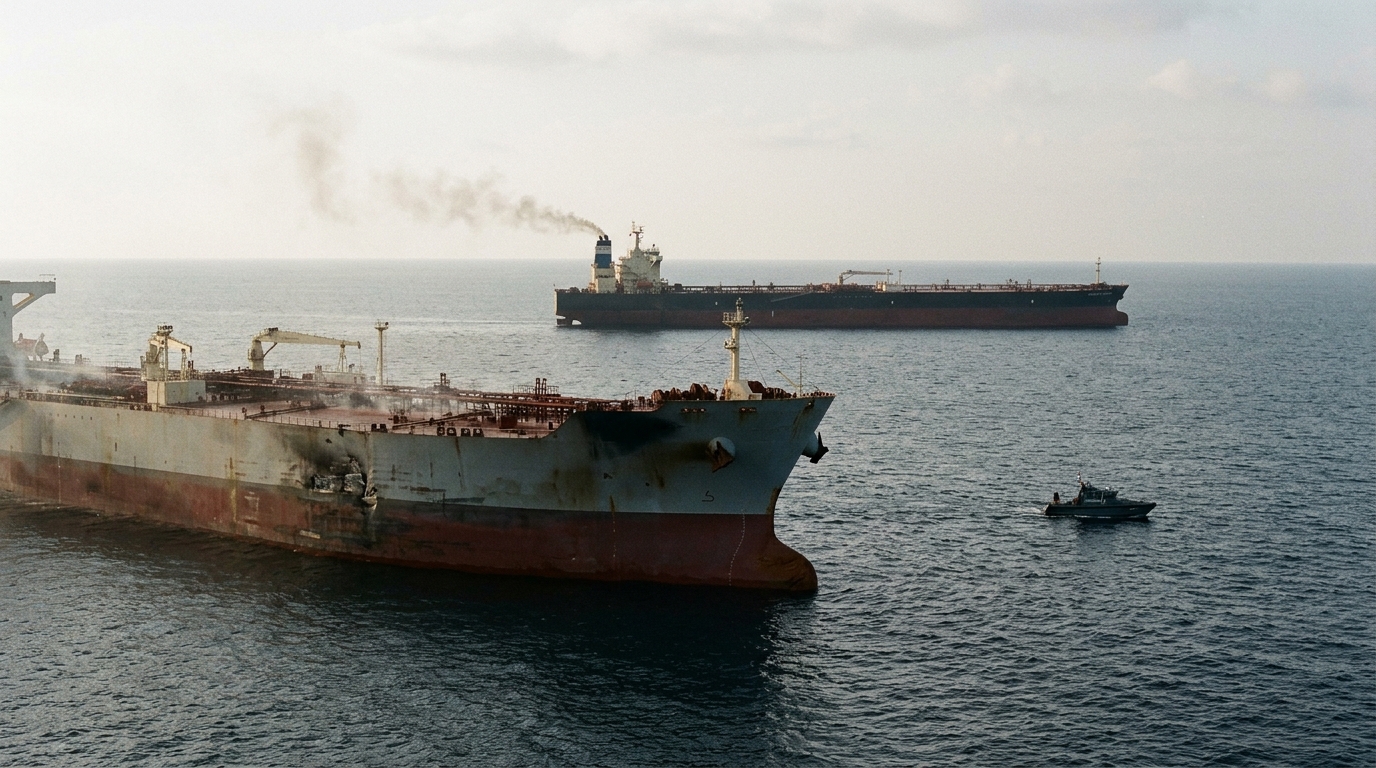
Two supertankers loaded with Saudi crude exited the Strait of Hormuz on the night of August 31 and never made it clean. The Sidr, a VLCC operated by Saudi Arabia’s state-linked shipping company Bahri, was struck by three unknown projectiles east of Khasab, Oman. Minutes later the Senegal Prosperity, operated by South Korea’s Sinokor, was hit in the same corridor.
Markets moved before the smoke cleared. Brent rose sharply on Tuesday, and U.S. crude closed above $90 for the first time in more than a month. Then the U.S. escalated. The U.S. military struck Iranian targets around the Strait of Hormuz area, and Iran retaliated against U.S. partners in the Gulf early Wednesday. Brent was trading around $95 a barrel on Wednesday.
Energy equities absorbed the move instantly. The SPDR S&P Oil & Gas Exploration & Production ETF, XOP, rose about 1.8% to around $192, a 52-week high. ExxonMobil and Chevron both gained about 2%.
Chevron’s move was the more significant one technically. CVX cleared $211.05, a fresh 52-week high that topped the March 27 peak after five months of failed attempts, retaking every level from its spring drawdown. Breakouts through a ceiling that old draw momentum funds screening for exactly this confirmation, but the margin above the prior extreme is narrow. The breakout fails if buying pressure does not follow through, and a close back below the March 27 peak signals the move lacked conviction.
The broader context makes the speed of Tuesday’s re-rating worth studying. Energy has been a standout in 2026, and that run came in violent episodes, not gradual drift. Analysts have warned that buffers the market had been relying on are becoming exhausted, with inventories in parts of the system nearing operational minimums. With supply already running thin, even a single incident compresses the gap between current price and the market’s fear price. Two incidents at once, coordinated in both timing and geography, did it in one session.
There is a secondary pressure point traders should watch. Higher oil raises expected inflation, which raises the odds the Federal Reserve holds or lifts rates, pushing yields higher. The 10-year Treasury yield rose to about 4.80% on Tuesday, its highest since early 2025. That dynamic complicates the bullish energy trade: strong CVX and COP earnings outlooks exist alongside a rate environment that compresses the multiple. The oil premium funds the upside; the rate response limits how far the sector can run on valuation alone.
The Trader’s Lesson
What Tuesday demonstrated is how fast a geopolitical catalyst can re-rate an entire sector’s leadership when the supply backdrop is already compromised. Brent was trading near $88 a week ago. The attack pattern shifted, and within 48 hours the benchmark was around $95. That is not a gradual shift. It is a discontinuous jump driven by expectations, not confirmed supply loss. The lesson for traders: in a market already priced for tension, a new escalation does not need to change physical flows to move prices sharply. It only needs to change the probability of the next worst outcome. Positions in CVX and XOP near prior resistance carried real breakout risk, in both directions. Any de-escalation signal can drain the war premium from crude in hours. Sizing accordingly, rather than chasing the move, is the process that survives when the signal reverses.