
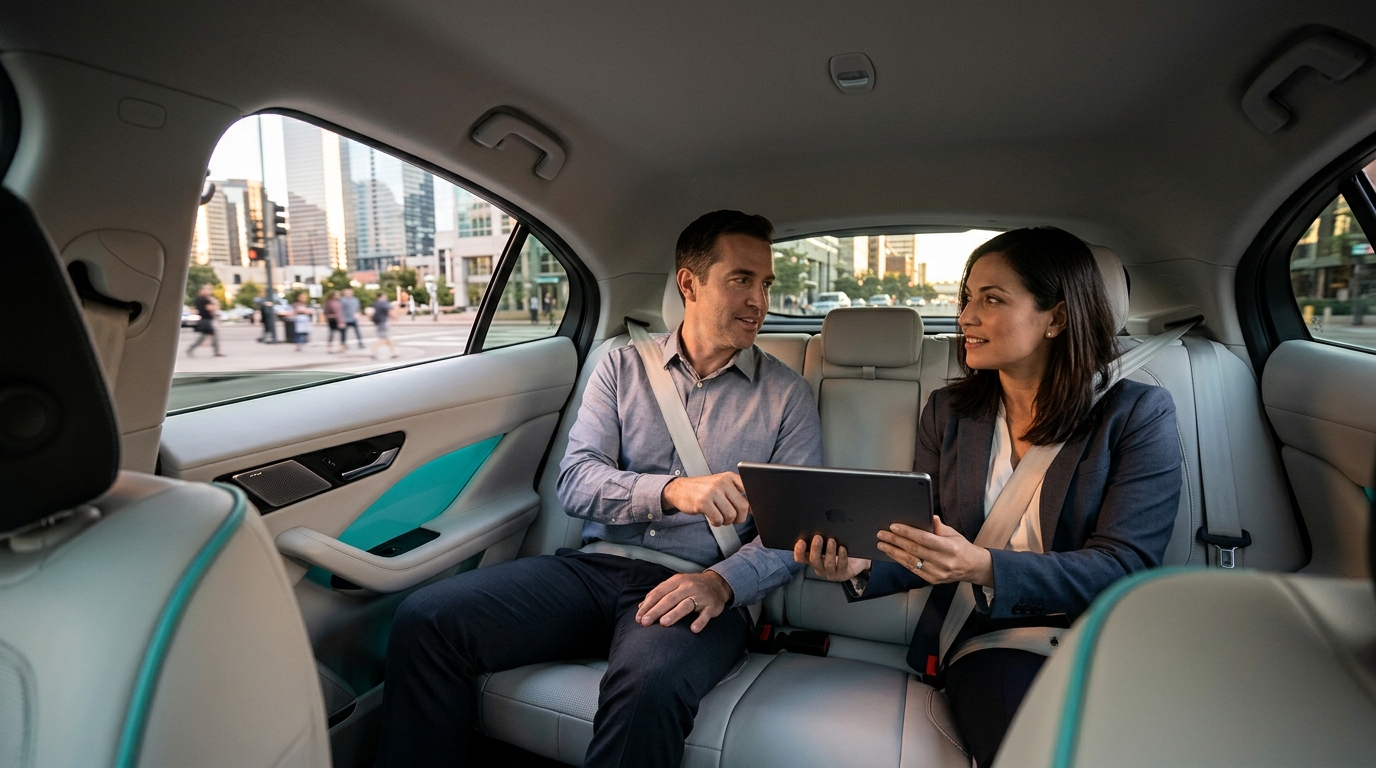
The week that mattered most in autonomous vehicles did not belong to Tesla. It belonged to Tuesday, September 1, when Waymo launched paid driverless rides in Denver, San Diego, and Tampa, bringing its commercial footprint to 14 U.S. markets and pushing its nationwide fleet beyond 4,000 vehicles. Waymo has said it is now delivering more than 500,000 paid rides weekly. Amazon’s Zoox announced the same day it would enter Houston and San Diego. Both companies chose the timing deliberately, getting their news out before Tesla’s Cybercab event on Thursday, September 3.
Focus on Waymo’s numbers. Half a million rides every week is not a pilot. It is an operating business. The company has said it is working toward crossing one million rides weekly by the end of 2026. Against that trajectory, Goldman Sachs Research projects the U.S. robotaxi market will reach $19 billion in 2030 and $48 billion by 2035. Those figures were revised sharply upward from earlier estimates, and Waymo’s current pace suggests Goldman’s analysts are, if anything, being measured.
What Waymo Actually Is
Waymo sits inside Alphabet as an “Other Bet,” which means most GOOGL shareholders treat it as an R&D cost center. That framing is becoming harder to defend. Reporting based on shipping data has said Waymo has imported more than 3,200 Zeekr vehicles into the U.S. through the Port of Los Angeles since 2024, with more than 2,600 arriving in 2026 alone, while facing steep U.S. tariffs on Chinese EVs. To comply with U.S. rules, the vehicles arrive without Chinese connectivity hardware, and Waymo installs its own compute and sensor suite, with final integration at a Mesa, Arizona facility with supplier Magna. A company absorbing those costs at that pace is not experimenting. It is building supply chain infrastructure.
The economics ahead are compelling. For a vertically integrated company that both builds and operates its own robotaxi fleet, Goldman Sachs Research has said gross margins could range from 30% to 50%, implying a global gross profit pool of roughly $150 billion in 2035. Goldman’s research also models the total cost of goods sold per mile dropping below $1 in the U.S. by 2035 for a vertically integrated AV rideshare operator. Waymo is building toward exactly that position.
In some markets, Waymo offers rides through Uber, giving it a distribution channel beyond its own app. That relationship cuts both ways: Uber gets fleet utilization, and Waymo gets demand it does not have to generate itself. The partnership is a sign of commercial maturity, not weakness.
Amazon’s Quiet Problem
Zoox is the other half of this week’s story, but the comparison is unforgiving. Zoox plans to begin testing in Houston and San Diego, giving Amazon’s subsidiary a presence in 12 U.S. markets. Its commercial footprint remains much smaller: Zoox’s only broad public ride-hailing service today is in Las Vegas, while it has also offered rides to select riders in San Francisco. In new cities, Zoox typically starts with retrofitted test vehicles for manual mapping and early testing before deploying its purpose-built robotaxis.
Amazon acquired Zoox in 2020. Six years later, it has one city with broad public rides. Waymo has 14. The gap is not closing quickly, and the window to close it may be shorter than Amazon investors appreciate. Scale in robotaxis compounds: more miles generate more training data, which improves the system, which earns rider trust faster. Waymo has been running that loop for years.
What Could Derail the Thesis
Regulatory risk is real. S.4429, the Connected Vehicle Security Act of 2026, is bipartisan Senate legislation that advanced out of the Senate Commerce Committee by voice vote on July 22, 2026. The bill targets connected-vehicle technology tied to foreign adversaries, and Zeekr is a Geely brand. Waymo’s position is that its U.S. integration process and hardware choices reduce exposure, but a legislative ban could still force a supply chain rethink. Waymo’s move to begin autonomous testing of the Hyundai IONIQ 5 with its sixth-generation Driver hardware is evidence of how seriously the company takes that risk.
Tesla’s Cybercab event on Thursday could also shift the competitive conversation, though Tesla remains years behind Waymo in driverless miles logged and commercial deployments. Ambition and scale are different things.
The Long-Term Case
What disciplined long-term investors tend to look for in an emerging industry is a leader who compounds its advantage faster than competitors can match it. Waymo has meaningful head starts in regulatory approvals, accumulated miles, rider trust, and manufacturing partnerships. The company is embedded inside Alphabet, which means capital is not its binding constraint. Execution is.
Half a million weekly rides. Fourteen markets. A fleet expanding by thousands of vehicles annually. The industry is not arriving in 2035. It is being built today, inside a company most investors still price as a search engine with expensive side projects.