
September 21, 2026
Saudi exports climbing back above 4 million bpd sent oil lower for a fourth straight session, showing traders exactly which data point controls the price.
Houthi ballistic missiles and drones targeted Riyadh and facilities of Saudi oil giant Aramco in Yanbu on Saturday, according to the Houthis and Saudi officials. The Houthis said they targeted “sensitive” sites in Riyadh with missiles and drones and an Aramco facility in Yanbu. Smoke was reported near King Khalid International Airport. It was the first time Riyadh had been targeted since the escalation in fighting opened a new front in the wider regional war.
“My system said ‘SELL’ right before this stock tanked. Today, I’m shouting ‘BUY NOW’ before it soars.”
In 2023, Marc Chaikin’s system flashed bearish on an automotive company no one had yet heard of. The stock crashed 35%. Today, his system rates this company “Very Bullish” and Marc calls it a screaming buy thanks to a new “groundbreaking partnership” with Nvidia that hands this company the keys to the self-driving kingdom on a silver platter.
Brent fell anyway. Oil fell Monday, as traders kept watch for a recovery in shipments from Saudi Arabia even after the attacks. Futures for international benchmark Brent crude for November delivery fell about 1.7% to around $102 a barrel in early trading. Brent is now on a fourth straight daily decline and roughly $6 below its 14 September high near $108. That is the clearest possible statement from the market about what it cares about.
The answer is barrels, not bombs.
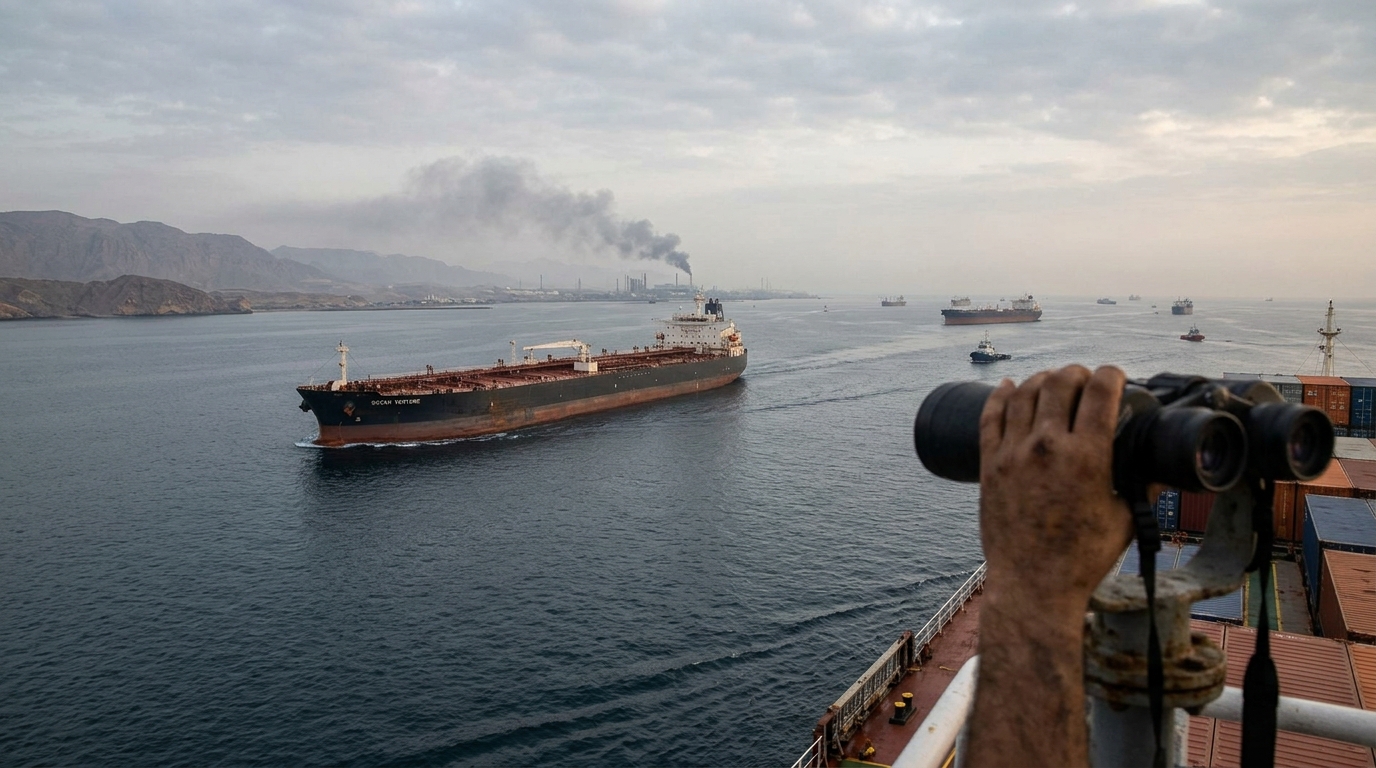
Saudi exports recovered to just over 4 million barrels per day so far in September after slumping to about 2.4 million bpd in August, the lowest since at least 2013, according to provisional data from analytics firm Kpler. That recovery happened because the Strait of Hormuz is moving more crude than it has in months. U.S. Central Command commander Admiral Brad Cooper said in a video message Saturday that the primary transit lanes are clear of mines and that momentum is building. He also said Persian Gulf allies have shipped more than 1 billion barrels of crude through it in the last couple months.
These 3 Stocks Could Soar as Sam Altman Announces New Venture After OpenAI
Elon Musk calls it “the most disruptive force in history.” The test staff are sworn to keep it secret – by law. And 3 little-known stocks are poised to take off, as Sam Altman releases what could be the biggest venture of his life – 500 times bigger than ChatGPT.
Click here to learn about the stocks tied to Sam Altman’s NEXT big move after OpenAI.
The flow numbers behind that headline are worth sitting with. JPMorgan analysts said in a September 18 note that Middle East oil flows averaged about 17.1 million bpd in the past 10 days, roughly 6.1 million bpd below the 2025 average. Still well below normal, but far better than the market feared when the Saudi East-West pipeline went down on September 11. “The most notable pivot has come from Saudi Arabia,” the analysts said, as satellite data indicated Saudi oil moving through Hormuz averaged about 2.9 million bpd over the past six days, up from roughly 700,000 bpd in August. That four-fold increase in Hormuz loadings is what defeated the weekend geopolitical premium before Monday’s open.
How Professionals Would Read This Session
Experienced traders know that the first reaction to a headline is rarely the trade. The decline followed an initial rise in oil prices after the Houthi attack, highlighting the market’s sensitivity to developments that could disrupt supplies from the Middle East. That gap-up Sunday night and reversal before Monday’s open is textbook: the knee-jerk move goes with the fear, the real move goes with the data. Traders who waited for export confirmation rather than buying the geopolitical spike avoided a losing position.
There is a structural tension underneath this, and disciplined traders should keep it visible. The rerouting depends on the Strait of Hormuz staying open, which puts the two main chokepoints in the same story. JPMorgan’s Natasha Kaneva cautioned clients that these volumes might be hard to sustain. “For now, the workaround appears to be working, so long as Iran allows it to,” the analyst said. RBC Capital Markets flagged the same risk: Iran’s Houthi allies in Yemen “likely retain the drone and weapons supplies required for further attacks on the East-West Pipeline and energy infrastructure along the Red Sea,” according to RBC’s Helima Croft.
Governments worldwide are investing billions to revive a proven energy source. Supply chains are tightening, demand is rising, and select companies stand to benefit. The Nuclear’s Second Act report explains what’s happening next.
What Comes Next
The UN General Assembly sessions start this week with Trump and Iranian President Masoud Pezeshkian both in New York. Hopes for US-Iran diplomacy during UN General Assembly week added to the selling. Whether anything substantive emerges is unknowable, but traders should note that Saudi flow data through Friday is more important than anything said at a podium. Kpler had exports above 4 million barrels per day in September. That number either holds or it does not. Crude is trading the answer to that question, not the diplomacy.
For energy equities, refiners like VLO, MPC, and PSX most directly, the key variable is whether the Hormuz volume recovery persists long enough to replenish product inventories. Diesel is the part of this trade that has not responded to any of the relief headlines. U.S. refining capacity is set to drop about 371,000 barrels per day next week with diesel already at elevated levels. The product market is setting the floor regardless of what crude does on the Saudi export story.
The Trader’s Lesson
Today’s session is a clean case study in the difference between a catalyst and a cause. Missiles hitting Riyadh are a catalyst. The cause of oil’s direction is Saudi export volume through Hormuz. When those two things point in opposite directions, the market tells you which one it believes. Today, it believed the tanker data. The lesson: before trading a geopolitical headline, find the physical flow number that would either confirm or contradict it. If the barrels are moving, the premium shrinks. Every time.