
September 22, 2026
Bonus Content: Ukraine Hit the Moscow Refinery. Now Zelensky Meets Trump.
Wall Street loves a new story.
But sometimes the more interesting opportunity is a company that has been waiting years for the market to catch up.
One little-known Nasdaq company has spent more than 25 years developing professional drone technology that is now a priority in Washington.
This is not a company trying to invent itself around D.C.’s latest push.
It was developing these technologies long before America’s current drone demand started.
That experience matters as the Pentagon looks for scale and Washington directs more attention toward domestic manufacturers.
Yet the company is still trading under $5… for now.
If America’s drone industry is entering a much bigger chapter, investors may want to know why this pioneer remains so overlooked.
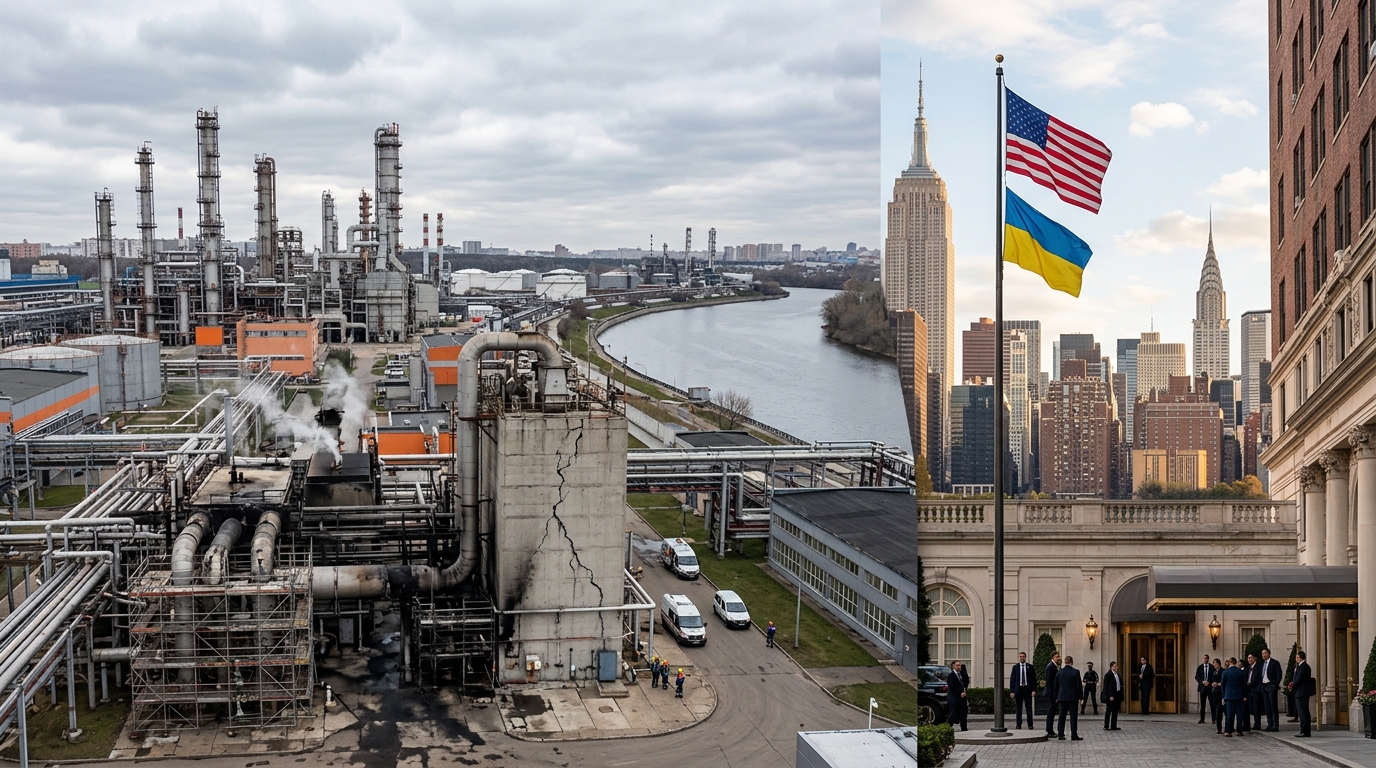
Ukraine Hit the Moscow Refinery. Now Zelensky Meets Trump.
There are days when a single geopolitical event forces traders to make a decision before the full picture is clear. Today is one of them.
Russia’s Moscow Oil Refinery halted crude processing after Sunday’s Ukrainian drone strike damaged key production units. Both of the refinery’s primary crude-processing units caught fire, and repairs could take several weeks. That is not a routine infrastructure hit. The facility has a refining capacity of 11 million tonnes of oil per year and supplies about 40% of Moscow’s fuel market and 70% of the Moscow region’s demand for petrol and aviation gas. After the attack, the refinery stopped offering fuel for sale on the St. Petersburg International Mercantile Exchange starting September 21.
The strike was part of the largest overnight Ukrainian barrage of 2026. Russia’s Defense Ministry said it downed 1,110 Ukrainian drones across Russia, as well as over Crimea and the waters of the Black Sea. Ukraine chose the biggest drone operation of the year as the backdrop for Zelensky’s New York trip. That sequencing is deliberate, and traders should treat it as such.
The Collision Point: 1pm ET
Zelensky, who held a phone call with Trump on Sept. 20, said their upcoming meeting “could change a lot.” On that call, Zelensky cited “ideas for de-escalation steps and for addressing fundamental security issues, including energy security,” and said Ukraine was “ready to take really serious steps.” The meeting comes several days after Trump signed a Russia sanctions bill and approved the biggest arms deal between the U.S. and Ukraine since assuming office.
That context matters enormously for how to read the refinery strike. Ukraine did not quietly de-escalate heading into negotiations. It launched a record barrage, hit a strategically important refinery, and then sent its president to meet Trump. The message to Moscow is plain. The message to markets is more complicated.
Two Trades, One Outcome
The energy trade is the cleaner read right now. Russia’s export restrictions have been extended until January 31, 2027 for gasoline exports and for diesel exports by non-producers, with diesel exports by producers no longer restricted after September 1. Those restrictions exist because Ukraine’s intensified attacks have taken major Russian refining capacity offline, triggering shortages, queues, and rationing at stations across the country. The Moscow refinery outage adds another leg to a diesel market that was already tight. In Europe, diesel’s premium over Brent has been hovering around $100 per barrel, putting wholesale diesel around $194 per barrel in northern Europe.
The defence trade is binary on the meeting outcome. RTX carries a $289 billion backlog and management raised its 2026 cash-flow and earnings outlook heading into today. Lockheed Martin is around $535 per share. Rheinmetall has been trading roughly around the €1,000 level in Frankfurt in recent sessions. All three names are priced for a prolonged conflict. A credible ceasefire framework that emerges from the meeting would compress that war premium fast. A breakdown, particularly if Trump signals continued or expanded arms supply, would do the opposite.
How Professionals Are Thinking About It
Experienced traders are not betting on a particular diplomatic outcome today. They are watching for the reaction in Brent and diesel cracks in the hour after the meeting concludes, treating that move as the market’s real-time interpretation. Earlier this month, Trump publicly pushed for an energy-focused de-escalation, but a broader truce has remained elusive. That history makes a comprehensive peace breakthrough today unlikely. It does not make the market’s response to any perceived progress any less sharp.
The asymmetry here is worth noting. A significant de-escalation announcement would hit RTX, LMT, and Rheinmetall simultaneously while potentially cooling diesel cracks on the expectation of restored Russian refining over time. A breakdown or non-event leaves the energy squeeze intact and defence names supported. The market is long both outcomes right now, and it cannot stay that way past close.
The Trader’s Lesson
When a single scheduled event has directly opposing implications for two sectors you hold, the instinct is to hedge both. The better discipline is to decide in advance which scenario you are positioned for, define where you are wrong, and respect that line. Holding RTX and diesel-leveraged refiner exposure into a genuine peace announcement because you expected the meeting to fail is not a risk management strategy. It is hope dressed up as analysis. Know your scenario. Own it or exit before the catalyst hits.