
October 22, 2026
Bonus Content: Linde Holds the Pipes Steel Needs to Beat the Carbon Tax
Early to America’s Next Defense Boom?
Sometimes Wall Street only needs one headline.
When a report named possible contenders for a $1.1 billion Pentagon drone contract, shares in the sector jumped as much as 57% in a single afternoon.
Another American drone manufacturer has climbed more than 700% from its 2024 IPO price.
Those moves do not guarantee what happens next. But they show how quickly investor money can move when Wall Street sees government demand building behind an emerging industry.
Yet, this little-known drone company is still trading under $5 on the Nasdaq… for now.
It has more than 25 years of experience, a growing patent portfolio and drone technology already used in real world missions.
Still, it has not received the same level of investor attention as some of the market’s earlier winners.
The question may not be whether drone companies can rally. It may be which overlooked name Wall Street discovers next.
Linde Holds the Pipes Steel Needs to Beat the Carbon Tax
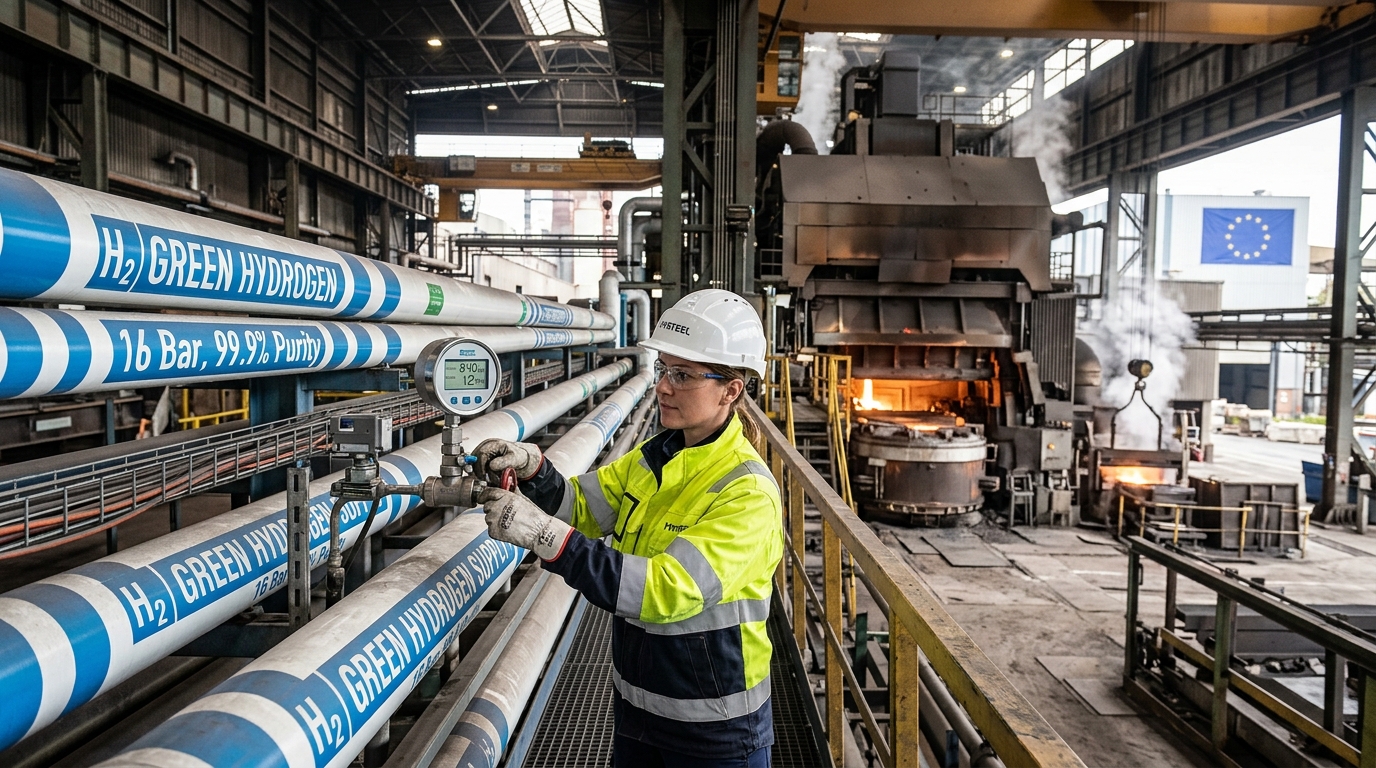
For years, green hydrogen in steelmaking was a technology story. Pilots, trials, announcements. Progress that looks impressive in a sustainability report and does little to move stock prices.
That changed on January 1, 2026. The EU Carbon Border Adjustment Mechanism entered its definitive phase, converting what had been a reporting exercise into a live financial obligation. Steelmakers exporting into Europe now face a real cost tied to the carbon embedded in their production. The Q3 2026 CBAM certificate price, published by the European Commission on October 5, is €82.32 per tonne of CO2. Traditional blast furnace steel, running roughly 1.8 tonnes of CO2 per tonne of output, generates a substantial exposure. The arithmetic is no longer hypothetical.
This is the context that matters for Linde (LIN), and it is the angle the earnings headlines missed.
Linde’s Q2 2026 results were genuinely strong: $9.3 billion in revenue, up 9% year over year, adjusted EPS of $4.50, up 10%, and a record project backlog of $11.1 billion. The stock still fell about 6% after the report, with investors fixated on a 60 basis point operating margin decline and cost inflation tied to the Lincare home care business. But buried inside that backlog is the more interesting development. The metals and mining end market contributed to Americas volume growth in Q1, and Linde’s engineering arm is already embedded in at least one of the world’s first large-scale green steel projects.
In Boden, Sweden, Linde committed roughly $150 million to build an on-site air separation unit supplying oxygen, nitrogen, and argon to Stegra’s green hydrogen steel plant, which is designed to cut emissions by up to 95% versus conventional steelmaking. Linde Engineering separately secured an engineering and procurement contract for a HIPURE pressure swing adsorption unit at the same facility, which recovers and purifies hydrogen from the direct reduction iron furnace to minimize losses and improve overall efficiency. Google announced an agreement with Stegra in September 2026 tied to environmental attribute certificates connected to Stegra’s steel production in Boden. When hyperscalers start buying commitments connected to green steel, the policy pressure has already crossed into commercial reality.
Google’s move into green steel certificates is part of a broader hyperscaler push to lock in physical infrastructure commitments before markets reprice scarcity. Hyperscalers face a parallel constraint in water infrastructure, where liquid cooling demand is creating a supply bottleneck the market has not yet priced.
Linde also served as the hydrogen gas supplier to Cleveland-Cliffs for its blast furnace hydrogen injection trial at Indiana Harbor #7, which Cleveland-Cliffs has described as the largest blast furnace in North America. That trial may be a building block for future commercial practice, but it is still best understood as a trial, not a standardized commercial model.
The mechanism connecting these two facts is worth studying. CBAM does not require steelmakers to use green hydrogen. It charges them financially for not doing so. At €82 per tonne and rising toward full phase-in through 2034, the cost of carbon-intensive steel shipped into Europe becomes structurally disadvantaged versus low-emission alternatives. Steelmakers in the US, India, and Turkey now face a price on inaction. Linde supplies the gas, builds the infrastructure, holds the long-term offtake contracts, and recovers its capital over multi-decade supply agreements. The contract is the asset, not the molecule.
Linde’s remaining performance obligations as of June 30, 2026 were approximately $64 billion, reflecting future minimum purchase requirements and plant sales locked into existing arrangements. That is not project backlog in the conventional sense. It is contracted recurring revenue stretching years into the future.
The lesson here is not to chase the green hydrogen theme. It is to identify who owns the infrastructure layer when a regulatory regime converts an optional investment into a mandatory one. CBAM did that for covered imports into Europe on January 1, 2026. The steelmakers have a new cost line. Linde has new customers.