
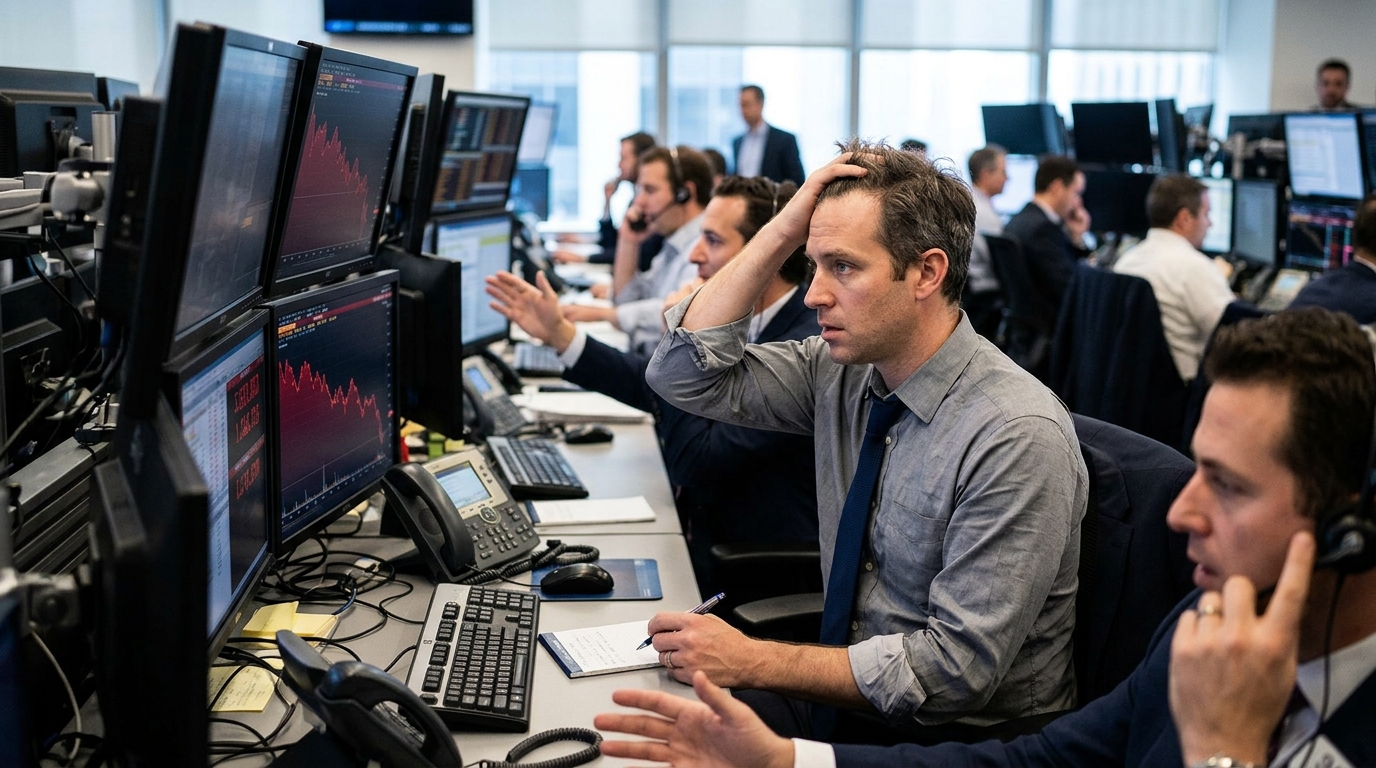
The session that closed October deserves more than a recap. Disappointing tech results spurred the worst drop for stocks since June, with the Nasdaq 100 sinking 3.5% and briefly crossing the threshold of a technical correction. The S&P 500 fell 1.8%, and it closed below its 100-day moving average. That breach matters because the 100-day is where a lot of institutional trend models draw the line between noise and signal.
What Happened
Tech stocks plunged Friday, erasing about $1 trillion in value. The Nasdaq 100 fell by as much as 4.5% on Friday as disappointing technology earnings triggered another major selloff, briefly pushing the index more than 10% below its recent peak and marking its third correction of 2026.
The most violent single-stock move belonged to Intel. Intel’s data center business grew almost 80% in a year, yet its Q4 outlook handed the stock its worst day in more than half a century, erasing nearly $140 billion in market value Friday. The chipmaker issued weaker-than-expected guidance, citing ongoing softness in the PC market. The contagion was immediate: Nvidia fell 4.2%, AMD fell 10.9%, and Amazon slid after results disappointed. A day earlier, Alphabet logged its worst day on record. CoreWeave fell 9.66% and Dell sank 10.77% on PC and server demand worries.
Why It Happened
The surface explanation is earnings misses. The real issue is more structural. As the central businesses of America’s technology giants show signs of slowing, investors are sharpening their scrutiny of whether the huge sums being poured into AI will pay off. A three-week rout driven by mounting anxiety about whether the technology will deliver profits big enough to justify the investment boom reached its crescendo Friday.
Friday was the market pricing risk, not reacting to a single data point. As one portfolio manager put it: “We’re moving out of the hopes and dreams phase of the AI trade and into the ‘show me’ phase.” The bond market agreed: defensive trading lifted Treasuries, sending the 10-year yield to near two-month lows. When growth gets sold and duration gets bought simultaneously, that is a positioning shift, not a dip.
How Professionals Might View It
The 100-day moving average break on the S&P 500 is the detail most worth sitting with. It does not predict where the index goes next, but it tells you that the market’s internal structure changed on a monthly close. Funds that run trend-following overlays will reassess exposure over the weekend. Some already did Friday afternoon, which helps explain why the S&P 500 recovered from its session low to close at 7,580.
The VIX jumped 12.91% to 19.42 as hedging demand picked up. That level is not panic, it is wariness. Short-dated implied volatility jumped as well, a sign options markets expect volatility to persist into next week’s open.
Disciplined traders note what held. The S&P 500 Equal Weight ETF fell only 0.79%, meaning the average stock fared far better than the index. That breadth divergence is meaningful. The damage was concentrated in the names with the heaviest AI capital expenditure commitments, not the broader market. Rotation, not collapse.
What Comes Next
The Nasdaq 100 previously saw similar declines earlier this year during the Iran war and during a summer selloff in semiconductor stocks. Both recovered. The question for November is whether this correction has the same character. The prior two were sentiment-driven; this one is earnings-driven, which tends to require more time before a base forms.
CoreWeave and the neocloud names deserve close watching. CoreWeave’s stock is now trading close to its 52-week low, reflecting investor concerns amid a challenging environment for tech stocks in the AI and cloud infrastructure space. These are the companies whose revenue models depend on Big Tech sustaining its AI spending levels. If that spending decelerates, the revenue assumptions embedded in their valuations become the next problem. Intel’s Q4 revenue guide of $15 to $16 billion, against Wall Street’s expectation of about $17.1 billion, was not a rounding error.
The Trader’s Lesson
When a sector corrects on earnings rather than macro fear, the recovery timeline lengthens. Price can stabilize, but leadership rarely returns to the same names on the same thesis. Friday’s session did not end the AI trade. It ended the version of it that required no proof. The traders who navigate November best will be the ones asking which AI-adjacent companies have actual revenue tied to that spending, rather than the ones waiting for the old leadership to simply bounce back.