
November 5, 2026
Bonus Content: Microchip’s Earnings Tonight Could Show Chips Still Work Without AI
Dear Reader,
Over the past three decades, Weiss Ratings has time and again broken some of the biggest investing stories before most people knew what was coming.
In 1999, we warned that 90% of Nasdaq stocks were “radioactive” before the index crashed 75%.
Before the 2008 financial crisis, we pinpointed 98% of the banks that eventually failed … months in advance.
Now again, our ratings system has picked up something that could become a HUGE story in the months ahead.
In fact, a few of the stocks involved are already moving.
And if this develops the way we think it could, waiting until it becomes obvious to everyone could be a big mistake you go on to regret.
We’re revealing the full story in a new presentation.
Click here to find out what Weiss Ratings has uncovered
Sincerely,
Eliza Lasky
Weiss Advocate
Microchip’s Earnings Tonight Could Show Chips Still Work Without AI
Today’s session is making one thing painfully clear: not all semiconductor exposure is the same. Global memory chip stocks tumbled on November 4 and 5, with Micron down about 7% and SK Hynix dropping more than 9% in Seoul. The catalyst was word spreading that the memory shortage could persist until 2029 or even 2030, sending capital fleeing the sector. Meanwhile, chip stocks experienced broad pre-market declines, with Qualcomm falling about 9.7%, AMD dropping about 3.7%, and Arm sliding about 3.6%.
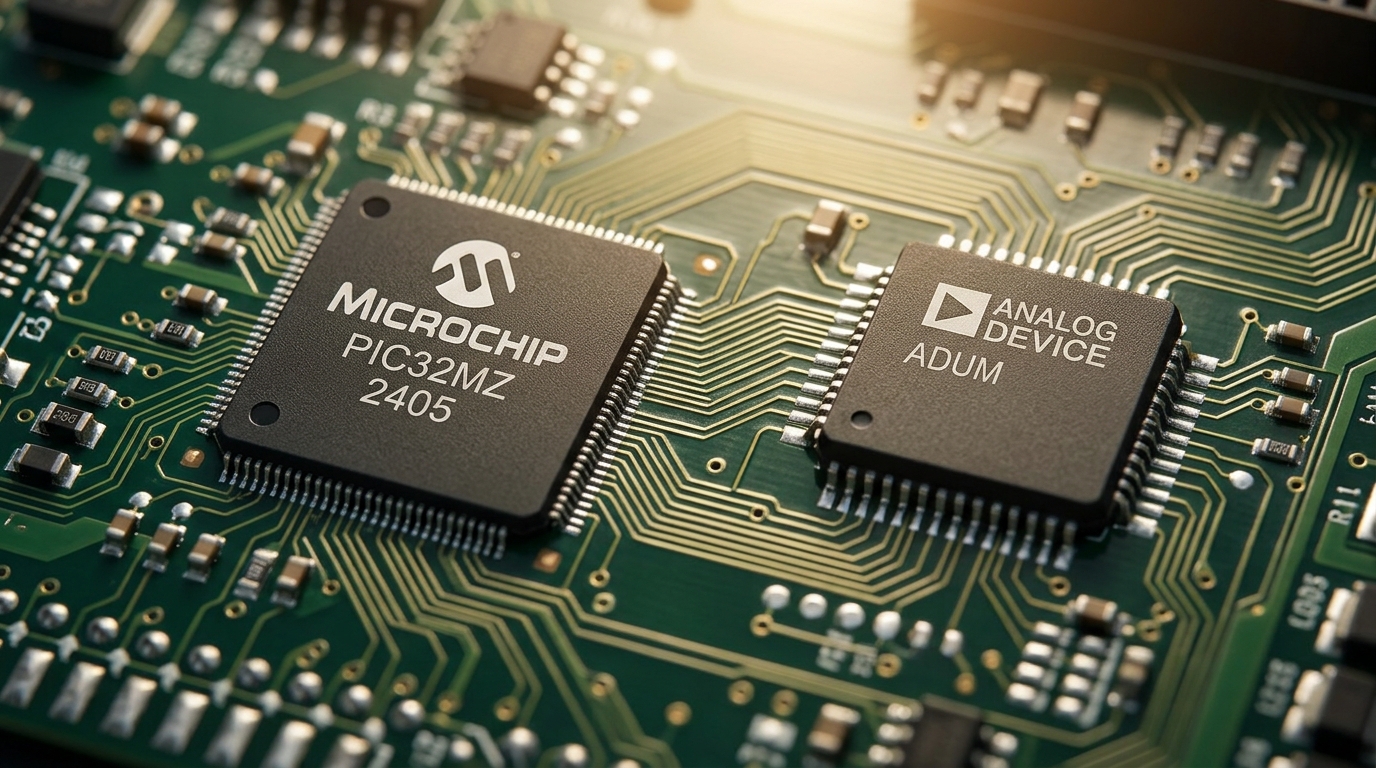
Into that environment, Microchip Technology reports its fiscal second quarter 2027 results after the close tonight, with its conference call and webcast scheduled for 5:00 PM ET. The question is whether the company’s results confirm that a separate, quieter recovery is unfolding in analog and microcontroller chips, one that the AI selloff hasn’t yet reached.
What Happened Last Quarter
Microchip kicked off fiscal 2027 with net sales increasing 38% year over year and 13.2% sequentially to $1.485 billion, above the high end of guidance. Inventory days declined from 185 to 175, and non-GAAP gross margin expanded sequentially to 63.8%, above the high end of guidance. Those are not the numbers of a company still stuck in a down-cycle. They are the numbers of a company accelerating out of one.
Demand improved across several key end markets, and management has pointed to aerospace and defense as an area of strength. Gross margins also recovered faster than expected as inventory-related charges normalized, together signaling a shift from inventory destocking toward cyclical recovery.
What Analysts Expect Tonight
For the second quarter of fiscal 2027, Microchip guided net sales of $1.589 to $1.618 billion, implying sequential growth of 7 to 9% and roughly 40.6% year-over-year growth at the midpoint, with non-GAAP earnings projected at 91 to 95 cents per share. The consensus sits at $0.9360 per share on revenue of $1.61 billion. MCHP has beaten the Zacks consensus estimate in all four of the past quarters, delivering an average earnings surprise of 7.74%.
Momentum continued into the second quarter, with strong bookings in July and August across product lines, business units, and geographies, while expanding backlog and gradual replenishment of depleted distributor inventories are expected to have supported revenue growth.
Why This Matters Beyond MCHP
MCHP is not reporting in isolation. Peer names Texas Instruments, Analog Devices, and NXP Semiconductors continue to shape sector-wide sentiment around the analog and microcontroller cycle. After an extended inventory destocking phase that crushed analog orders across the sector, channel inventory has moved back toward leaner levels by historical standards. With manufacturers shifting toward restocking and forward-looking manufacturing surveys improving, the pieces are in place for a classical cyclical recovery that could run for several quarters.
What makes tonight’s report structurally significant is the divergence it may expose. Analog chips have stickier design-win cycles, customers don’t easily switch suppliers mid-program, and the automotive and industrial revenue base, though cyclical, is not as immediately discretionary as consumer electronics. That durability is precisely what the memory and AI names lack right now.
How to Read the Results Tonight
Disciplined traders won’t just watch whether revenue beats the $1.61 billion consensus. The more important signal is the fiscal third-quarter guidance. If Microchip guides above its own previous trajectory, it confirms the cycle is running on its own engine rather than borrowed momentum. If gross margin holds above 63%, that tells you factory utilization is genuine. Watch inventory days too. Any reversal back above 180 would suggest channel replenishment is stalling.
Microchip’s exposure to industrial and automotive microcontrollers makes it a higher-beta recovery play. MCHP trades at roughly the high teens on forward earnings by many services, versus peers like ADI closer to the high 20s to around 30 times. That gap closes fast if tonight’s results confirm the cycle rather than merely match the number.
The Trader’s Lesson
Broad sector selloffs destroy information. When Micron, AMD, and Qualcomm all fall together, traders are tempted to treat the entire chip universe as one trade. It isn’t. Memory and AI infrastructure names are resetting around hyperscaler spending questions. Analog and microcontroller names are resetting around an industrial restocking cycle that is well underway and completely unrelated to AI capex. Knowing which cycle you’re in is more valuable than knowing today’s index level. Tonight’s Microchip call gives traders a chance to find out whether there is still a part of semiconductors where the fundamentals are running ahead of the fear.