

Dear Reader,
My name is Jeff Brown, founder and CEO of Brownstone Research.
And I want you to circle one date on your calendar…
That’s the day a tiny company could announce a huge supply deal with Elon Musk.
It’s a stock trading at under $1…
In an overlooked sector you’d never associate with tech.
But Musk’s robots, microchips and AI satellites all rely on it.

And on page 37 of the SpaceX IPO filing, Musk names this sector directly.
Why does that matter?
Because Musk raised $85.7 billion from the SpaceX IPO…
And a further $25 billion by selling bonds.
That money is about to flow downstream.
And when a Musk supplier in this sector announced a deal before…
The stock soared 395% in a single day.
That’s almost five times your money…
Before the sun goes down.
I recently sat down with an insider in this sector to talk about what could happen on November 11.
A man who once turned $13,140 of his own money…
Into around $1.85 million in under a year.
In our urgent strategy session, we reveal the name and ticker of a crucial Musk supplier…
Entirely for free.
But once November 11 arrives, this opportunity could be gone.
Click here to watch the strategy session before November 11.
We have so much to look forward to,
Jeff Brown
Founder & CEO, Brownstone Research
Brent Falls 14% in a Month as Hormuz Burns. Here Is Why.
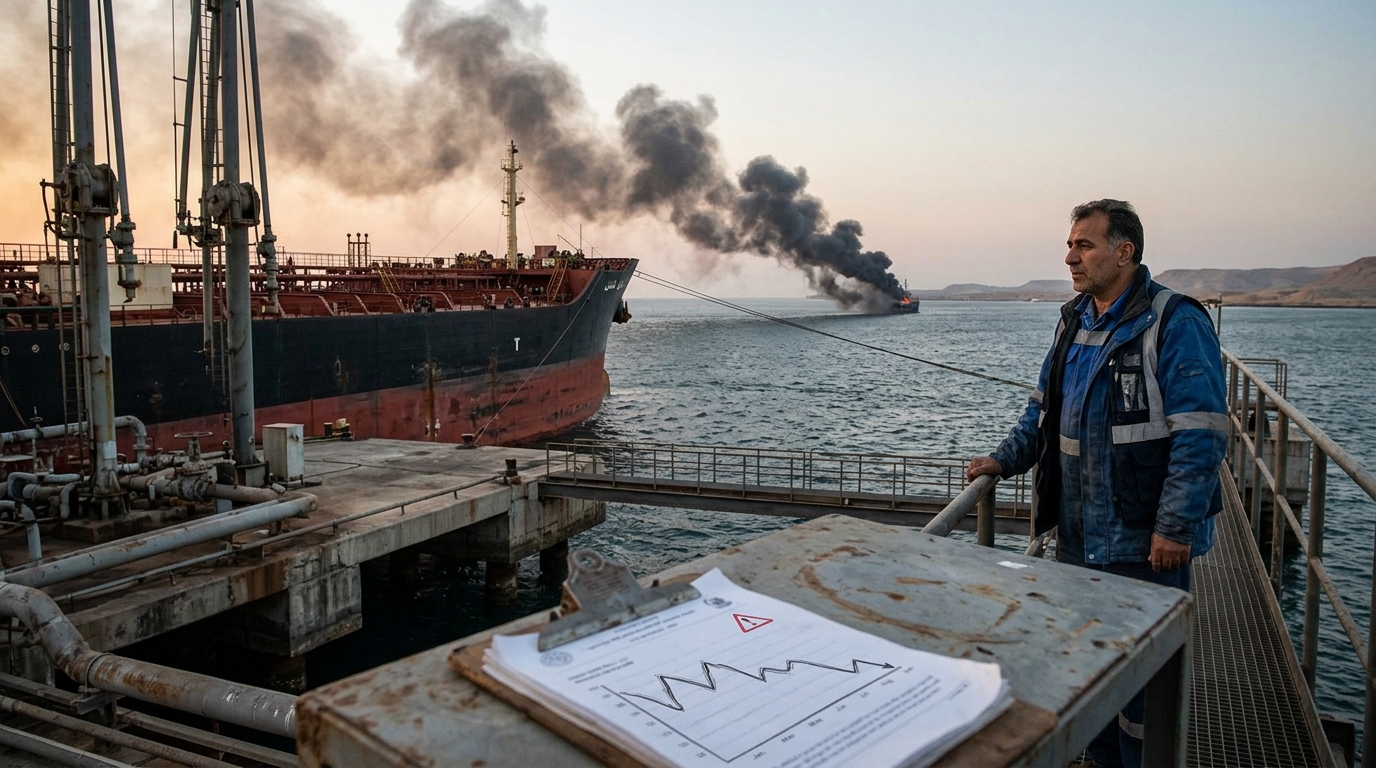
The question is not whether the Strait of Hormuz is dangerous. It is. Iran’s state media reported Wednesday that four oil tankers caught fire after striking naval mines on what it described as unauthorized routes. The physical danger is real. And yet Brent crude has been falling for weeks.
That divergence is the lesson.
What Happened
Brent settled at $91.49 a barrel on November 10 after falling about 1.2% on the day. To understand how sharp the reversal has been, consider where prices were in early October: Brent traded as high as $135.51 on October 2, and was still above $128 as late as October 23. The round-trip from those levels to roughly $92 happened in about six weeks.
The catalyst for the sell-off was not any reduction in physical risk. Brent sank toward its lowest levels since late August as comments from President Trump and U.S. officials eased concerns about further military escalation with Iran and the potential for additional Middle East supply disruptions. Trump said the war with Iran could end “fairly soon,” and some reports pointed to recovering regional oil flows and talk of a softer Iranian posture around the Strait of Hormuz.
Meanwhile, the security picture has not stabilized. Since the outbreak of the war in late February, Iran has repeatedly warned or restricted traffic through the strategic waterway, saying vessels should use routes it authorizes. U.S. Central Command has also said the primary transit routes remain clear of sea mines, noting that more than 3,000 commercial vessels have transited with U.S. support over the last six months. Both claims can be true: the main lanes are cleared, the perimeter is not.
Why It Happened
Markets do not price the last headline. They price the expected distribution of outcomes over the next several weeks. The oil market has sold off during prior phases of the war on settlement hopes, only for the conflict to later escalate and spike prices again. Traders who chased each spike paid for it. Those who faded the headlines and waited for confirmation did not.
That pattern is what is running again today. Trump says the Iran war could end “fairly soon,” while Iranian officials have pushed back on talk of negotiations and Secretary Rubio has signaled skepticism about a near-term breakthrough. The market is weighting the diplomatic signal over the operational reality on the water. Whether that weighting is correct is a separate question from whether understanding it makes you a better trader.
The gap between diplomatic signals and operational reality has a recent precedent worth examining. Brent’s failure to price renewed U.S. strike discussions against Iran illustrates exactly how markets lag behind live military optionality.
How Professionals Might View It
Disciplined traders are asking one question this morning: does this latest round of mine incidents represent genuine re-escalation, or is it noise within a conflict that the market has already begun to discount?
The burden of proof matters here. As one analyst put it, so long as there is no concrete conclusion to the war and tanker attacks remain prevalent, diplomacy headlines alone may not fully erase the risk premium. That is the fulcrum. The price has moved hard on hope. A single mine incident is unlikely to reverse it, absent evidence that the main shipping corridor is genuinely compromised.
Tanker operators like Frontline (FRO) and Scorpio Tankers (STNG) sit at the intersection of this tension. When geopolitical disruption forces crude to travel farther, avoiding conflict zones and finding alternative routes, tanker companies can collect more revenue per voyage. Investors should note, however, that tanker rates are cyclical and geopolitical premiums can fade quickly if tensions ease. Peace talk momentum is a direct headwind for rates, even if ships keep burning.
The Trader’s Lesson
Price is not a tally of events. It is a forecast. When a commodity sells off hard while the physical risk it is supposed to price keeps getting worse, the market is telling you something specific: it believes the endpoint of the conflict matters more than the daily drumbeat of incidents along the way.
That belief can be wrong. Oil has been volatile this year and sensitive to perceived shifts in the direction of the war. Every time diplomacy stalled, oil spiked. Every time peace talk momentum returned, it fell. The trader’s edge is not predicting which of those comes next. It is refusing to treat today’s mine incidents as automatically bullish when the market’s dominant signal is pointing the other way.
Wait for confirmation. Fading a headline is not a strategy. Fading a headline while the dominant trend is against you is.