
Hey there, bargain hunter.
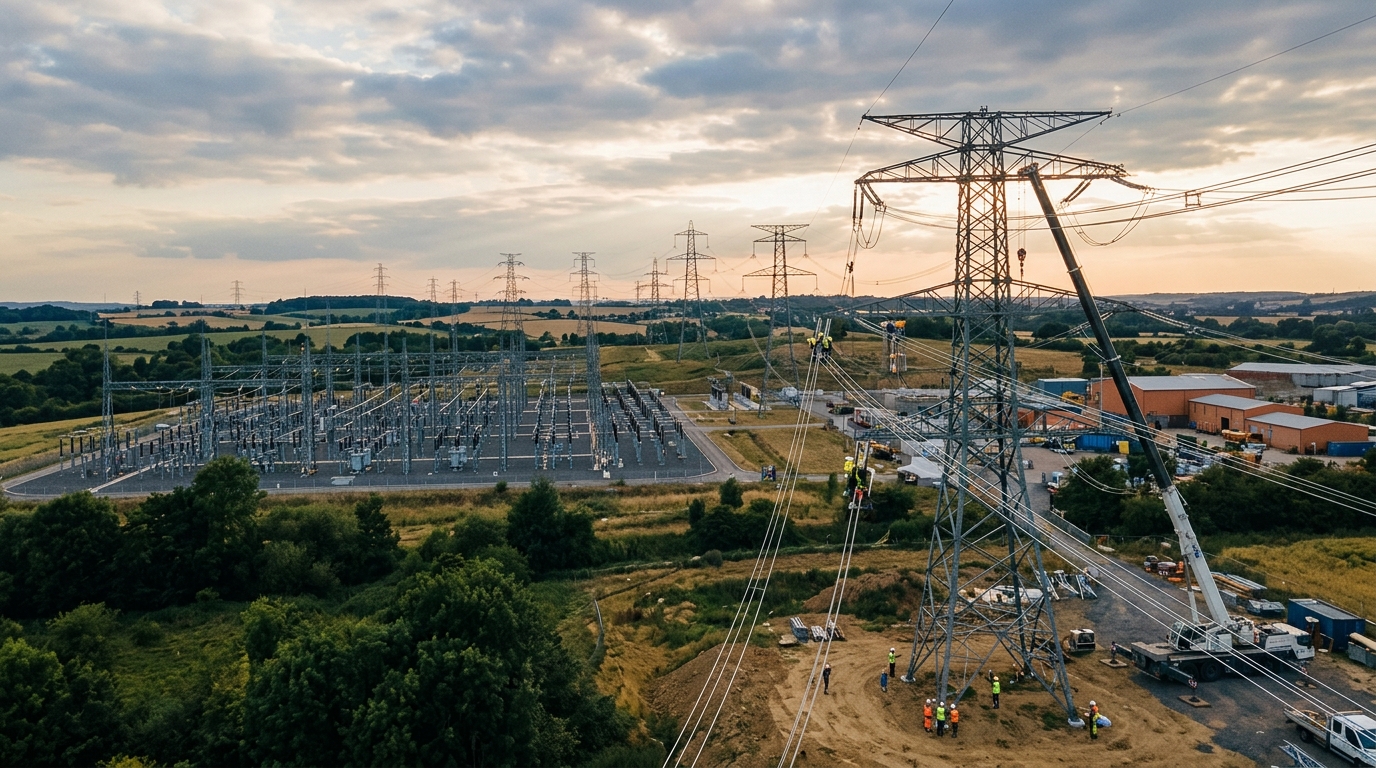
While the market has been watching oil and semiconductors this week, the utility sector quietly closed the most consequential transaction in the history of American power infrastructure. NextEra Energy agreed to acquire Dominion Energy in a $66.8 billion all-stock transaction, the largest power-sector merger ever recorded.
To understand why this deal happened, you have to understand why it had to.
Demand for electricity across the United States has surged because of the explosion of the data center industry underpinning the AI build-out. Every GPU cluster requires an enormous, stable, continuous power supply. Every hyperscaler adding capacity is adding load. Goldman Sachs estimates hyperscalers plan to spend more than $5 trillion on AI and data centers by 2030. That spending does not exist in a vacuum. It requires physical power, and the grid is not built for the scale that is coming.
NextEra is already the world’s largest generator of renewable energy and the operator of the largest fleet of wind and solar assets in the United States. Dominion brings nuclear capacity, including Millstone in Connecticut and North Anna in Virginia, along with extensive transmission infrastructure in the Mid-Atlantic and Southeast. The combined entity would control all of the nuclear power produced in New England.
The deal dwarfs every prior utility transaction. The next largest was BlackRock and EQT’s $33.4 billion purchase of AES. Constellation Energy’s $26.6 billion acquisition of Calpine. Duke Energy’s $32 billion acquisition of Progress Energy in 2012. NextEra is paying twice the previous record.
Here is the investment angle most people are missing. The utilities that control reliable, large-scale generation capacity are not just power companies anymore. They are infrastructure toll booths for the AI economy. Every hyperscaler signing long-term power purchase agreements is signing a 20-year anchor tenant lease with the utility sector. The company that controls the generation capacity controls the rate at which AI infrastructure can physically be built.
The stock to watch is not just NextEra. Dominion shareholders received a premium, but the combined entity’s dividend sustainability and regulatory approval path matter for how the deal actually trades. Regulatory approval from FERC and multiple state commissions will take 12 to 18 months. That creates an arbitrage window and a question about what the deal looks like when it closes in a higher-rate environment.
The broader question this deal forces is which other utilities become targets. The demand math is the same for Duke, Entergy, and AES. If NextEra needed $67 billion to solve its scale problem, who is next? That is the second-order trade the market has not finished pricing.
Power is the constraint. The companies that control it are figuring that out faster than most investors.