
October 11, 2026
Chinese exporters are racing the January 10 tariff deadline
China’s Trade Numbers Land Wednesday. Watch the Shipping Clock, Not Demand.
Wednesday’s September export figures matter less as a growth signal and more as a measure of how hard Chinese exporters are racing the January 10 tariff deadline.
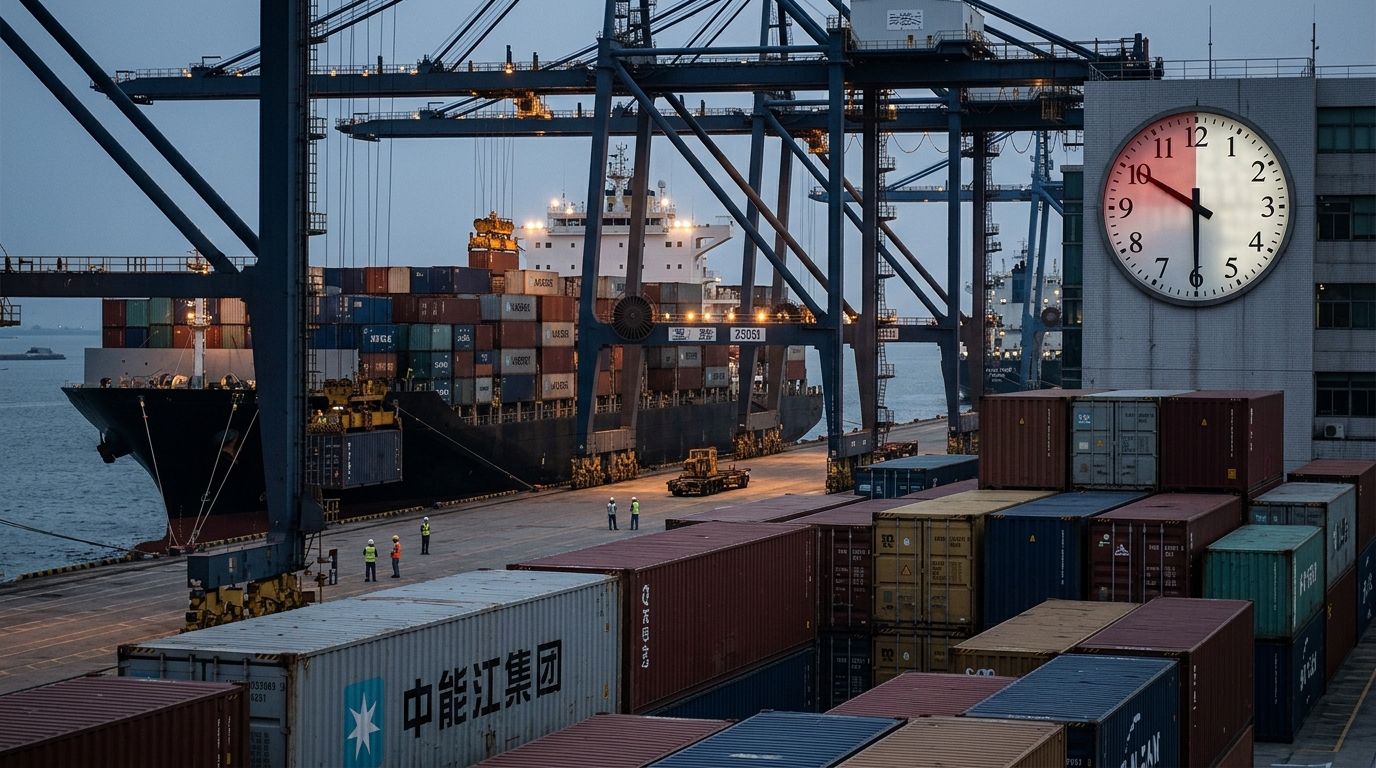
Wednesday’s China trade release is one of those data points that will be misread by half the market before the morning session opens in Europe. The General Administration of Customs publishes September figures on October 14, and calendars list the release time as 3:00 AM GMT (tentative). China’s September CPI is also scheduled for October 14, but it is released by the National Bureau of Statistics. Analysts are looking for a surplus near $114.5 billion, down from August’s $119.09 billion. Whatever the headline lands at, the more useful question is whether September’s volume reflects genuine end demand or a deadline-driven shipping surge.
“Market Wizard” Who Made Hundreds of Millions for Clients Reveals Two-Rule Strategy
Trading legend reveals how any American can go for their first $1,000 using his simple two-rule system.
The context matters here. China’s exports surged 25% year-on-year to $401.44 billion in August 2026, following July’s 23.9% increase, as the global AI infrastructure buildout continued to drive trade across Asia. In the first eight months of 2026, China’s trade surplus reached $806 billion, putting the annual figure on track to surpass last year’s record of about $1.2 trillion. That is a staggering run rate, and it already has Beijing’s trade partners in a difficult spot politically.
September was the first full month after Treasury Secretary Scott Bessent announced the truce extension. The US and China agreed to extend their bilateral trade truce by two months to January 10, 2027, giving both sides more time to pursue a broader economic agreement. The extension is only two months, shorter than the six months or longer that the market had widely expected. That gap between expectation and reality is the critical detail for traders reading Wednesday’s data: a two-month runway is short, and Chinese exporters know it.
The gauge measuring orders from the US jumped to 13 in September, from negative-12 a year earlier and 3 in August, though overall export orders remained below their levels a year earlier and new orders weakened from August. That divergence is exactly the pattern you see in deadline-driven frontloading: US-directed orders spike because importers are pulling forward shipments, while broader demand trends stay soft. The China Beige Book survey of more than 1,200 Chinese companies captured this through mid-September, before the Xi-Trump summit even concluded.
Why Crypto Investors Have Historically Called October “Uptober”
October has built a reputation as a strong month for crypto – and our team believes one overlooked altcoin is particularly interesting this year. Its technology earns fees when trades flow through its infrastructure, while a portion of those fees can be used to buy back its own token. We reveal the project in a new $3 report.
Reveal our #1 crypto for “Uptober” and get the complete research for just $3
Shipping capacity data reinforces the read. US retailers brought forward orders from China by four-to-six weeks to secure inventories ahead of expected tariff changes later this year. “There is an expectation that tariffs could be raised again, or restored to previous levels, so everyone is rushing to get goods in before that happens,” said Tony Meng, a sales manager at shipping firm XPD Global. That behavioral pattern almost certainly persisted through September as the truce extension was confirmed at only two months.
There is a second deadline traders should not overlook. The 12-month suspension of China’s expanded rare earth export controls is set to expire on November 10, 2026, with current supply conditions indicating limited progress in reducing global dependence. Europe, which meets about 98% of its demand for permanent magnets with imports from China, has had no such extension that Washington secured for itself. That creates an asymmetric risk across equity markets. Stocks tied to European industrial supply chains, particularly in automotive and defense, face a harder cliff than US-exposed names.
For traders watching container shipping equities, COSCO, Maersk, and Hapag-Lloyd all benefit from volume surges tied to frontloading, but that demand is borrowed from the future. China-origin container volumes entering the United States were high in July, partly because some importers moved cargo before the tariff change, and this frontloading could reduce part of the usual August demand. The same hangover logic applies heading into Q1 2027 if the truce either lapses or gets replaced with higher rates in January.
Did Trump Draw a Red Line Around This Mystery Stock?
When a major U.S. trading partner targeted one American energy company’s profits, Trump publicly warned it was making a “big mistake.”
Why defend this company?
Wednesday’s number will generate a reaction. A surplus above $120 billion will likely stoke EU political pressure on Chinese goods, particularly given that China’s trade surplus with the EU surged 27% to a record $32.9 billion. A softer read near the consensus will be misread as demand cooling when it may simply reflect the calendar: September’s Golden Week truncated the shipping window, and some exporters likely pushed volume into August instead.
The trader’s lesson: A data release is only as useful as the question you bring to it. Wednesday’s China trade figures are not telling you about end demand. They are telling you how aggressively exporters and importers are positioning against a known deadline. Read the EU surplus line, the AI hardware breakdown, and the forward booking data from carriers. Those three pieces say more about the January 10 risk than the headline surplus number will.