
November 8, 2026
Bonus Content: Fervo Energy Was the AI Power Trade. Now It Costs $9.
One Asset Gained 2,300%
The Last Time This Setup Happened
Here’s What It Was
Dear Reader,
From 1970 to 1980, one specific asset gained more than 2,300%.
That’s not a typo. A $10,000 investment became $230,000 in a decade.
And here’s why we’re bringing it up right now.
The exact same conditions that produced that gain in the 1970s are forming again today.
Stagflation. The toxic combination of high inflation AND a stalled economy. The 1970s version trapped the U.S. economy in a vise for nearly a decade. Stocks went sideways for 10 years. Bonds got crushed. Cash lost half its value.
Now look at where we are:
Inflation expectations spiked to 4.8%. JP Morgan and Moody’s are warning of recession by 2026. Oil is surging on Middle East tensions. And the Fed is trapped – cut rates and inflation worsens, hike rates and recession arrives faster.
The setup is identical.
Now we know what you’re thinking. “That was 50 years ago. It can’t happen again.”
The smartest money in the world disagrees.
Central banks are loading up on the same asset that gained 2,300% in the 1970s – at the fastest pace in 50 years. JP Morgan is forecasting it could hit $8,000 before this cycle ends.
You’re going to make a decision today whether you realize it or not.
Position before stagflation locks in. Or watch from the sidelines while the same trade plays out again.
Because once the trap closes, getting out gets expensive.
Fervo Energy Was the AI Power Trade. Now It Costs $9.
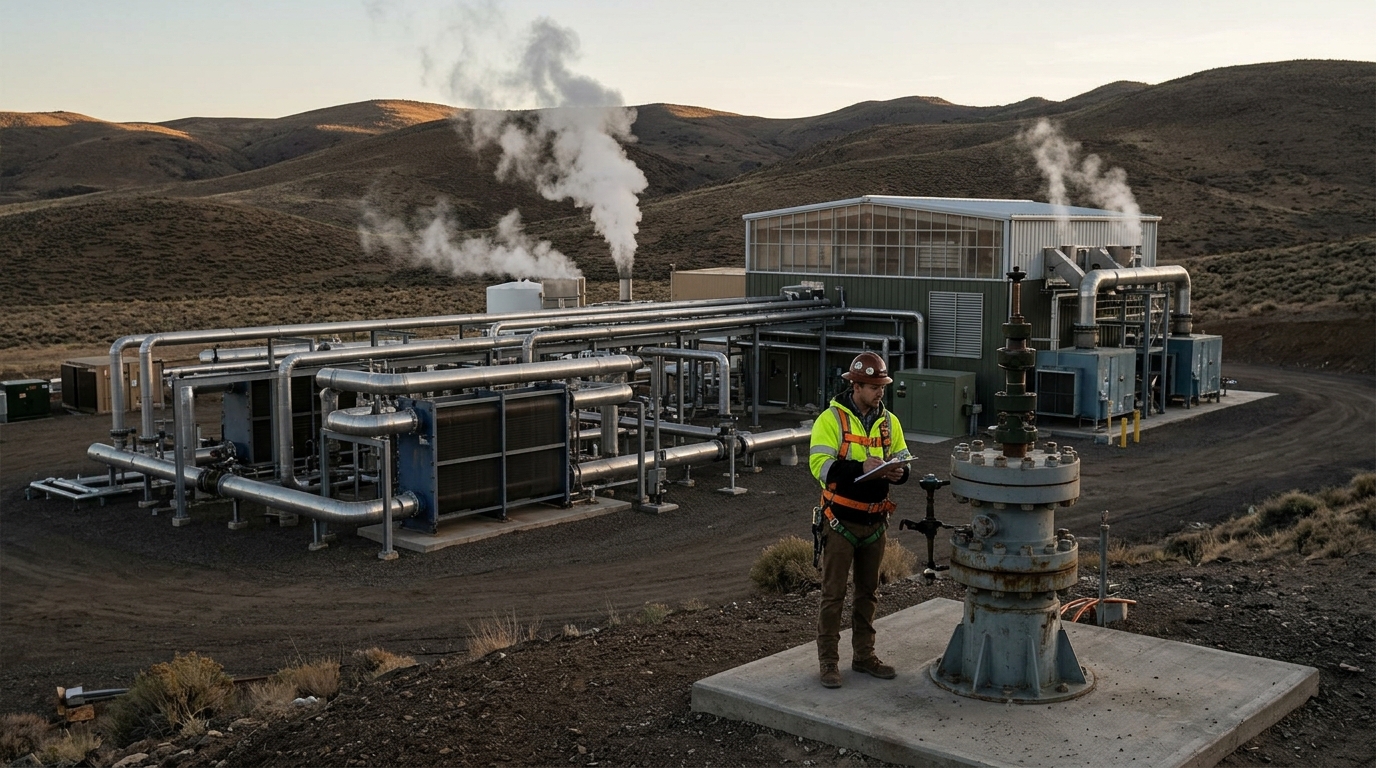
When Fervo Energy priced its IPO at $27 a share in May 2026, the story was airtight: AI data centers need reliable, 24/7 clean power, geothermal is the only renewable that delivers it, and Fervo held the contracts to prove it. The stock opened about 35% higher on its first day, pushing the market cap above $10 billion. Six months later, FRVO trades around $9. The lesson sitting inside that collapse is one every trader needs to understand before Monday’s pre-market earnings report.
What actually changed? Not the technology. Not the contracts. What changed is the cost of waiting.
Fervo sold an aggregate of 80.5 million Class A shares at $27.00, raising approximately $2.2 billion in gross proceeds. At IPO, the company reported 658 megawatts of binding power purchase agreements representing roughly $7.2 billion in potential revenue backlog. That is real. The problem is timing: Cape Station’s first power is still a future event, revenue today is essentially zero, and the discount rate that investors apply to future cash flows has moved decisively against pre-revenue infrastructure plays.
As of November 6, the 30-year Treasury yield stood at 5.26%. That is not noise. When risk-free long money yields more than 5%, the present value of power revenues five or six years away shrinks fast. The math punishes any company whose equity story is built on cash flows that have not arrived yet. Fervo has $312,000 in trailing twelve-month revenue against a trailing twelve-month net loss of about $144.5 million. Those numbers create almost no anchor for a discounted cash flow model.
Then came the August earnings call. During the Q2 2026 call on August 12, the company said it expected transmission-related curtailment affecting the lines serving its Cape Station project. That news drove shares down more than 16% that day to close at $20.16. The stock has not recovered. It has continued falling, hitting a 52-week low of $7.64 this week.
Now add the Q3 setup. Consensus for Monday’s report is $0.17 million in revenue and a loss of $0.09 per share. In Q2, Fervo’s revenue of $0.11 million missed analysts’ expectations of $0.42 million by 73%, and the company posted a loss of $0.38 per share versus a consensus loss of $0.09.
This is the precise situation where professional traders force themselves to slow down. The stock is cheap relative to its IPO price. Analysts maintain an average price target around $34. JPMorgan kept its Overweight rating even after cutting its target. The bull case, that geothermal becomes indispensable to the AI power grid, is not obviously wrong. But cheaper is not the same as cheap. With earnings-based metrics unavailable due to negative EPS, sales-based valuation shortcuts tend to do the heavy lifting, and they remain sensitive to how little revenue actually exists.
Constellation Energy and NRG also report Monday, in what amounts to an energy-sector gauntlet. Those are operating businesses with real cash flow. Watching how the market prices earnings quality across all three will tell traders something useful about where institutional appetite for energy infrastructure actually sits right now.
The Trader’s Lesson
Story stocks are priced on belief. When the discount rate rises, belief requires a bigger down payment. Fervo’s collapse from $27 to single digits is not primarily a verdict on geothermal technology. It is what happens when a pre-revenue company with a long-dated asset base runs directly into a 5.26% risk-free rate. Before buying any stock whose value depends almost entirely on future cash flows, traders should ask one question: at today’s interest rates, how long can I afford to wait? The answer sets your position size, not the story.