
Dear Reader,
Todd Phillips has spent 30 years studying safe-money income.
And he says there’s one question that separates real retirement income from everything pretending to be income:
Can it promise the same income – to the dollar – every year for life?
Dividend stocks can’t.
Any board can cut their company’s payout.
REITs can’t.
Tenants leave. Rates move. Property values change.
Covered calls can’t.
The income depends on the market.
Even CDs can’t.
They mature… reset… and force investors back to the window hoping the next rate isn’t worse.
That’s why Todd came charging into my office three weeks ago.
He had found what we now call the 10.3% War Bond.
Not because it trades on Wall Street.
Not because it rises and falls with the market.
But because it’s designed to do what income investors want most:
A locked-in income stream that stays the same…
Year after year…
For LIFE.
Todd says the current 10.3% income rate for this war bond is in his opinion among the highest available anywhere.
But he does not believe this window will stay open long.
Click here now to see the 10.3% War Bond Blueprint.
To the future,
Roger Michalski
Publisher, Eagle Financial Publications
EVgo’s $2 Buyout Bid Is Below Fair Value. The Stock Still Trades Lower.
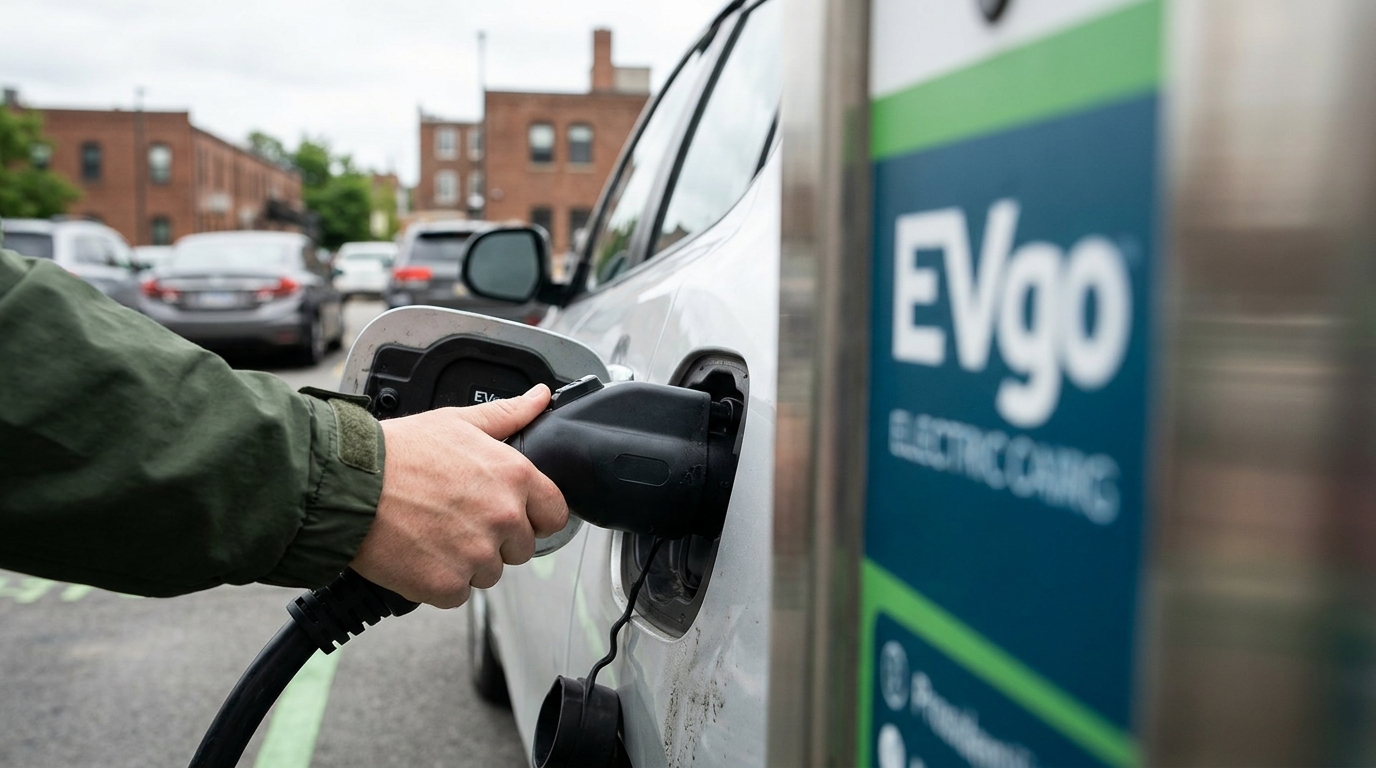
EVgo’s $2 Buyout Bid Is Below Fair Value. The Stock Still Trades Lower.
LS Power controls about 57% of the vote and is offering a 59% premium. That math leaves minority shareholders in a weak seat.
When a controlling shareholder comes in with an unsolicited buyout offer, the press release almost always uses the word “premium.” LS Power’s November 2 proposal to acquire the remaining EVgo shares it doesn’t already own is no exception. The $2.00 per share offer represents a 59% premium to EVgo’s October 30 closing price and a 62% premium to its 30-day volume-weighted average price. That sounds generous until you check where the stock was trading the day after Q3 results landed.
On November 10, EVgo shares opened roughly 3% lower after the company cut its full-year 2026 revenue guidance following weaker-than-expected third-quarter results. The stock sat near $1.84, still well below the offer price. That gap typically reflects uncertainty about whether a deal closes, how long it could take, and whether the final terms change. In this case, there is a third variable that makes the discount harder to close: LS Power already holds the votes.
LS Power currently owns approximately 178 million shares, representing roughly 56.8% of EVgo’s outstanding voting power, and plans to use a long-form merger structure rather than a tender offer, which it says allows for the most comprehensive disclosure and preserves minority shareholders’ appraisal rights. The appraisal rights language is significant. It signals that minority holders who believe $2.00 undervalues the business have a legal path to contest the price, but that path is expensive and slow.
The Q3 earnings report released the day before makes the valuation debate more complicated. Charging network revenue grew 29% year-over-year to $72 million, marking the 19th consecutive quarter of double-digit charging revenue growth. Yet EVgo’s net loss narrowed to $49.2 million from $58.2 million in the same period last year. EVgo also lowered its full-year target for new stall additions, signaling a more cautious growth posture.
The analyst community landed exactly where you’d expect when a buyer with controlling votes sets the ceiling. Roth MKM downgraded EVgo from “buy” to “neutral” and set a $2.00 price target. UBS moved from “strong-buy” to “hold,” and Cantor Fitzgerald cut its target from $3.00 to $2.00 and downgraded to “neutral” as well. When analysts reset a stock to match a bid rather than a business model, they are telling you the deal outcome now controls the range.
One analyst framed it plainly: absent a deal, fair value sits closer to $1.15 per share, making the risk/reward binary, buyout upside or significant downside, which argues for a merger-arbitrage framing rather than a fundamental one.
That is the lesson worth internalizing here. When a majority shareholder submits a non-binding offer below what independent valuation models suggest the business is worth, public shareholders face a constrained negotiation. The special committee can retain advisors and push back, but they cannot manufacture competing bidders when the controlling party is already inside the gates. Traders holding EVGO need to decide whether the spread between today’s price and $2.00 compensates for the risk that the committee negotiates a modest bump, or nothing at all. The answer to that question belongs in a risk budget, not a growth thesis.
Merger-arbitrage spreads carry a specific risk that pure fundamental trades do not. A preliminary acquisition bid can send a stock up 21% before any deal is signed, leaving traders exposed if talks collapse.