
September 6, 2026
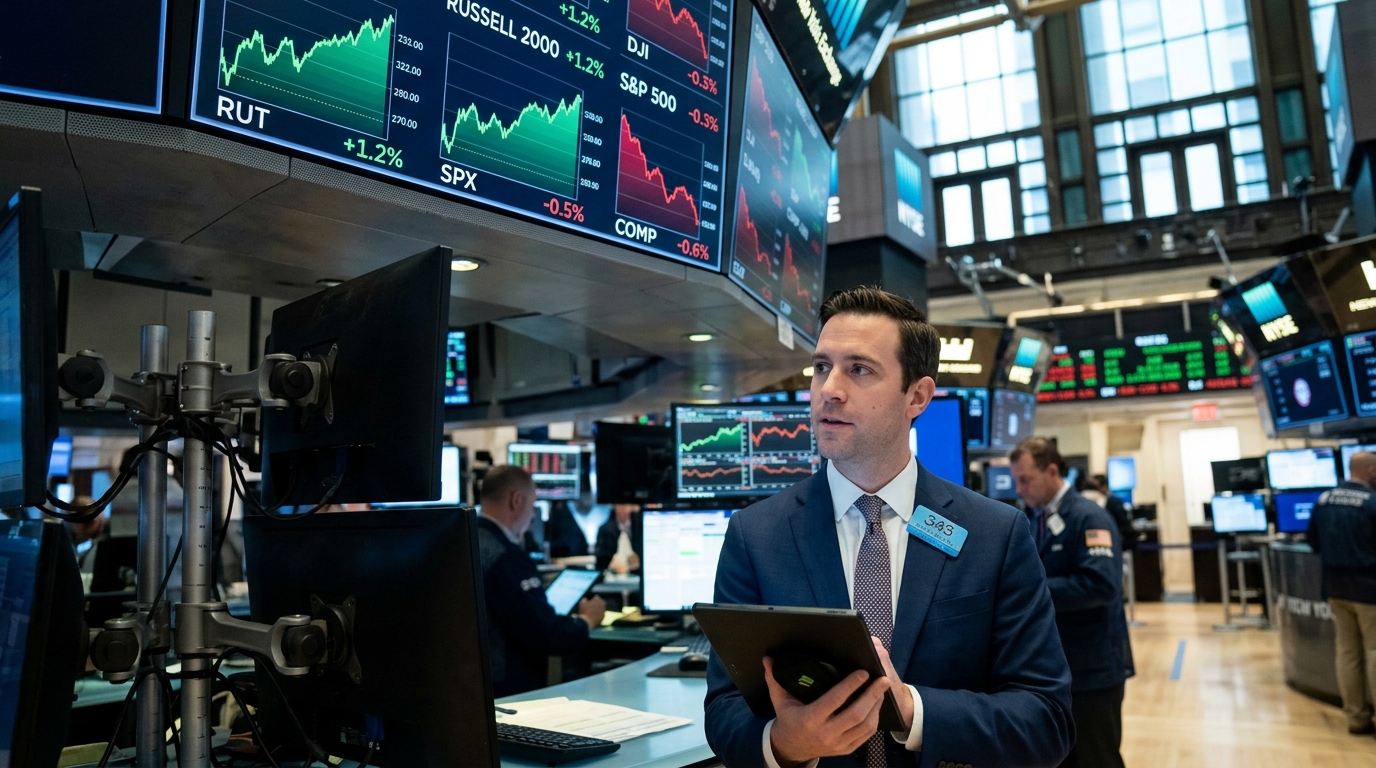
Friday’s split session, Russell 2000 green while the S&P 500, Dow, and Nasdaq fell
Friday delivered a genuine leadership test, and the Russell 2000 passed it in the least expected way possible. The U.S. economy added 162,000 jobs in August, far above consensus estimates of about 53,000. Traders responded by pushing the probability of a quarter-point rate hike at the September 15-16 Fed meeting to 58%, roughly 9 percentage points higher than the day before, according to CME Group’s FedWatch tool. The S&P 500, Dow, and Nasdaq all closed lower. The Russell 2000 closed up 0.25% at 2,975.65.
Bigger than Nvidia? Louis Navellier thinks so.
In 2016, Louis Navellier recommended Nvidia at $2.51 – split-adjusted. It went up 44,000%. He also called Apple before a 36,000% rise and Microsoft before a 60,800% climb. Now he says a new AI device coming online in Tennessee is the setup for the biggest call of his career.
He’s agreed to reveal the stock at the center of it – down to the ticker – for free.
That is not the outcome the textbook predicts. Hot payroll data, rising rate-hike odds, and a declining large-cap tape are exactly the conditions that are supposed to punish small caps. It did not happen. Understanding why tells you more about where money is moving than any individual sector chart could.
Why Small Caps Are Defying the Script
About 40% to 45% of the debt held by Russell 2000 companies is floating-rate, compared to about 9% for S&P 500 companies. When rates drop, large caps barely notice. Small caps feel it immediately in their borrowing costs. The conventional argument, then, is straightforward: price in a hike, hurt small caps. But that logic applies cleanly only when the rate cycle is the dominant story.
In 2026, it is not the only story. Consensus forecasts for Russell 2000 companies’ 2026 earnings growth have climbed to 38% from about 23% at the start of the year, according to LPL, reflecting growing optimism that profit growth is broadening beyond the largest technology companies. The rally has moved beyond mega-cap technology companies and into smaller companies positioned to benefit from the massive buildout of AI infrastructure. When earnings revisions are moving that sharply upward, a single rate-hike reset does not erase the thesis.
5 Nasdaq Stocks Under $5 That Aren’t What You Think
Most stocks under $5 come with a reputation. These don’t.
Each company on this list is tied to major trends like AI, cybersecurity, and next-gen infrastructure.
They may not have the spotlight yet, but they are building real businesses in real markets. That combination is not always easy to find at this price level.
Bank of America has estimated that each 25-basis-point rate move can shift Russell 2000 non-financial operating earnings by roughly 2 percentage points on a cumulative, forward-looking basis. That matters. But against a 38% earnings growth forecast, a 2-point hit is a rounding error rather than a reversal signal, at least until those forecasts start getting cut.
The Year in Context
The Russell 2000 index has gained about 20% so far in 2026, putting it on pace for its strongest annual performance since 2003. Meanwhile, the S&P 500 is roughly flat on the year. The index breached a 2026 high around 3,068 in mid-August.
That record matters because it happened before Friday’s hot payroll report, not because of it. The index absorbed a significant macro shock on Friday and still closed higher. That kind of relative strength inside an adverse macro event is exactly what institutional traders monitor when they are trying to identify durable leadership versus a crowded momentum trade.
How Professionals Might Read This
Experienced traders distinguish between a sector holding up despite bad news and a sector moving higher because of it. Friday was the former, which is the more meaningful signal. Selling pressure in SPY and QQQ did not migrate into IWM. That is rotation, not just resilience.
Inside the Nuclear Revival Reshaping Energy Markets
Governments worldwide are investing billions to revive a proven energy source. Supply chains are tightening, demand is rising, and select companies stand to benefit. The Nuclear’s Second Act report explains what’s happening next.
The leading ETF for the small-cap group is priced at about 19 times portfolio earnings, while the Russell 1000 ETF carries a ratio closer to 29 times, putting small caps at roughly a one-third discount. When a cheaper asset outperforms a more expensive one during a risk-off session, the valuation gap becomes harder to ignore on the institutional side.
The risk worth watching is real, though. September hike odds jumped after Fed Chair Kevin Warsh’s hawkish Jackson Hole remarks, and then moderated after Governor Christopher Waller urged patience. The September 15-16 FOMC decision will likely hinge on upcoming inflation data, with PPI and CPI reports due in the days ahead of the meeting. If that inflation data surprises to the upside, rate-hike odds could move meaningfully above 60% and the floating-rate debt burden becomes a harder argument to dismiss.
The Trader’s Lesson
The most important analytical discipline Friday demonstrated is this: the expected reaction to a macro event and the actual reaction are often two different things, and the gap between them is where leadership lives. Small caps were supposed to sell off on a hot jobs report with rate-hike odds surging. They did not. When a market repeatedly refuses to behave the way the consensus says it should, that is not noise. That is a signal worth tracking into the September Fed decision and beyond.