
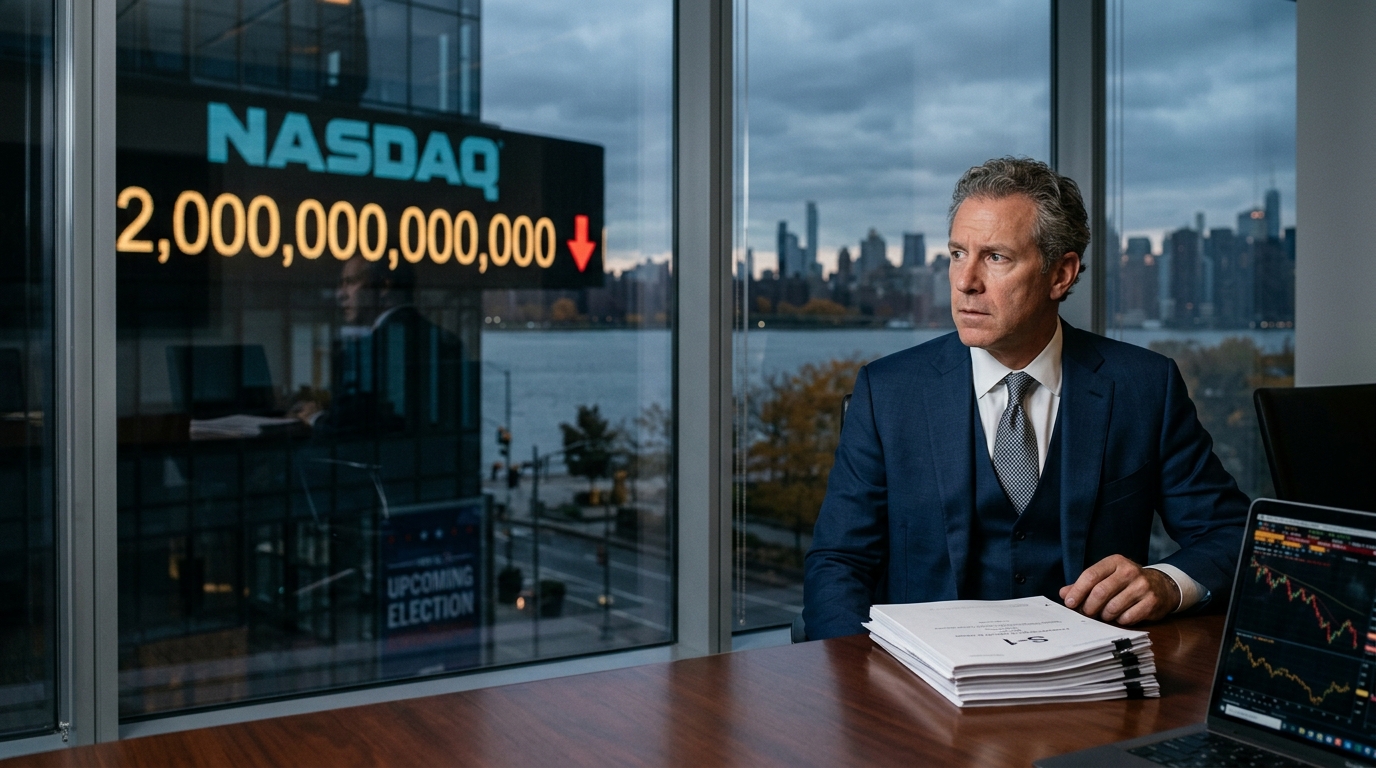
The prospectus has not landed yet. Anthropic filed a confidential S-1 with the SEC on June 1, and the clock is now pointing to October on the Nasdaq. The delay from an earlier expected timeline is not just a scheduling inconvenience. It means pricing will occur within striking distance of U.S. midterm election volatility, precisely when institutional risk appetite shrinks and book-building gets harder.
The numbers in play are striking. Following its $65 billion Series H on May 28, 2026, Anthropic was valued at $965 billion. Investors now expect a listing at $2 trillion or more, which would make it the largest initial public offering in history. The revenue case behind that target is real: Anthropic’s annualized revenue run rate has surpassed $65 billion, up more than sevenfold from end-of-2025 levels. Investors expect that figure to reach roughly $100 billion to $120 billion by the end of 2026. Projections for 2028 revenue run as high as $190 billion to $200 billion. Fast growth commands a premium. Whether it commands a $2 trillion premium from buyers who can exit the following morning is a different calculation entirely.
SpaceX ran this experiment first. SpaceX began trading as a publicly traded company on June 12, 2026, pricing shares at $135 each and initially raising $75 billion, for an implied valuation of roughly $1.77 trillion at the IPO price. When SPCX went public, only roughly 4 to 5% of its shares made up the public float at first; the rest were locked up. Scarcity did what scarcity always does. After an initial surge that briefly pushed SpaceX past both Amazon and Microsoft in market capitalization, shares peaked at $225.64 intraday on June 16 before falling in three consecutive sessions. As of September 7, SPCX is trading at $147.95.
The supply pressure is not finished. The SpaceX lockup expires in stages, with scheduled releases on September 9, September 24, and December 8, 2026, alongside additional staggered tranches during the late-summer to mid-fall window. Each date adds to the tradable float. On a stock whose entire personality comes from scarce supply, more shares to sell is a genuine headwind. Anthropic’s October roadshow will overlap directly with at least one of those release dates, meaning the market will be digesting fresh SPCX supply at the same moment it is being asked to price a $2 trillion AI company for the first time.
The cost structure adds another layer of risk. Anthropic’s top model carries a price tag more than 2.5 times higher than OpenAI’s flagship offering, while Chinese open-weight alternatives can be accessed at a fraction of that cost. Revenue growth also slowed in June after the U.S. Commerce Department imposed a temporary export control on Anthropic’s best models. Companies limiting AI spending or migrating to cheaper models represent a real ceiling on multiple expansion. Investors at peer companies like Palantir and Nebius have paid around 55 times revenue this year. At 55 times the current $65 billion run rate, the implied valuation approaches $3.6 trillion. At 30 times, it sits near $2 trillion. Neither multiple is stable if compute costs keep rising and enterprise budgets tighten.
One piece of the IPO picture is now in sharper focus. Anthropic is preparing to finalize an expansion of its revolving credit facility to $15 billion. Morgan Stanley is leading the process; Goldman Sachs and JPMorgan also have prominent roles, along with Citigroup, and the four lenders are also leading the IPO. Companies typically finalize their revolving credit facility before notifying banks of their roles in the IPO. That sequencing makes this week’s move a genuine signal, not a formality. The credit line does not fix model risk, but it guarantees Anthropic does not have to negotiate its future from weakness. A company with $15 billion in committed liquidity can afford to walk away from a soft book. One that cannot will price into whatever the market will bear.
An Anthropic IPO in October 2026 would put the Claude maker on the public markets before OpenAI, an outcome that could influence the pace and pricing of both listings. A successful debut could warm sentiment for OpenAI’s eventual offering, or it could absorb capital that might otherwise flow there. Either way, how public investors answer Anthropic’s $2 trillion question will set the terms for every AI company lining up behind it.