
September 24, 2026
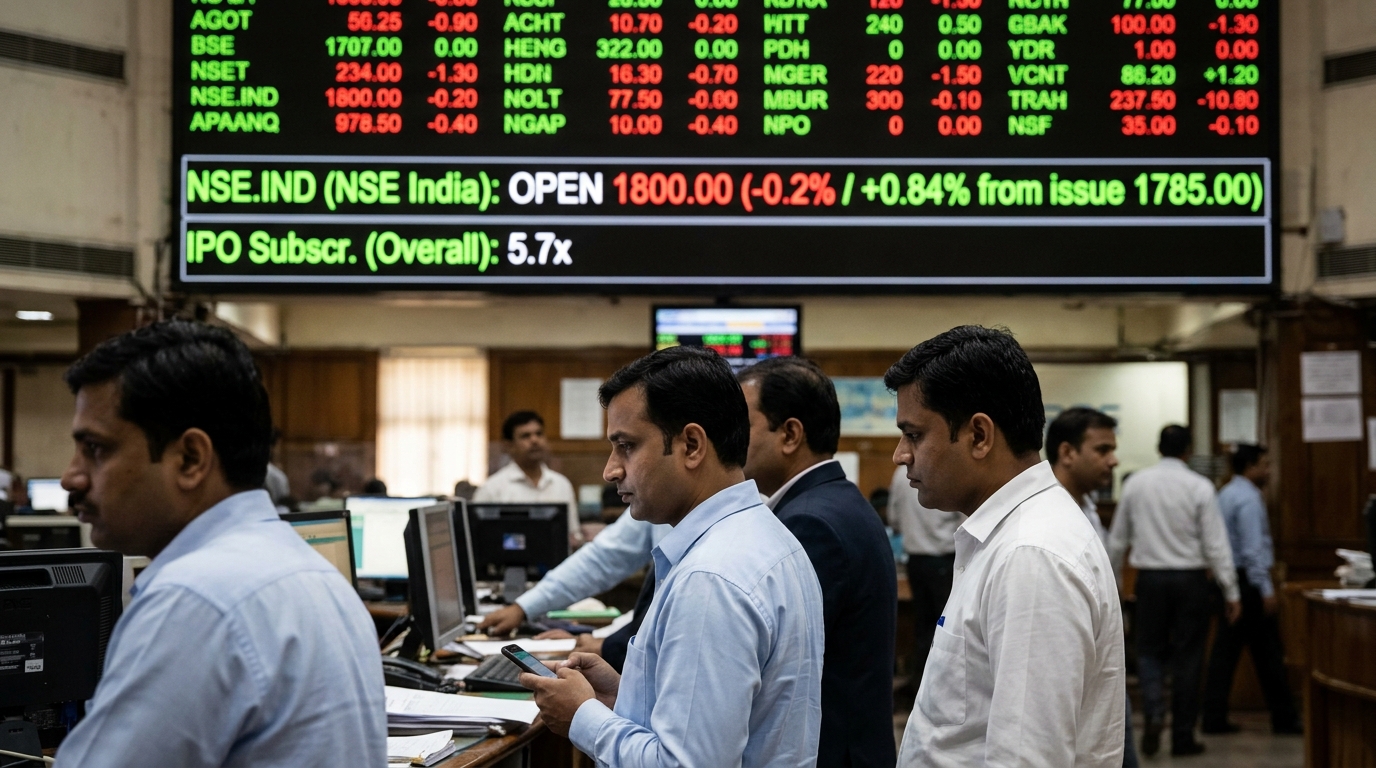
Bonus Content: India’s NSE Opens Flat Despite a 5.7x Oversubscribed Book
Dear Reader,
Elon Musk can build rockets. Satellites. Factories the size of cities.
But he cannot build minerals he does not control.
I’m Dr. Mark Skousen. My career began inside CIA headquarters, spotting patterns before they became obvious. I warned about Black Monday weeks in advance and called the March 2009 market bottom.
And on January 1, 2027, a U.S. defense restriction expands across the full supply chain for certain covered magnets and strategic materials originating in China and other covered countries.
That is not a headline. It is a countdown.
|
Because every launch system, satellite network, military contract and AI buildout ultimately comes back to physical inputs. No minerals… no machines. No machines… no empire.
One small public company is pursuing a direct line to a vast new source of critical minerals – far from the traditional chokepoints that have trapped Western industry for decades.
The company is pursuing rights to recover mineral-rich nodules from the seafloor. Think of them as loose, golf-ball-sized deposits containing metals the 21st-century economy consumes by the ton.
This could give Musk something money alone cannot guarantee: a strategic supply line beyond China’s grip.
And if he chooses to buy rather than wait? The crowd will not receive a polite warning. The ticker could be repriced before most investors finish reading the press release.
My analysis has flagged this mineral play plus two other public companies positioned at the exact pressure points Musk still needs to control: compute and satellite communications.
|
A hard deadline is colliding with a strategic bottleneck. Waiting is now a decision of its own.
Yours for peace, prosperity, and liberty, AEIOU,
Dr. Mark Skousen
Macroeconomic Strategist, The Oxford Club
P.S. The January 1, 2027, rule is already on the books. Once the countdown hits zero, the market will not care that you meant to look at this later. This obscure mineral play could become essential to Musk’s empire. Learn more details before the deadline – click here now.
India’s NSE Opens Flat Despite a 5.7x Oversubscribed Book
The National Stock Exchange of India’s long-awaited listing landed today with a quiet thud. NSE shares made a flat debut, opening at ₹1,800 in the pre-opening session on the BSE, a premium of just 0.84% over the issue price of ₹1,785. The grey market had already flagged what was coming: ahead of the listing, the grey market was signalling a muted premium of roughly 2% to 3%, down from roughly ₹280 per share at its peak earlier in the month.
The shares recovered intraday. The stock touched an intraday high of ₹1,878 before profit-taking set in, and was last seen trading at ₹1,865.40, a gain of 3.13%. That recovery matters, but it does not change the core lesson: a heavily oversubscribed book is not a price forecast.
What Actually Happened
India’s largest stock exchange priced its debut at ₹1,785 per share, the top of the marketed range, valuing NSE at about ₹4.4 trillion ($46 billion) and putting it among the world’s most valuable exchange operators. The offering was India’s second-biggest IPO ever, ranking behind only Hyundai Motor India’s 2024 offering.
The book closed 5.71 times subscribed, with bids for 50.58 crore shares against 8.86 crore on offer. QIBs drove the demand at 12.68x, while non-institutional investors came in at 6.55x. Retail investors, notably, booked just 1.39 times their allocated portion. That retail hesitation was a signal worth watching before the open.
One structural detail coloured the whole event. The ₹22,562 crore IPO was entirely an offer for sale, meaning NSE itself received none of the proceeds; the funds went to selling shareholders. There is no fresh capital going to work inside the business. Investors buying the listing were acquiring exposure to a cash machine, not funding its next chapter.
Why the Grey Market Was Right This Time
The grey market premium had traced a sharp downward trend into listing week, a move reflecting weakening unofficial sentiment. That decay deserved attention. By the time the book closed, the premium was signalling something the subscription number was not: at ₹1,785, the price was full.
At that level, NSE was valued at roughly 43 times FY26 earnings, a multiple that leaves less room for disappointment if earnings growth slows. Strong institutional demand covered the book many times over, but institutional buyers also know how to hedge. A 12.68x QIB subscription at about a 43x earnings multiple tells you there was appetite for the asset class, not necessarily conviction that the IPO price was cheap.
The Broader Context
NSE has held the top position in India by cash market turnover and equity derivatives turnover from FY01 to FY26. As of June 2026, it supported about 132.4 million unique registered investors and 1,328 trading members. The business is exceptional. Its market share stood at about 93% in the cash market, 99.7% in equity futures and 68.5% in equity options by premium turnover. That dominance is not going anywhere soon.
The listing’s muted open was not a verdict on NSE’s quality as a business. It was a verdict on valuation at the time of pricing.
The Trader’s Lesson
Subscription multiples measure demand at the offer price; they say nothing about whether that price is right. The grey market, flawed and unofficial as it is, spent weeks telling anyone watching that the premium was deflating. By listing day, the two signals agreed: a crowded book and a 0.84% open are not contradictions. They are the same message delivered by different instruments.
The discipline here is separating enthusiasm from edge. When retail undersubscribes at 1.39x while institutions pile in at 12.68x, the smart money is not necessarily predicting a breakout. It is managing allocation math. Knowing why a book is covered matters as much as knowing that it is.