
September 28, 2026
Bonus Content: Escondida Is Losing 3,455 Tonnes of Copper a Day. No Restart Date Yet.
Dear Reader,
I’m writing to share our #1 stock to buy right now as the U.S. power grid cracks.
This company’s new tech is already live in remote fields in West Texas.
It can generate round-the-clock power without waiting years for the public grid to catch up.
This tech is now backed by Elon Musk.
And Meta, Microsoft, and Google are getting in too.
Satellite images have surfaced – that could soon show everyone what’s going on. So before the average person hears about this…
Click here to learn all about the #1 power grid stock to own right now.
Regards,
Joel Litman
Chief Investment Officer, Altimetry
Escondida Is Losing 3,455 Tonnes of Copper a Day. No Restart Date Yet.
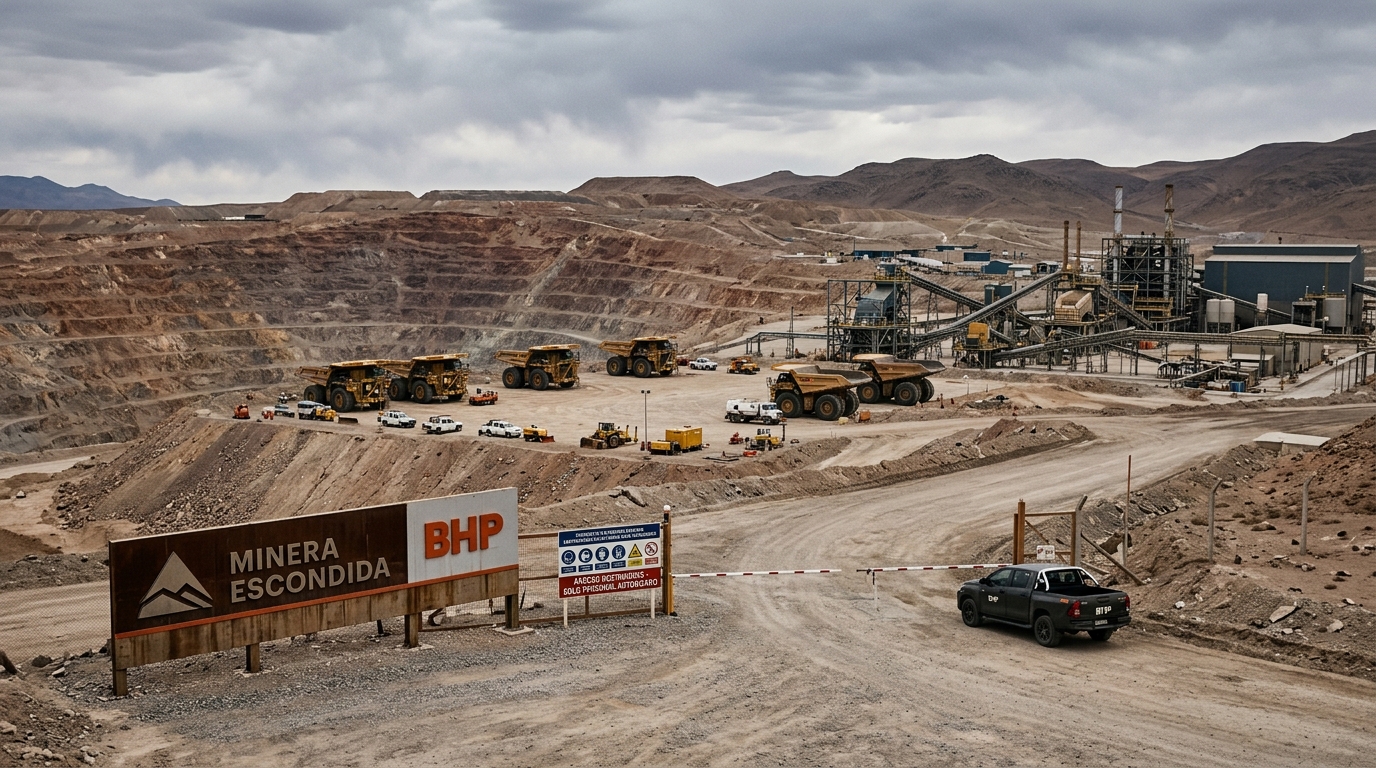
Most traders looked at Escondida last week and saw a headline. The ones who sized it correctly looked at a number: 3,455 metric tonnes per day. That is roughly what the world’s largest copper mine produces, and as of this morning, every one of those tonnes remains offline with no confirmed restart date.
One of BHP’s employees was fatally injured at Escondida on September 23, prompting the company to suspend operational activities at the site. BHP said it is working with local and national authorities in Chile. That last point is the one the market may be underweighting: BHP does not control its own restart timeline.
Metal available in LME warehouses stood at roughly 133,725 tonnes on September 21, representing about 39 days of the halted mine’s output. The shutdown removes approximately 3,455 metric tonnes of copper per day with no restart timeline. Framing it that way transforms a news event into an inventory problem you can actually quantify. Thirty-nine days of cover sounds ample until you factor in what else is hitting supply simultaneously.
Shanghai Futures Exchange copper stockpiles stand at about 47,000 tonnes, near a cyclical low ahead of China’s National Day Golden Week from October 1 to 7. Those holidays are expected to pause restocking by Chinese consumers, creating a temporary lull in physical demand. The disruption magnifies supply pressures further as multiple refineries in China schedule maintenance at the start of the fourth quarter. The lull in Chinese buying is not relief. It is a delay before demand returns into an already thin market.
The labor situation layers another risk on top. Union leadership has already recommended that members reject BHP’s latest offer, with a vote scheduled for September 28 to 30. A strike is considered likely if the proposal is voted down. If workers reject the offer when the contract expires September 30, mandatory mediation lasts five days and can extend by another five before a legal strike is permitted. That calendar matters. Safety clearance and a potential labor stoppage are not the same risk, but they overlap in time.
Against that backdrop, copper prices surged to a COMEX record of $6.95 a pound on September 22, with the industrial metal up nearly 20% year-to-date and more than 46% over the past year. LME copper traded above $14,600 per metric ton on September 21. Any interruption at a single large mine now moves the price, because there is no spare capacity to absorb it.
For traders watching the copper equity complex, the divergence in risk profiles is worth understanding. FCX, SCCO, and Teck remain substantially higher for 2026, supported by supply constraints that are unlikely to ease quickly given multi-year lead times for new mine development. Antofagasta gained 3.17% by the September 21 close as the spot price surged. The equities are pricing continued tightness. The question is whether they are pricing the full duration of this outage or just the first day of headlines.
The trader’s lesson here is about how to measure a supply disruption. Reacting to the word “shutdown” is reactive. Converting that shutdown into daily tonnes lost, then dividing available inventory by that daily rate, is analytical. The outage hit a weaker supply base after Chilean mine production fell 6.6% in the first half of 2026, leaving less domestic supply to offset any single-asset loss. When the buffer is already thin, the duration of an outage matters more than its existence. Count the days, not just the headlines.