
October 8, 2026
When tech giants announce debt to fund AI compute, equity holders are sending a clear signal back.
There is a trade emerging in big-tech AI names, and it has nothing to do with model performance or revenue beats. It is about what the equity market does the moment a company announces it needs to borrow to keep building.
Elon’s $480 Trillion Currency Masterplan
He’s waited 27 years for this moment. Elon Musk just launched his biggest disruption ever, which could totally reset how millions of people access their money and even pay tax.
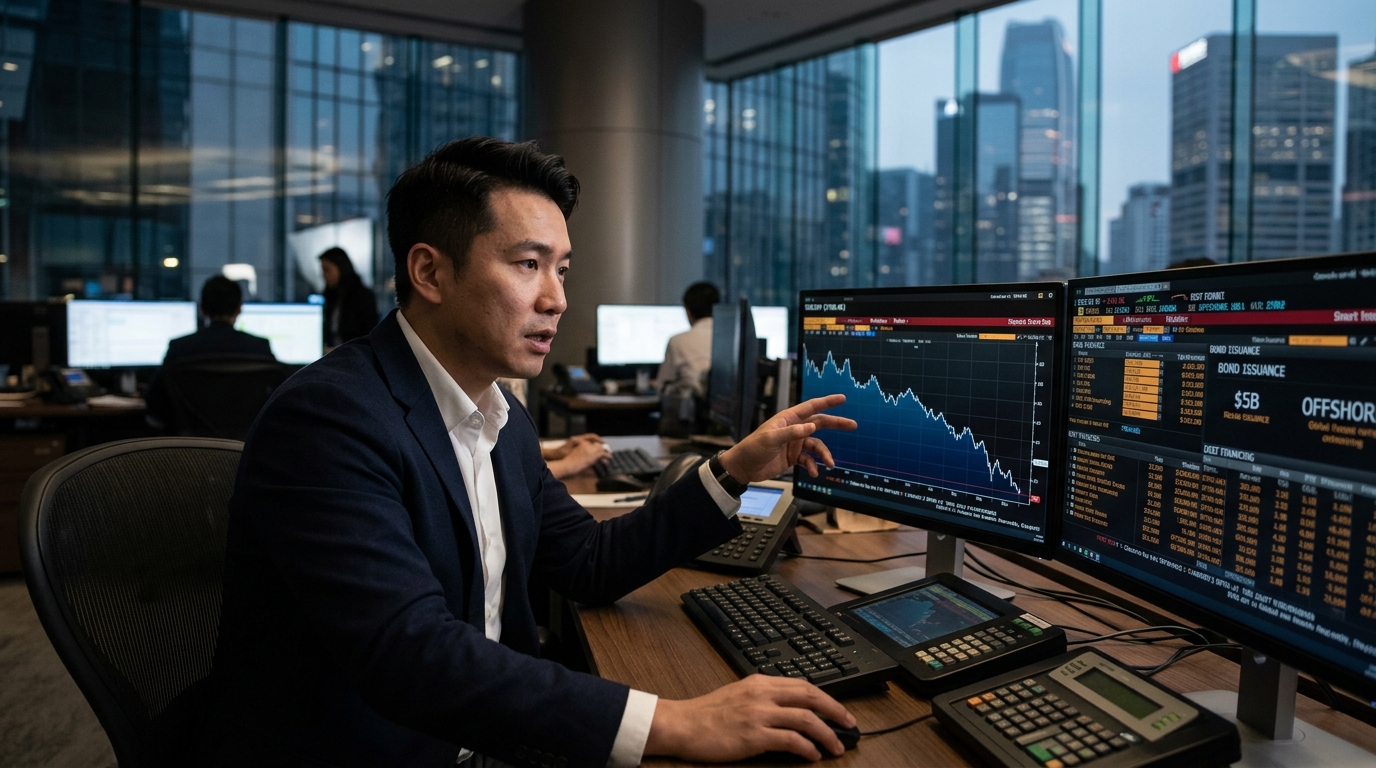
This morning, Bloomberg reported that Tencent (0700.HK / TCEHY) is weighing an offshore bond sale of as much as $5 billion to fund artificial intelligence and computing infrastructure. The company is considering issuing the debt in U.S. dollars and offshore yuan, with a sale potentially coming as early as this month. The market’s reaction was immediate, shares fell 1.57% to HK$414, underperforming the broader Hang Seng Index, which declined 1.3%, as investors weighed the potential increase in borrowing alongside Tencent’s sharply higher AI spending.
That spending is not a rumor. Tencent reported capital expenditure of RMB52.8 billion in Q2 2026, up 176% year over year from RMB19.1 billion in Q2 2025. The potential transaction follows Tencent’s roughly $4.7 billion multi-currency bond deal in June 2026, its largest debt offering since 2020, with proceeds described at the time as mainly for refinancing and general corporate purposes. A second major raise so soon after the first is the detail equity investors appear unwilling to absorb quietly.
Executive Order 14028 Changed How Banks Work
Over 100 U.S. banks are quietly rewriting the rules under Executive Order 14028 – giving Washington new power to track, and potentially freeze, your accounts. It’s sold as cybersecurity. Critics call it control.
The template for this reaction was written last month. Reuters and other outlets described SoftBank’s roughly $11.1 billion high-yield bond deal as a record-setting corporate junk-bond offering, with proceeds tied in part to its OpenAI funding. SoftBank (9984) fell 6.0% to ¥6,296 on October 2, the drop coming right after the final $10 billion tranche into OpenAI went through. The same news that lifted the shares on announcement was re-read, days later, as concentration risk and mounting debt costs. The dollar notes paid 8.625% to 9.75%. That is the price of conviction at this stage of the AI capital cycle.
Tencent’s situation differs in credit quality, it is investment grade, not junk-rated, but the equity signal is consistent. The possible bond sale comes as technology companies increasingly turn to debt markets to finance the enormous capital requirements associated with AI. When that is the backdrop, a fresh $5 billion raise no longer reads as strength. It reads as necessity.
Disciplined traders file this pattern without overcomplicating it. The bond market is open, demand is real, and the capital gets deployed. But equity holders are pricing in dilution of returns, higher interest costs, and the uncomfortable possibility that compute spending at this scale is running ahead of monetization. Tencent reported net profit up 9% year over year in Q2 2026, but for shareholders those figures place the bond plan between two competing signals, resilient core earnings and a much faster rise in AI-related spending.
5 Little-Known Stocks Behind Today’s Defense Tech Shift
Behind the headlines, a major transformation is underway.
Modern warfare is being driven by AI, autonomous systems, and next generation technology. A handful of lesser known companies are helping power this shift.
This report uncovers five stocks quietly playing a critical role in the future of defense.
Watch Alibaba and other large Chinese tech names that have signaled similar infrastructure ambitions. If they announce comparable debt raises, the equity response is now reasonably predictable, and the window between the announcement and the sell-off is where positioning matters.
The Trader’s Lesson
When a company with strong cash generation still needs to borrow heavily to fund a buildout, the equity market is telling you that the return timeline is uncertain. Tencent and SoftBank both had the cash flows. Both chose debt anyway. Both saw their shares fall on the news. Borrowing to buy compute, at this scale, is now a sell signal in the stock, not because the strategy is wrong, but because the market has learned to price the risk before the returns arrive.