

October 27, 2026
Bonus Content: Prediction Markets Put Lula at 20%. Brazil Stocks Pay Up
When news broke overnight about China’s Moonshot AI unveiling its new model…

The market gapped down 1% before most traders even poured their morning coffee…
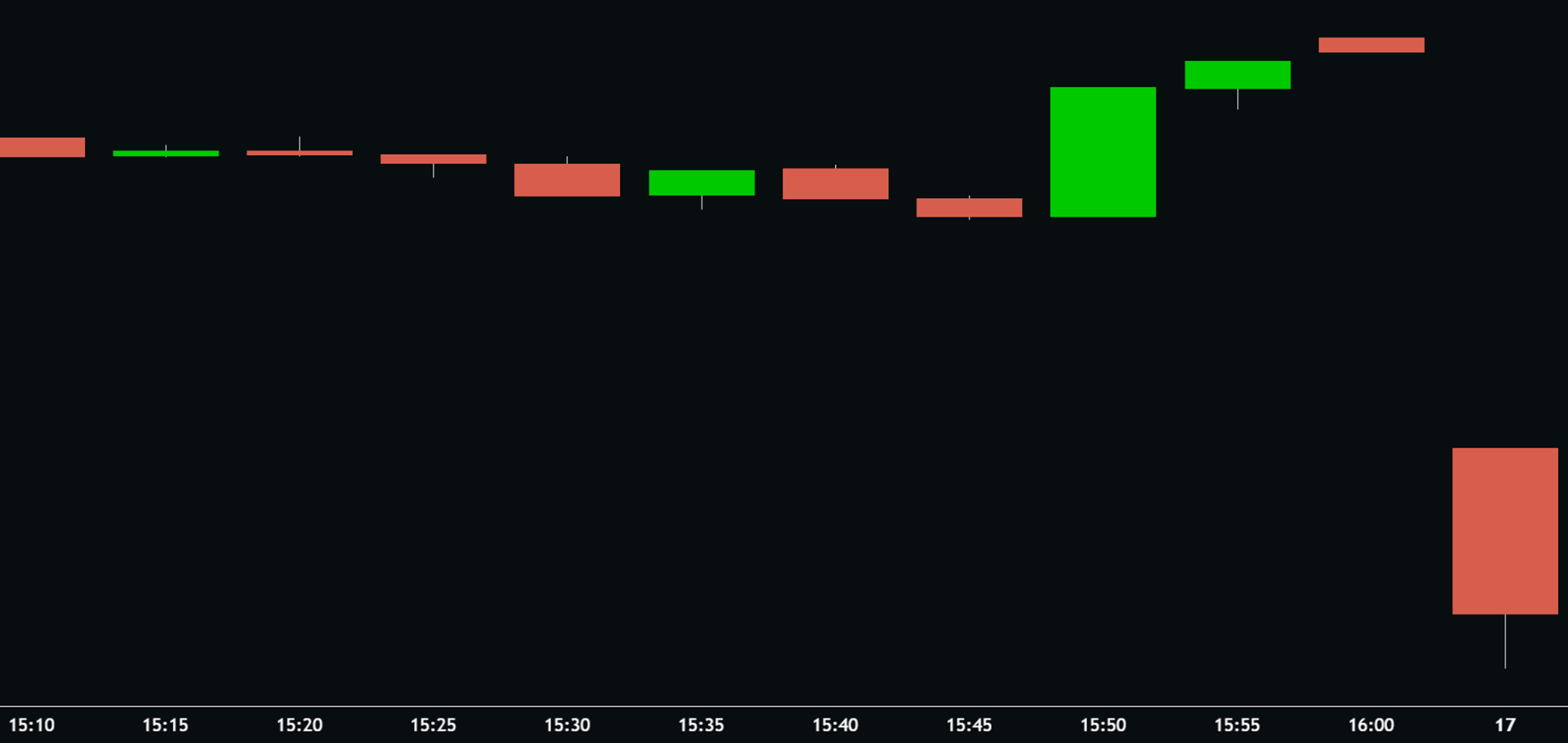
For standard portfolios, it looked like the start of another stressful day…
And over the next two hours, the market barely crawled higher… moving a tiny 0.2%…
To traditional buy-and-hold investors, a 0.2% move is practically useless…
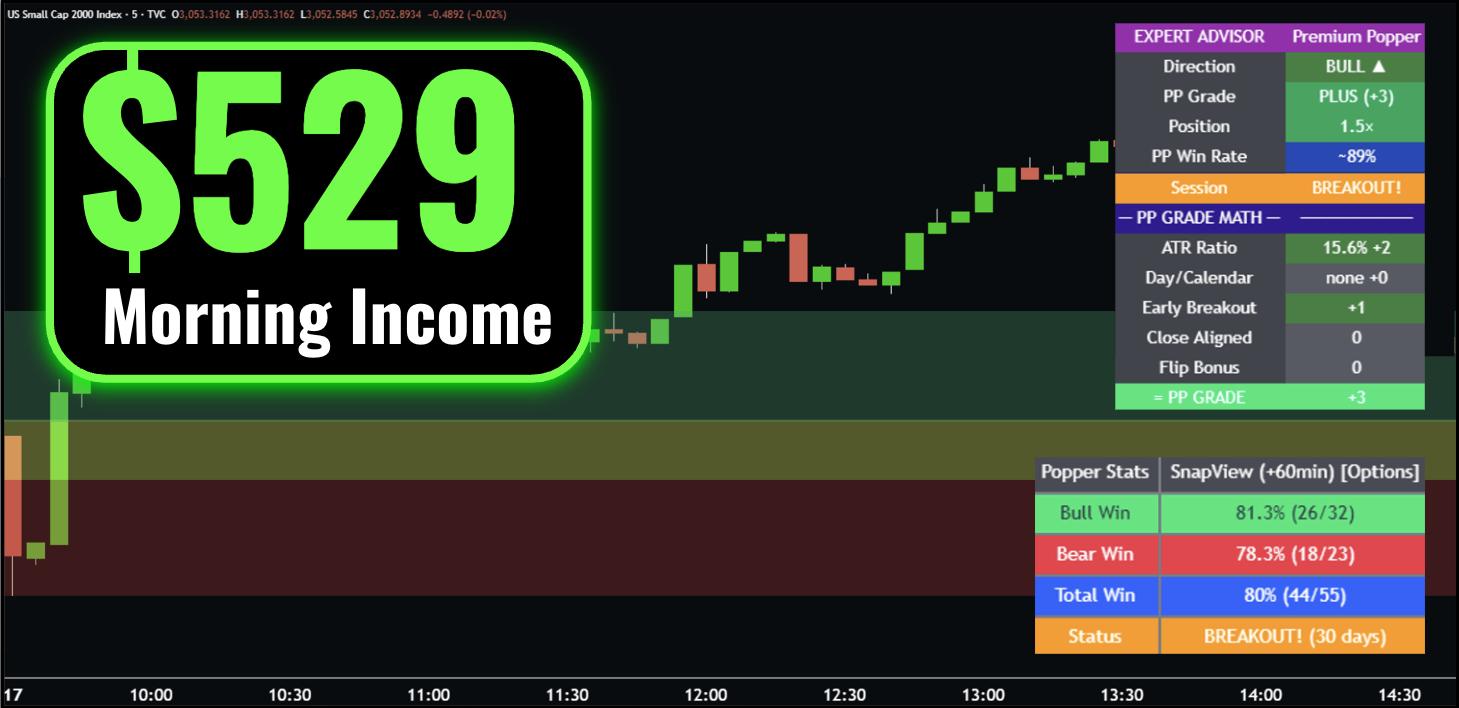
Yet, according to our research, anyone who ignored the overnight headlines and waited until exactly 9:50 AM Eastern could have locked in a $529 payout before lunchtime… on a simple $1,000 starting stake…
That would not have been an isolated fluke either…
Back on June 25th, when inflation surged past 4%…
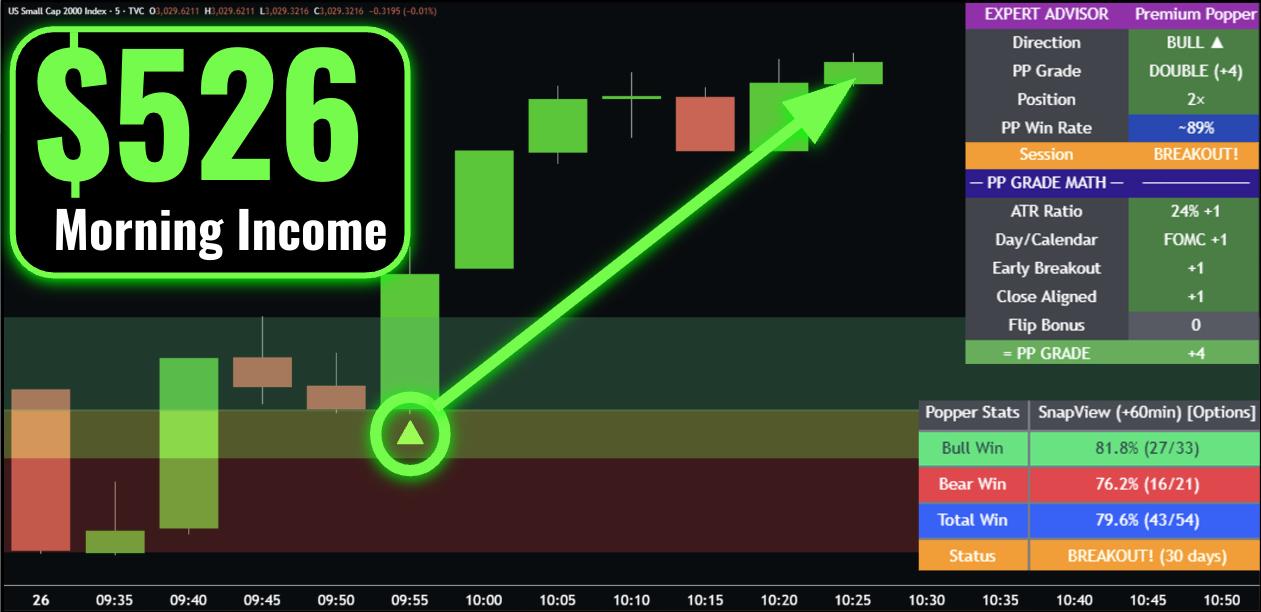
And panicked investors expected a massive market beatdown… the market moved just 0.3% after the open… yet that exact same morning setup yielded another $526 payday before lunch…
Of course, there would have been smaller gains and some that did not work out, but…
How would it have been possible to pull $500+ out of the market on a tiny fraction-of-a-percent crawl… while traditional traders are getting chopped to pieces?
It all comes down to an institutional phenomenon that happens during the first 20 minutes of every trading day…
Between 9:30 AM and 9:50 AM, Wall Street heavyweights enter a massive brawl to settle block orders… pushing nearly 25% of the entire day’s volume into a brief 20-minute window…
Right around 9:50 AM, the brawl ends… the dust settles… and the market literally hands us its direction for the rest of the morning…
By placing just one simple trade on one ticker right as that direction becomes clear…
You give yourself a shot to walk away with $500 in hand before lunch, leaving you completely free for the rest of your day…
While I cannot make any guarantees in the market…
Recently, I sat down live on camera with a former money manager to lay out the floor data behind this 9:50 AM morning phenomenon…
And how anyone with a normal brokerage account can take advantage of this step-by-step…
Tap here to watch the complete video breakdown before access is taken down.
See you there,
Silas Peters
Prediction Markets Put Lula at 20%. Brazil Stocks Pay Up

The morning-of price on Polymarket was clear: Flávio Bolsonaro at roughly 80%, Lula at roughly 20%. By Sunday night, those contracts were worthless. The lesson for traders watching Brazil open today is not about politics. It is about what happens when a market consensus price is built on positioning rather than probability.
As of early October 25, Polymarket and Kalshi were still leaning heavily toward Bolsonaro, with Lula priced as the clear underdog. That was not a fringe view. It reflected weeks of capital flows into Brazilian risk assets after Bolsonaro’s stronger-than-expected first-round performance. The Ibovespa had rallied sharply after the first round, and investors had been treating a Bolsonaro victory as the market-friendly outcome, with expectations he would cut fiscal spending and create conditions for interest-rate cuts. The prediction market price and the equity market price were telling the same story. Both were wrong.
What the Overnight Reaction Tells You
Lula received 51.8% of the vote in the runoff, defeating Bolsonaro, who received 48.2%, securing a fourth term. The verdict from offshore markets was immediate. Real futures tied to CME pricing fell about 10% on Sunday evening. A Tokyo-listed ETF tracking Brazilian equities fell sharply in Asian trade on the result. By early Monday, shares of Petrobras plunged roughly 22% in premarket trading. Banking stocks were hit hard, with Itaú Unibanco, Banco Bradesco, and Nu down between 23% and 29%.
That scale of move does not happen in a market that was genuinely pricing 20% Lula odds. A true 20% probability implies investors had already sized for the scenario and hedged accordingly. The gap-down across PBR, VALE, ITUB, NU, and EWZ says the opposite: the market was crowded long, priced for a Bolsonaro win, and caught nearly flat-footed.
Why Prediction-Market Odds Failed Here
This is the structural problem worth studying. Polymarket’s Brazil election markets drew heavy volume into the vote, which sounds like deep liquidity. But Brazilian voters number in the tens of millions, and late-breaking shifts can move the final count in ways that do not show up in time inside a trade-driven market. Prediction markets are not immune to recency bias; they aggregate the same information asymmetries that affect every other market.
Goldman Sachs had flagged an extreme scenario in which USD/BRL could move about 10%, long-term government bond yields climb about 200 basis points, credit spreads widen 30 to 40 basis points, and Brazilian stocks fall 15%. After Sunday night’s shock, that scenario is no longer being treated like tail risk.
What Comes Next
This is the first full trading session since Lula secured a fourth term, and the market’s entire focus is on what that means for the public finances. Markets have been concerned that Lula may be reluctant to pursue the fiscal austerity measures investors believe are necessary to bring down interest rates and strengthen Brazil’s public finances, raising concerns about the country’s fiscal outlook and implications for monetary policy.
The 205,000-point area from Friday’s Ibovespa close is the immediate pivot, with 200,000 as the next psychological floor. Dollar investors in Brazil’s ADRs, such as PBR, VALE, ITUB, and NU, or in EWZ, face gap risk as markets reopen. Watch where the real holds relative to R$5.00. Bolsonaro is also seeking to have the result annulled, arguing the rules changed at the last minute when voting hours were extended, which adds a layer of political uncertainty that could weigh on sentiment well past today’s open.
Brazil is not the only market where political consensus pricing has run ahead of actual probability. German equities have shown a similar pattern, with DAX and EWG largely failing to price the AfD’s consecutive state-election victories.
The Trader’s Lesson
When a prediction-market price and an equity-market price are telling the exact same story at the same time, they are probably reflecting the same crowded trade rather than two independent signals. The 80% Bolsonaro odds were not a reason to size up on Brazilian equities. They were a reason to ask what the other 20% looked like and whether you could afford it. Today’s session answers that question in real time. The cost of ignoring a 1-in-5 risk, when that risk lands, is not a 20% loss. It is a gap that has no floor until the first live trade shows up.