
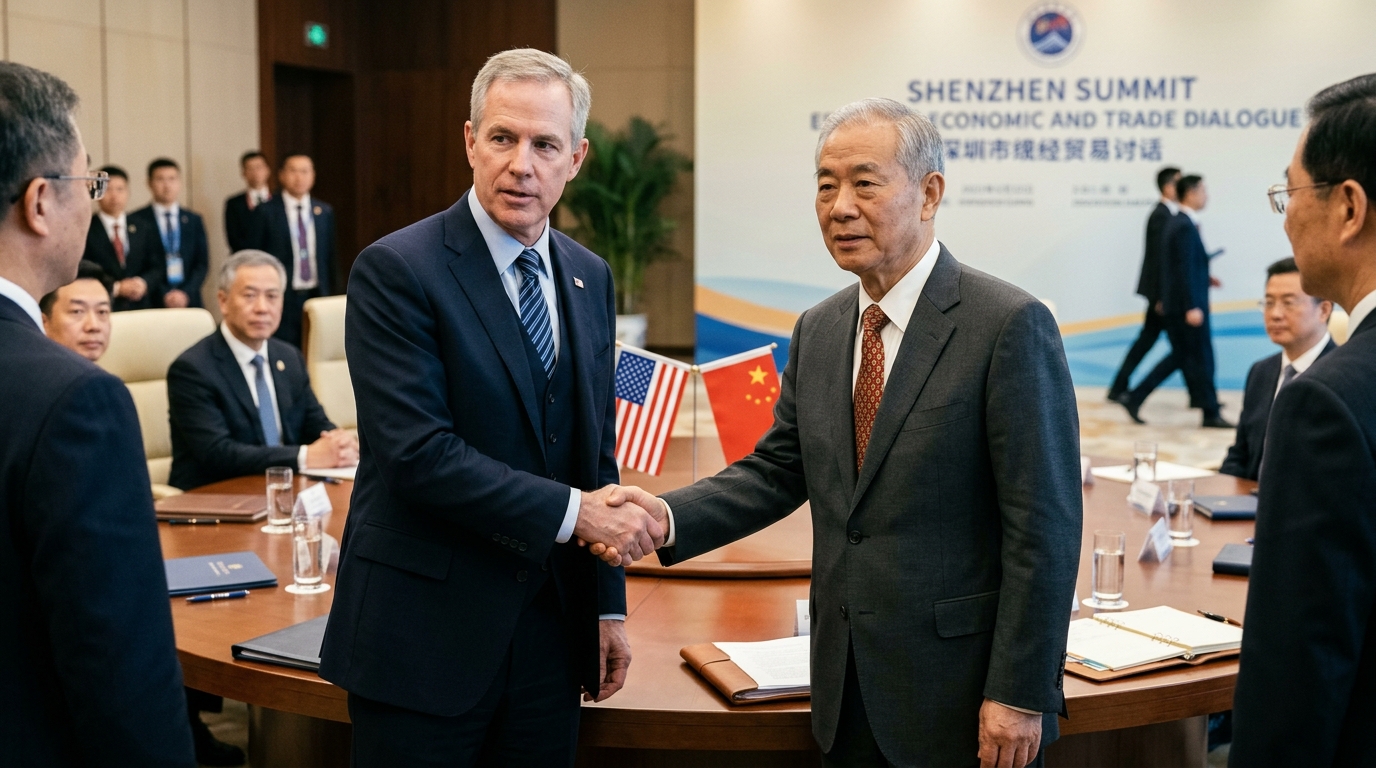
Markets rarely hand traders a clear schedule of risk events. This week they did. The APEC Economic Leaders’ Meeting is set for November 18-19 in Shenzhen, and Secretary of State Marco Rubio held a phone call with Chinese Foreign Minister Wang Yi on Wednesday to finalize preparations for the Trump-Xi meeting. In Washington in September the two sides agreed a two-month extension of a trade truce to January 10, 2027, but disputes over tariffs, Chinese purchases of US goods, rare earth exports, and technology restrictions remained unresolved. Every one of those disputes has a ticker attached to it.
The January 10 Clock
China extended the suspension of newly introduced export controls on certain rare earths and other strategic materials until January 10, 2027, preserving another part of the trade understanding reached between Xi and Trump. That is not a resolution. China’s Ministry of Commerce published the notice on November 9, a day before the original suspension was due to expire, and did not publicly explain why it chose a two-month extension. Two months instead of another full year tells you something: Beijing is keeping leverage available, not giving it away.
China processes and separates about 90% of global rare earth elements, so the rollover buys time without altering the structural dependency of US defense and consumer electronics manufacturers on Chinese exports. The extension also lands close to the Pentagon’s January 1, 2027 DFARS effective date that tightens restrictions covering certain magnets and related materials from China in defense procurement. Those two deadlines are not coincidental. They are the reason Shenzhen matters beyond the photo opportunity.
What Each Scenario Means for Stocks
Scenario one: Shenzhen produces a framework agreement that pushes the rare-earth suspension further out or converts it into a longer-lasting waiver. MP Materials and Lynas Rare Earths could cool off on that outcome. The Pentagon is positioned to become MP Materials’ largest shareholder and the Department of Defense has committed to a $110 a kilogram price floor for NdPr for ten years, which limits downside, but speculative premium built on supply-chain urgency evaporates fast when the urgency appears to ease. Non-Chinese processors such as Lynas similarly benefit from continued uncertainty as US and allied buyers seek to diversify regardless of the January 2027 goals. Resolution reduces that urgency for buyers sitting on the fence.
Scenario two: talks stall or produce only vague language. MP Materials and Lynas have already been volatile, and both have room to extend those moves if the January deadline starts to feel genuinely consequential to procurement teams. Watch volume in MP in the final two weeks of December if Shenzhen delivers nothing concrete.
Nvidia and the Harder Problem
Rare earths are legible. The Nvidia situation is not. Nvidia’s board has opened an independent investigation after CEO Jensen Huang acknowledged an extramarital relationship with a woman U.S. officials have described as a suspected Chinese intelligence operative. Nvidia has also lost hundreds of billions of dollars in market value in the early days of the controversy, but the exact figure has varied sharply by day and by how different outlets measure the move. That is not a geopolitical story dressed up as a corporate one. It is a governance crisis that happens to sit at the intersection of US-China tech competition, and the Shenzhen summit will not resolve it.
Reports have tied the relationship to a wider set of questions about alleged chip diversion to China and have intensified scrutiny from lawmakers and regulators, while the company leans on the board-led investigation and outside counsel to navigate what comes next. Trump and Xi can agree on rare earths in Shenzhen and Nvidia’s problem persists regardless, because Huang co-founded the company in 1993 and has remained at the center of its product strategy, and how the board handles any transition could shape the company’s direction well beyond the current controversy.
The governance question compounds a structural shift already underway at Nvidia. Nvidia backing a 20-year OpenAI data center lease as guarantor means the board’s decisions now carry obligations well beyond chip sales.
The Trader’s Lesson
Diplomacy creates windows, not certainties. The presidents of the US and China are set to meet at next week’s APEC summit, but observers have cautioned that few tangible bilateral deliverables may emerge from their talks. That means the January 10 deadline remains live regardless of the Shenzhen optics. Experienced traders do not position for the headline. They position for the specific mechanism: in this case, whether rare-earth export-control waivers get extended again in early January or quietly allowed to lapse. Watch what China’s Commerce Ministry publishes in the first week of January, not what the two presidents say next Wednesday in Shenzhen. The meeting sets the mood. The ministry notice sets the trade.