
September 15, 2026
Bonus Content: Lilly’s $15B Quarter Is Just the Opening Act
If you still haven’t downloaded Your First Trade Playbook…
…please take a few seconds and download it right now before your temporary download link expires.
Most beginners stay stuck on the sidelines for years because nobody shows them the simple steps between “interested in options” and actually placing a trade.
This playbook fixes that in one evening.
I eventually plan to charge for it, so do yourself a favor and download it now…
That way, no matter how much it costs in the future, you’ll have a copy on your computer already.
Make sense?
FREE: Your First Trade Playbook << Download Now
Good Trading,
Bill Poulos
P.S. Go here to save a copy of Your First Trade Playbook to your computer before I start charging for it.
Lilly’s $15B Quarter Is Just the Opening Act
Here is the number that reframes everything else: Mounjaro and Zepbound together generated about $14.9 billion in a single quarter, on volume that grew 60% year-over-year even as realized prices fell 13%. That is not a pricing story. That is a demand story, and the distinction matters enormously for how traders should think about LLY from here.
Q2 2026 revenue hit $23 billion, up 48% from a year earlier, and Lilly raised its full-year guidance to $85 billion to $87 billion. Those are the headline figures. The more instructive ones sit beneath them.
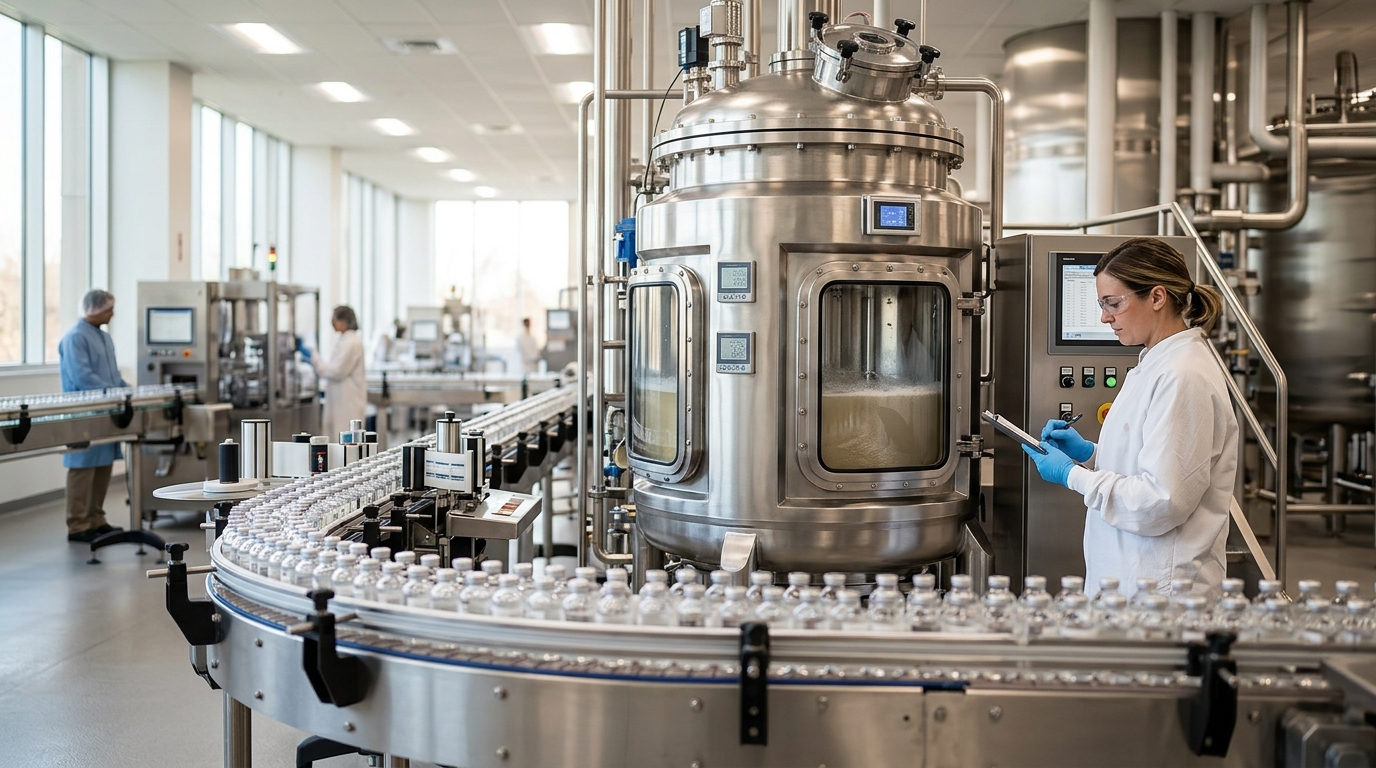
Demand is no longer constrained by manufacturing the way it was in 2023 and 2024. The FDA removed tirzepatide injection products from its drug shortage list on October 2, 2024. What replaced the shortage problem is a distribution question: how does Lilly push volume into 40-plus international markets when its current injectable infrastructure was built for a smaller business?
The answer is already in motion. In March, Lilly committed $3 billion to China over the next decade, focused on building local manufacturing for orforglipron, its oral small-molecule GLP-1. A €2.6 billion facility in the Netherlands is targeting the same molecule for European supply. New API sites in Texas and Alabama, announced as part of Lilly’s 2025 domestic manufacturing buildout, are intended to anchor domestic production against tariff risk and feed a product line that no longer fits inside a few Indiana facilities.
This morning at the Morgan Stanley Global Healthcare Conference, management confirmed Lilly expects more than 40 international markets for Foundayo, the FDA-approved daily oral pill, by 2027. Early international launches, including in the UAE and the UK, are positioning it as a way to expand the patient base rather than simply pull patients away from Zepbound injections. That is the cannibalization concern the market has priced in, and so far the evidence pushes back on it.
Retatrutide, the triple-hormone agonist that activates GIP, GLP-1, and glucagon receptors, sits just ahead of all this. Five Phase 3 trials have read out positively. Lilly plans to file for FDA approval in Q1 2027. At 80 weeks on the highest dose, 65.3% of trial participants dropped below a BMI of 30. That kind of efficacy, if it holds commercially, is a product that expands the addressable market rather than simply trading share within it.
The trader’s lesson is about patience with valuation. LLY trades at a forward multiple that remains elevated by traditional pharma standards. But the pipeline behind the current franchise is what justifies watching the stock closely rather than dismissing it on a multiple alone. Foundayo is distributing into a system already built for Zepbound. Retatrutide arrives into that same system in 2028 if the filing goes on schedule. The capacity being built today is the ceiling for revenue two and three years out.
Relative strength into a Morgan Stanley conference appearance, combined with guidance raised twice already in 2026, tells disciplined traders one thing: the business is running ahead of consensus, not behind it. That does not make the entry easy, but it makes the story worth tracking at every pullback.