
October 4, 2026
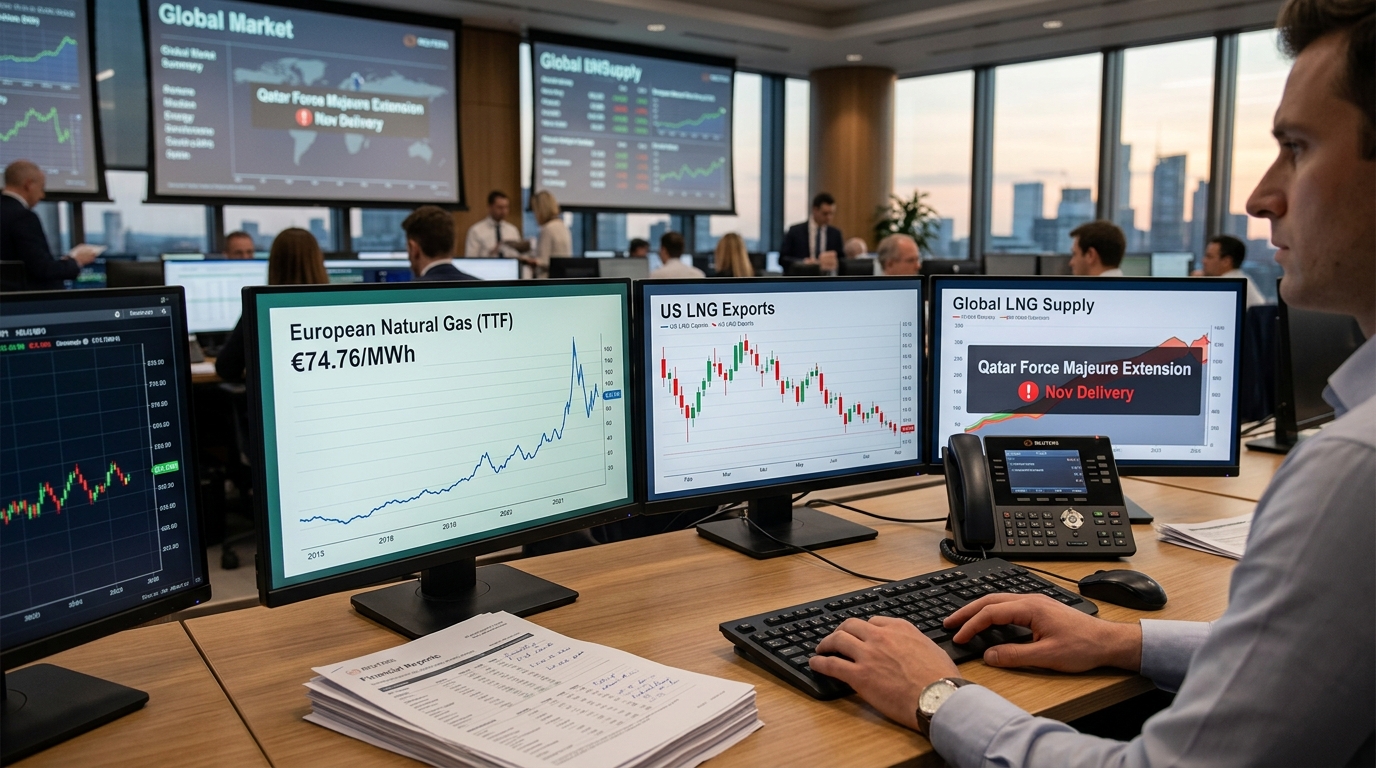
Bonus Content: European Gas at €74.76 Tells US Traders Something Important
At a time when copper demand is growing, a long-dormant copper property is about to thrust one little-known mining company into the spotlight.
It’s all happening in Canada’s Yukon territory, an area with a rich mining history and the kind of infrastructure and friendly regulatory environment that mining companies fight tooth and nail for.
In the case of copper mining, there is one area that has more than a century of history with past production of over 265 million pounds and yet there’s still more to be discovered.
And it couldn’t have happened at a better time.
Countries need copper to build their power grids and move away from fossil fuels.
Tech giants need copper to power their data centers.
And new mines just aren’t coming online at the pace they need to in order to keep up with that kind of surging demand.
It’s a reality the market is only just beginning to wake up to, and that fact is showing up in the price of copper as it marches steadily toward new all-time highs.
Since the process of bringing a mine online and getting the metal out of the ground is so intensive, the few companies capable of doing it are the ones in line to drive returns as more nations and corporations scramble to secure copper supply.
One mining company with assets in that storied Yukon territory is perfectly positioned to seize the opportunity to become a leading name in the copper mining industry thanks to district-scale projects that have produced exceptional results in the past.
Some of these areas haven’t been explored or drilled in over 40 years because of price collapses. But with demand resurging and mining technology having advanced in the time since, now is the time for this area to come back into the conversation.
Results so far have already been promising. Recent results have turned up thick, continuous zones of mineralization that have not only confirmed what past drillers knew, but have expanded beyond that and into new territory.
So this company is only just getting started.
Thanks to its robust treasury, experienced leadership, and ongoing work, it’s well-positioned to profit from rising copper demand into the foreseeable future.
Now’s the perfect time to buy in before more traders become aware of it.
You can learn more about how to do that in our brand-new FREE report where we go over the company, its history, its current assets, and its plans for the future in the unfolding copper bull market.
Click here to access the report now, before time runs out and more people learn about this opportunity.
European Gas at €74.76 Tells US Traders Something Important
Qatar just extended its LNG force majeure into November, and what that means for anyone trading US equities deserves more than a passing glance at an energy headline.
QatarEnergy has extended force majeure on LNG shipments to Asia and Europe into November, with Pakistan, Bangladesh, India, and Italy’s Edison among the buyers affected. The extension brings the total force majeure period to roughly seven months, impacting about 29 cargoes and representing around 3.8 billion cubic metres of gas.
The disruption traces to missile strikes on Ras Laffan Industrial City in March 2026 that damaged parts of Qatar’s LNG and gas-to-liquids infrastructure. Shell, a partner in Qatari LNG ventures, has said repairs to some damaged facilities could run into the first quarter of 2027.
The market is pricing this accordingly. EU gas rose to €74.76 per MWh on October 2, up 1.11% from the prior day. European storage facilities were around 71% full recently, below the five-year seasonal norm in the mid-to-high 80s.
Why This Matters to US Stock Traders
At face value, Dutch TTF natural gas pricing looks like a European utility problem. It is not. The transmission channels into US equities are real and already active.
Start with Cheniere Energy. The company raised its full-year 2026 financial guidance after posting record LNG export volumes in the first quarter, exporting a quarterly record 187 cargoes from its Gulf Coast facilities, up 11% year-over-year. With Persian Gulf LNG flows still disrupted, the void is being filled elsewhere, and US exporters are at the front of that queue.
Cheniere has said it delivered roughly a quarter of the EU’s annual LNG imports in recent years, and that kind of share can matter at the margin when Europe is paying up for flexibility.
Then consider the cost side. BASF, one of the world’s largest chemical producers, is locked into a long-term LNG supply deal with Cheniere running through 2043, with deliveries expected to begin in mid-2026. Analysts have warned that disruptions out of the Middle East can push up global LNG prices, increase supply pressure in Asia and Europe, and boost demand for alternative suppliers, including the United States. When energy-intensive European manufacturers face input costs doubling in a year, they compress margins, reduce output, and lose competitiveness against US peers. That is a relative earnings story, and it is unfolding now.
The Hedging Pause Is the Real Signal
Goldman Sachs’ commodities team flagged something that should command attention. In a recent Goldman Sachs note and interview-style research update, one of their analysts described speaking to European industrial clients and investors throughout this conflict and said hedging has somewhat paused. The higher price forecast, Goldman said, reflects the need for demand destruction caused by the recent rally to continue through the coming months.
Think about what that means structurally. Industrial users are entering the coldest months of the year without forward cover because prices are already high enough to make locking in feel like a trap. Goldman estimates that assuming average winter temperatures, inventories will be only 19% full by end of March 2027, and that a winter one standard deviation colder than average could push its average winter price forecast up by around 75%.
This is not hedgers expressing a bearish view. This is paralysis, and paralysis in front of a supply cliff is how disorderly moves begin. Goldman has warned that if Persian Gulf exports stay very low, prices would need to go above €100 per MWh in peak winter to destroy enough demand outside of Europe.
What Comes Next
Cheniere deserves continued attention as the structural alternative supplier while repairs in Qatar drag toward 2027. On its first-quarter 2026 results, CEO Jack Fusco highlighted continued development and expansion work across Sabine Pass and Corpus Christi, and the demand backdrop supports that posture. European utilities including Uniper and Engie face a winter where their own input costs are rising steeply. That pressure feeds through to earnings, to policy, and eventually to broader market sentiment about the durability of European economic recovery.
The Strait of Hormuz remains partially passable but far from normal. US government energy data has estimated that about one-fifth of global LNG trade transits the Strait of Hormuz in a typical year. Any escalation there changes pricing fast.
The Trader’s Lesson
A commodity moving 138% in twelve months is not background noise. The lesson from today is about second-order thinking: the price is already in the data, but the downstream consequences for industrial margins, utility earnings, and US exporter volumes are still being priced. When a market as important as European gas shows institutional buyers refusing to hedge into their highest-risk season in years, that is information about expected volatility, not just about gas. The disciplined response is to map the exposure before the volatility arrives, not after.