
When news broke overnight about China’s Moonshot AI unveiling its new model…

The market gapped down 1% before most traders even poured their morning coffee…
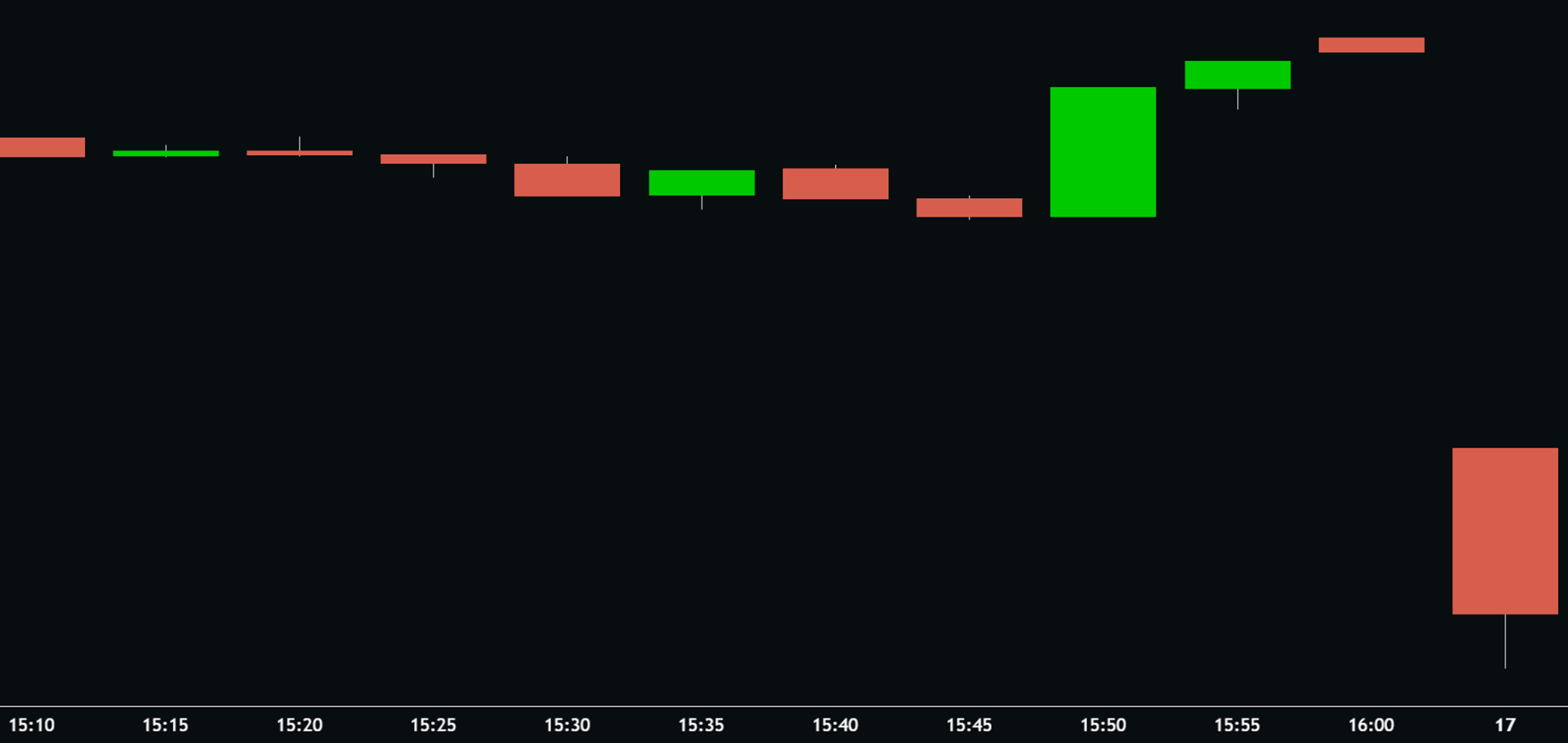
For standard portfolios, it looked like the start of another stressful day…
And over the next two hours, the market barely crawled higher… moving a tiny 0.2%…
To traditional buy-and-hold investors, a 0.2% move is practically useless…
Yet, according to our research, anyone who ignored the overnight headlines and waited until exactly 9:50 AM Eastern could have locked in a $529 payout before lunchtime… on a simple $1,000 starting stake…
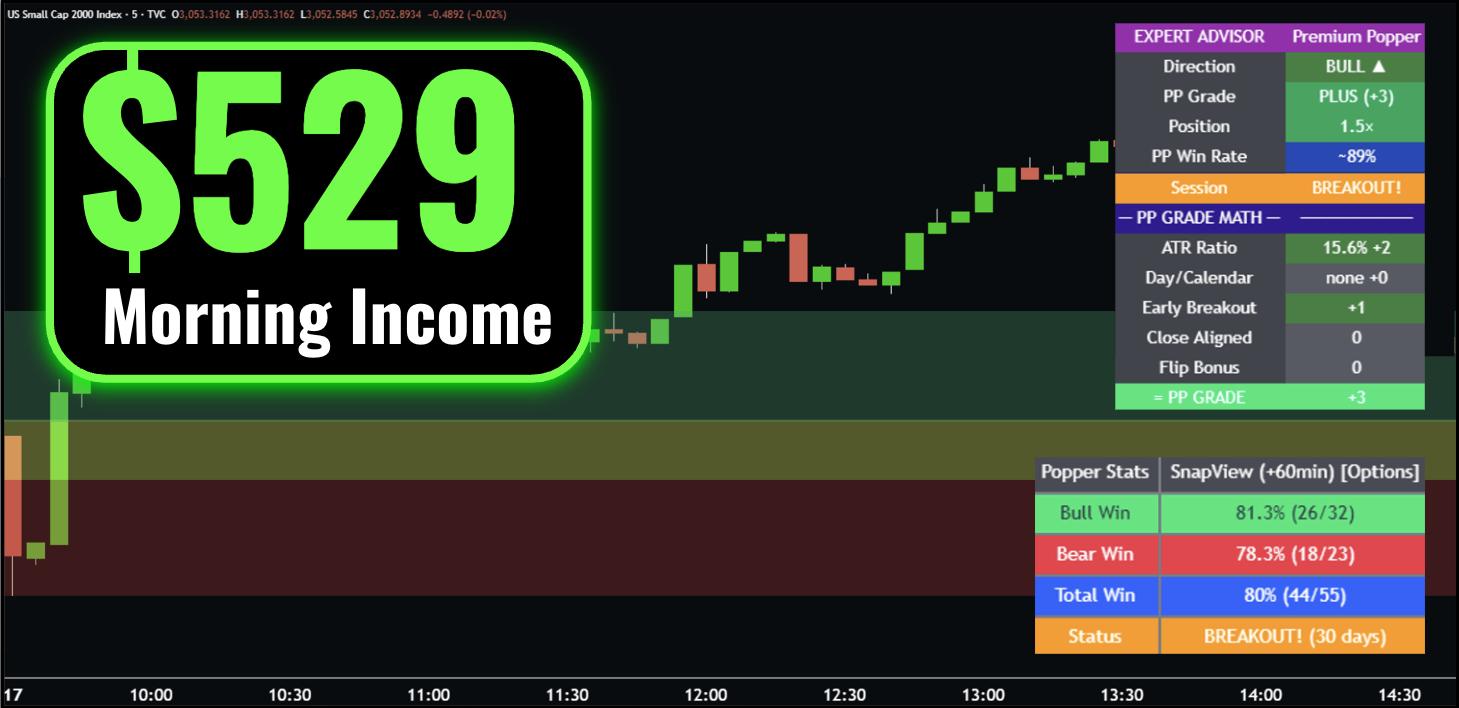
That would not have been an isolated fluke either…
Back on June 25th, when inflation surged past 4%…
And panicked investors expected a massive market beatdown… the market moved just 0.3% after the open… yet that exact same morning setup yielded another $526 payday before lunch…
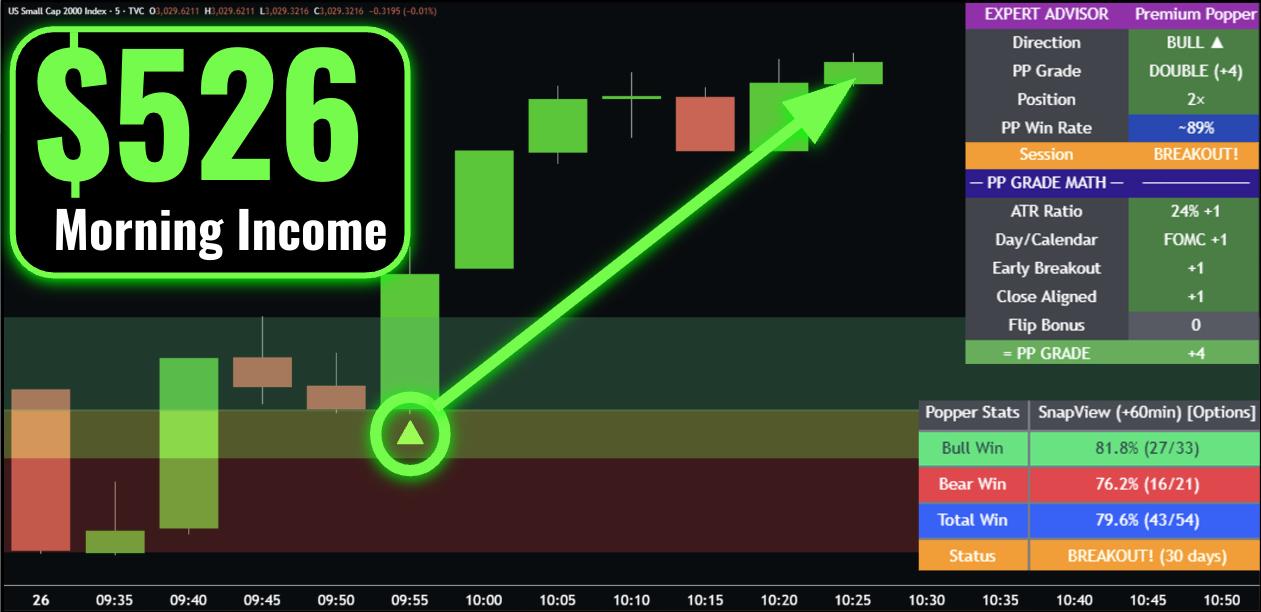
Of course, there would have been smaller gains and some that did not work out, but…
How would it have been possible to pull $500+ out of the market on a tiny fraction-of-a-percent crawl… while traditional traders are getting chopped to pieces?
It all comes down to an institutional phenomenon that happens during the first 20 minutes of every trading day…
Between 9:30 AM and 9:50 AM, Wall Street heavyweights enter a massive brawl to settle block orders… pushing nearly 25% of the entire day’s volume into a brief 20-minute window…
Right around 9:50 AM, the brawl ends… the dust settles… and the market literally hands us its direction for the rest of the morning…
By placing just one simple trade on one ticker right as that direction becomes clear…
You give yourself a shot to walk away with $500 in hand before lunch, leaving you completely free for the rest of your day…
While I cannot make any guarantees in the market…
Recently, I sat down live on camera with a former money manager to lay out the floor data behind this 9:50 AM morning phenomenon…
And how anyone with a normal brokerage account can take advantage of this step-by-step…
Tap here to watch the complete video breakdown before access is taken down.
See you there,
Silas Peters
DHL Lifted Its 2026 Profit Target Above €7 Billion. Here Is What That Tells Traders.
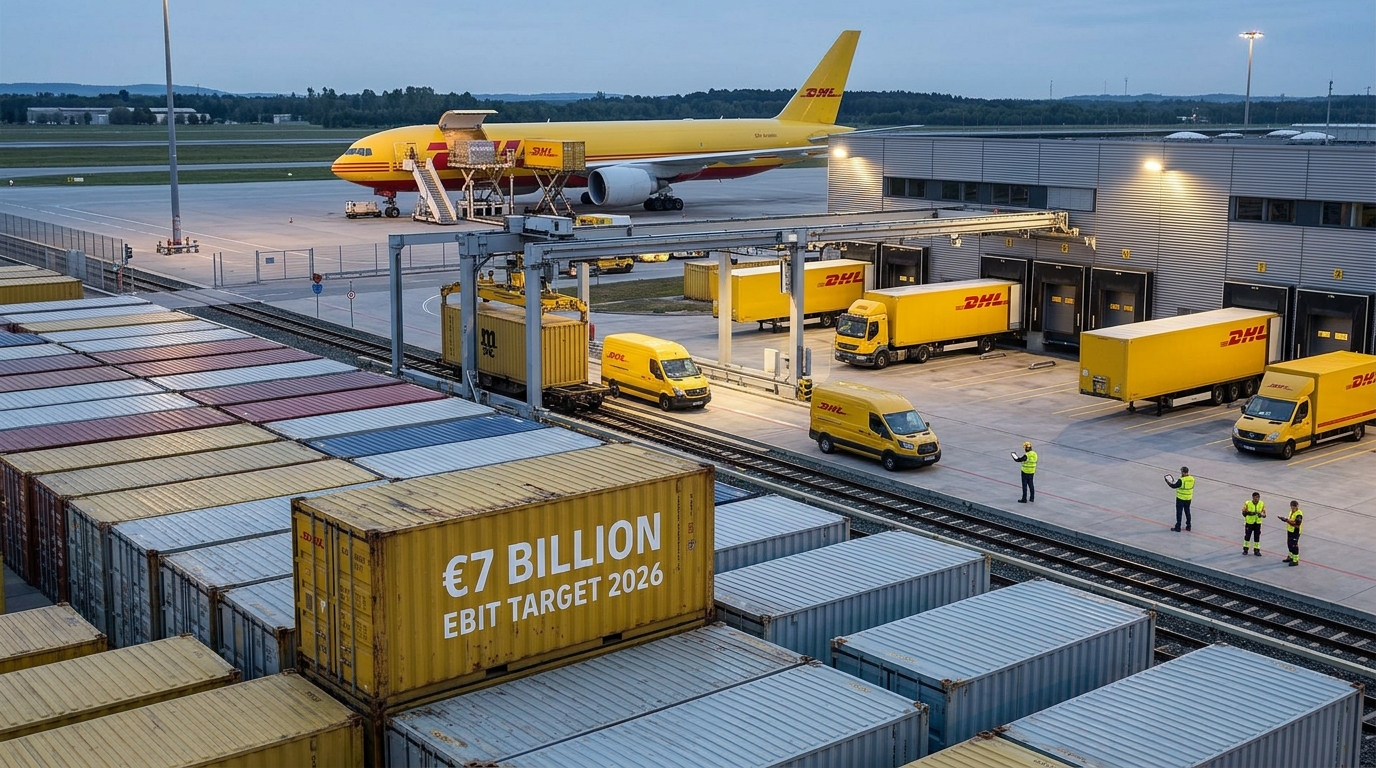
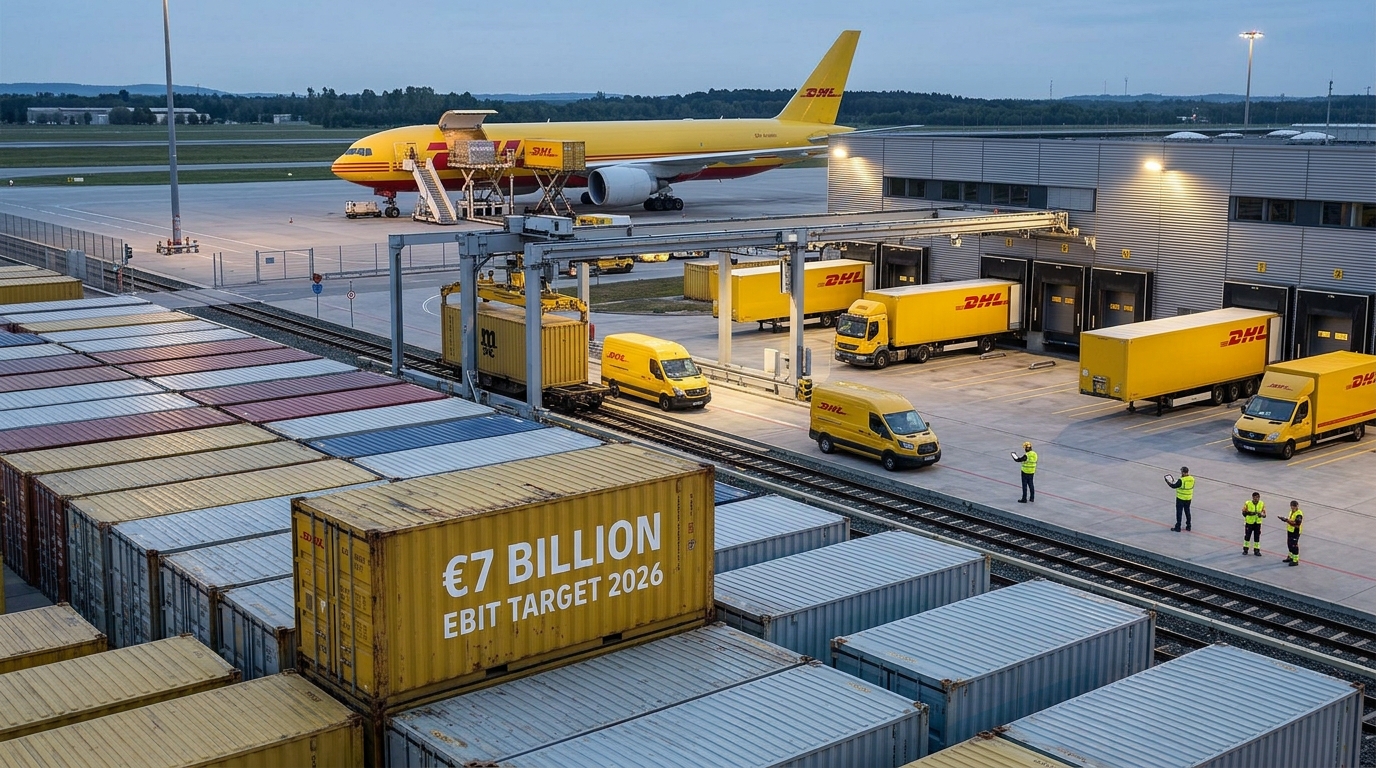
One number from Friday’s European close deserves more attention than it got in most US-focused feeds. DHL Group raised its full-year 2026 reported EBIT target to above EUR 7.0 billion, up from its prior guidance of more than EUR 6.5 billion, citing ongoing earnings momentum within its Express division and indications of a robust seasonal peak in Q4. That is a half-billion euro revision, and it did not come from financial engineering. It came from volume.
Business development in Q3 showed broad-based growth in demand, with group revenue rising more than 12% year over year to around EUR 22.6 billion, and group EBIT reaching approximately EUR 1,710 million compared with EUR 1,477 million a year earlier, a gain of around 16%. DHL Express alone posted EBIT of around EUR 1.035 billion in the quarter, versus EUR 692 million the prior year. The improvement was driven by yield and cost measures, operating leverage from weight growth, and limited support of around EUR 100 million from capacity constraints in the air freight market.
Now set that against what US carriers have reported. UPS said average daily package volume in its global small package operations fell in both Q2 and the year-to-date period, hurt by planned customer reductions, revenue quality actions, and the impact of trade policy changes on certain international trade lanes. Trade policy changes, including de minimis exclusions, have weighed on parts of the China to US lane for carriers including UPS. FedEx is scheduled to report earnings on October 28, 2026, and some analyst consensus snapshots currently point to roughly mid-single-digit to low-double-digit year-over-year EPS pressure, with estimates around $3.45 per share in some previews.
The divergence here is instructive. DHL operates a genuinely global Express network with heavy cross-border exposure. Its results suggest that international air freight and time-sensitive parcel demand are not falling apart, whatever the headline tariff count implies. What is actually struggling is US domestic parcel volume, where UPS deliberately reduced volume from its largest customer and where de minimis rule changes have reshaped parts of cross-border e-commerce flows. Those are structural shifts, not a global demand collapse.
Disciplined traders separate the signal from the category. Seeing “logistics” in a headline and treating all carriers as one trade is sloppy. DHL’s upgrade says cross-border Express demand is fine. UPS’s pressure says parts of small-parcel, particularly lower-yield e-commerce, are under real pressure. Both things can be true at the same time.
DHL also lifted its free cash flow outlook to more than EUR 3.2 billion from around EUR 3.0 billion, and raised its capex target to around EUR 3.6 billion, citing selected opportunities amid ongoing business dynamics. Companies do not raise capex when they expect volume to evaporate. That is a forward commitment worth noting heading into the Q4 peak.
The Trader’s Lesson
When a macro theme like tariffs hits a sector, the market often applies a single outcome to every name in it. The gap between DHL’s guidance raise and the pressure on US carriers is a reminder that sector-level thinking is a starting point, not a conclusion. Before fading or chasing anything labeled “logistics,” ask which specific trade lanes, volume types, and customer mixes are actually exposed. The answer is rarely the same across two companies in the same industry. The traders who do that work first are the ones who avoid buying the wrong dip or shorting the wrong strength.