
October 24, 2026
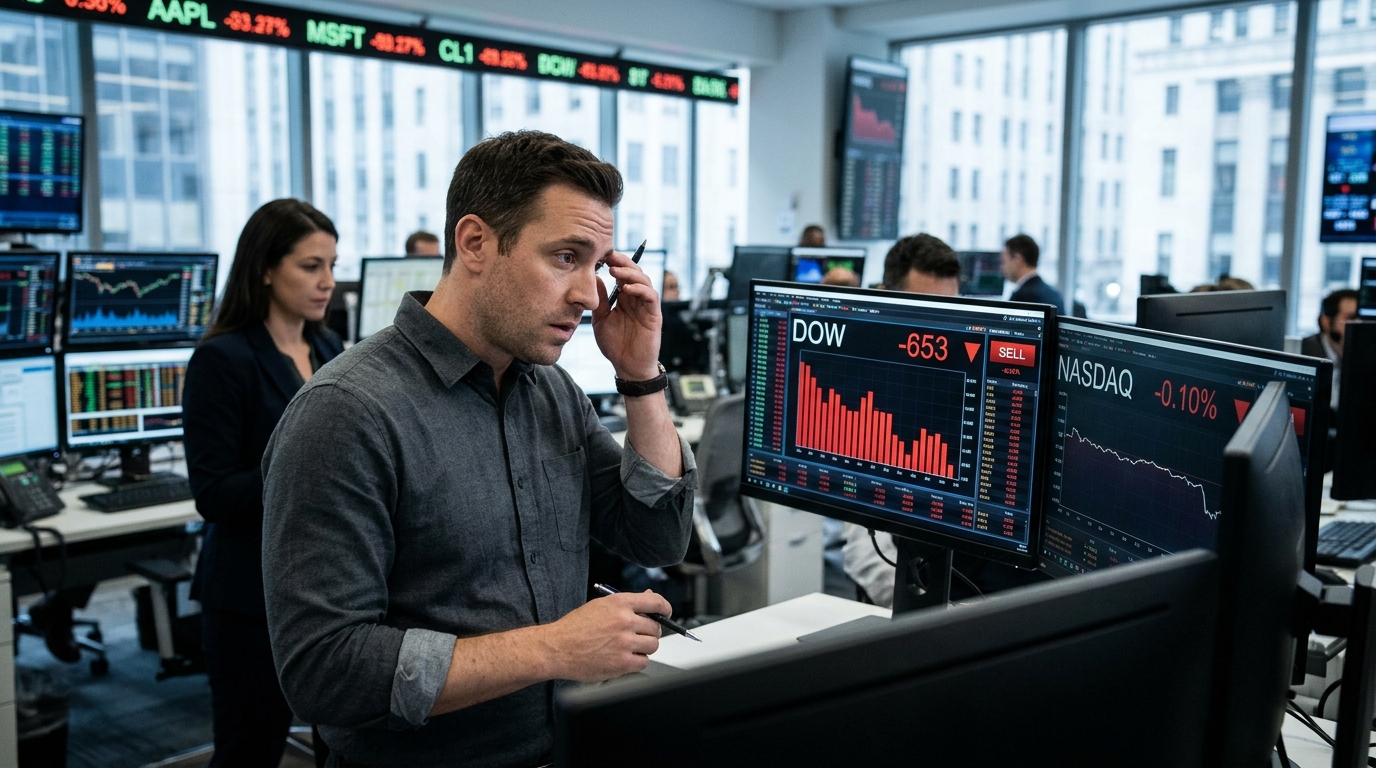
Bonus Content: The Dow Lost 653 Points on Friday. The Nasdaq Barely Moved.
Below is an important message from one of our highly valued sponsors. Please read it carefully as they have some special information to share with you.
** If you’re within miles of one of these dots you could see your electric bill increase. **
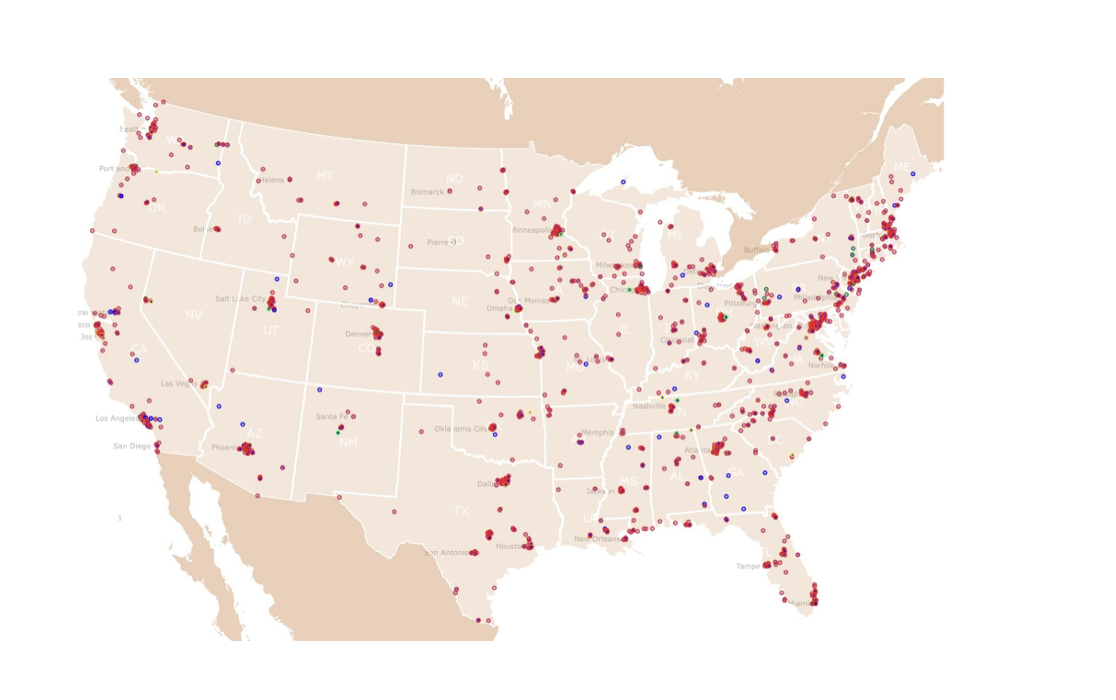
These are data centers. Warehouses full of computers, built to run AI.
There’s about 1,300 operating in America right now.
A single one can draw as much electricity as 100,000 homes.
In Manassas, Virginia, a man who’s lived in the same house for 40 years opened a $281 electric bill in January.
The month before, he paid about $100.
And this is just the beginning.
Another 2,500 data centers are set to be built in the coming years.
It’s only a matter of time before all of us feel this. If you haven’t already.
So who’s going to stop it?
I can tell you it isn’t your congress man. It isn’t your senator.
There’s exactly one person who can. And he’s not in government. Elon Musk. His new “hidden” project would take data centers out of our cities entirely
He’s already filed his plan to do this with the FCC.
And Trump has been in full support of this,, so that you don’t get hit with rising electric bills in the coming years.
And this goes one step further.
Which is the real reason I’m writing to you today.
We’re at the ground floor of a problem only Elon can solve.
And there’s one company I believe is sitting at the center of his solution.
It’s a company 99% of people have no idea exists, let alone has Elon’s name attached to it.
It’s publicly traded, and it costs less than $100 a share.
Imagine getting in on the ground floor of PayPal. Tesla. SpaceX.
That’s exactly where we are right now with his next project.
And this one could not only be his last… but it could be BIGGER than all of his past projects combined.
Learn how to get positioned before December 8th.
> GET POSITIONED BEFORE DEC 8 <
Sincerely,
James Altucher
The Dow Lost 653 Points on Friday. The Nasdaq Barely Moved.
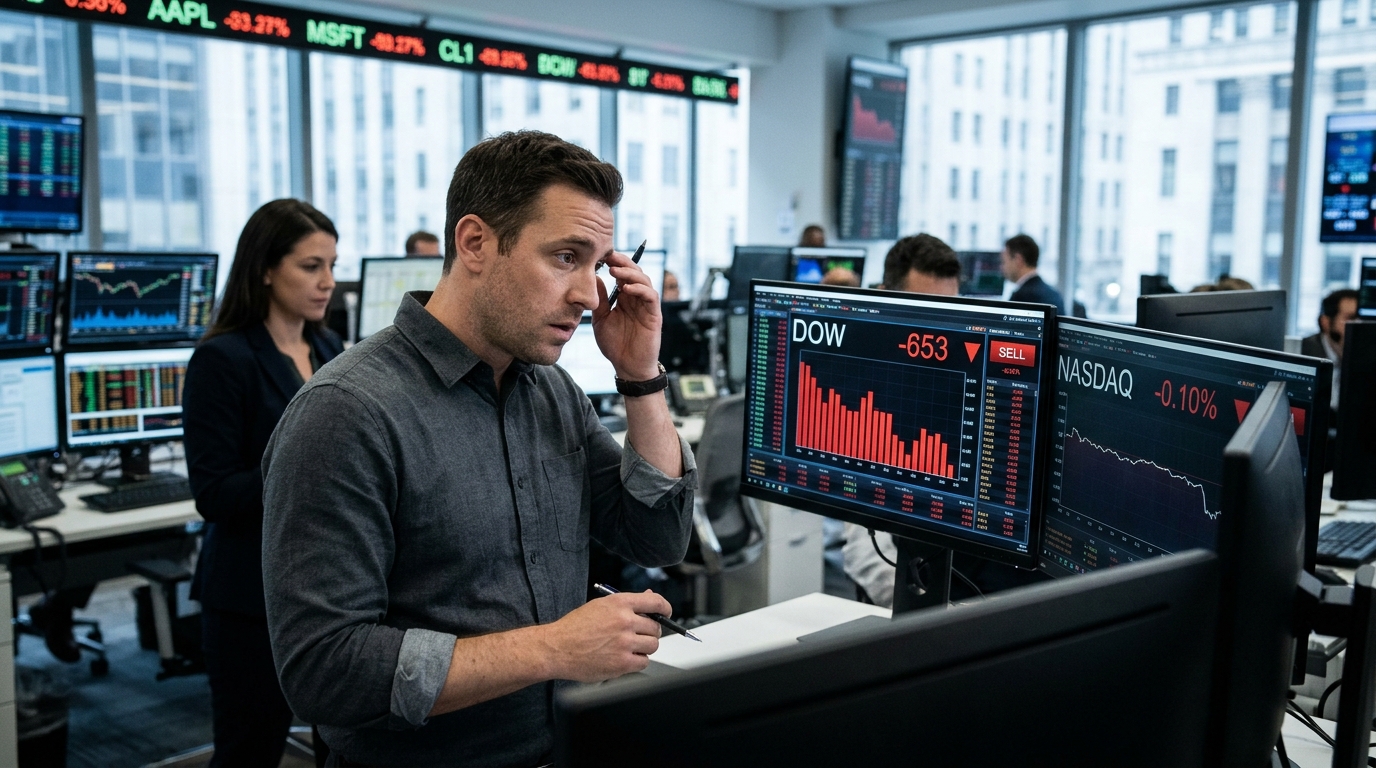
Two consecutive sessions. Two completely different markets. If you watched only the headlines, you missed the lesson. If you watched the leadership, you learned something that will pay off long after oil settles back down.
What Happened
On Thursday, October 22, the Dow finished essentially flat while the S&P 500 lost 1.21% and the Nasdaq fell 2.60%. The Philadelphia Semiconductor Index plunged 6.72%, while Meta, Nvidia, and AMD all suffered substantial losses. Friday flipped the script entirely. The Dow fell 652.82 points, or 1.23%, while the S&P 500 lost 0.52% and the Nasdaq slipped just 0.21%.
Leading the Dow’s losses were Caterpillar, Boeing, and American Express. The catalyst was not a tech earnings miss or an AI spending scare. Oil prices surged above $100 per barrel amid renewed fears that the U.S.-Iran conflict could intensify again. Reports of possible new U.S. and Israeli strikes, and threats of retaliation from Tehran, added to the risk premium.
Why It Happened
Selling pressure expanded beyond technology into traditionally defensive categories. Consumer staples, utilities, and healthcare absorbed notable capital outflows. Industrial and financial heavyweights also slumped. The Dow is a price-weighted index, so a heavy stock like Caterpillar punches above its weight when it moves hard. That structure amplified Friday’s damage precisely because the stocks under pressure were the Dow’s heaviest machinery and financial names, not its tech components.
American Express complicated the picture further. The company beat on adjusted earnings but announced plans to cut its workforce by about 5%, alongside a $336 million restructuring charge. Investors heard “restructuring” and saw the size of the charge. The stock sold off despite the earnings beat.
The Nasdaq’s relative resilience contrasted with the Dow’s weakness. However, one session of stabilization does not establish that the AI correction has ended. Investors continued to reassess valuations and financing conditions following Thursday’s technology selloff.
How Professionals Might View It
Thursday’s lesson was about AI spending risk concentrated in semiconductors and megacap tech. Friday’s lesson was entirely different: oil above $100 is a tax on industrials, financials, and consumer spending power. These are not the same trade. Conflating them because both sessions were “down days” is exactly the kind of thinking that produces bad entries and panicked exits.
Caterpillar is not just a proxy for industrial sentiment. Caterpillar’s record $63 billion backlog and the margin pressures that follow a commodity spike show why oil above $100 hits the stock from two directions at once.
Disciplined traders noticed that the Nasdaq’s resilience on Friday was not a sign of strength. The Nasdaq composite was up modestly earlier in the day before finishing slightly lower. That is not the same as tech recovering. It is oil-sensitive, rate-sensitive, and margin-sensitive names getting hit while beaten-down AI stocks caught a technical bounce. The distinction matters.
For the week, the S&P 500 and Nasdaq posted losses for a second consecutive week, while the Dow ended the five-day stretch with gains. That weekly split reinforces the rotation. Investors chased industrial exposure during the week and got caught by the same commodity that killed tech sentiment.
What Comes Next
Behind the Dow’s move was a market still wrestling with the inflation implications of higher energy prices. With the Federal Reserve set to conclude a two-day meeting next week, on Wednesday, October 28, investors will be watching whether policymakers stay on hold or signal more tightening if oil-driven inflation pressures persist. That Fed meeting is the fulcrum. If oil holds above $100 into next week, the inflation re-acceleration argument gets louder, rate-sensitive sectors stay under pressure, and the question of whether Friday’s Nasdaq stability holds becomes the central test.
The inflation mechanism behind that Fed calculus is already visible in the bond market. Rising Treasury yields and what a single PCE decimal point does to rate-sensitive sectors is the transmission channel connecting oil prices to the Fed’s next decision.
Watch Caterpillar and Boeing as proxies for whether the industrial damage extends. Watch AXP for whether investors ultimately reward the earnings quality or stay focused on the restructuring charge. The bigger point is that when oil gets this volatile, it stops being “an input” and starts acting like a macro driver again. Markets are still pricing that in.
The Trader’s Lesson
The index number tells you how much. The components tell you why. This week offered two back-to-back sessions that looked like “market selloffs” from a distance and were actually two entirely separate problems: AI capex risk on Thursday, oil-driven inflation fear on Friday. A trader who read only the index missed both. A trader who read the leadership understood exactly which positions were at risk each day, and why.
The skill is not predicting which sector gets hit next. It is knowing, in real time, which part of the market is actually under pressure and whether your positions sit inside that group or outside it. Friday was not a technology problem. It was an oil bill. They are not the same.