
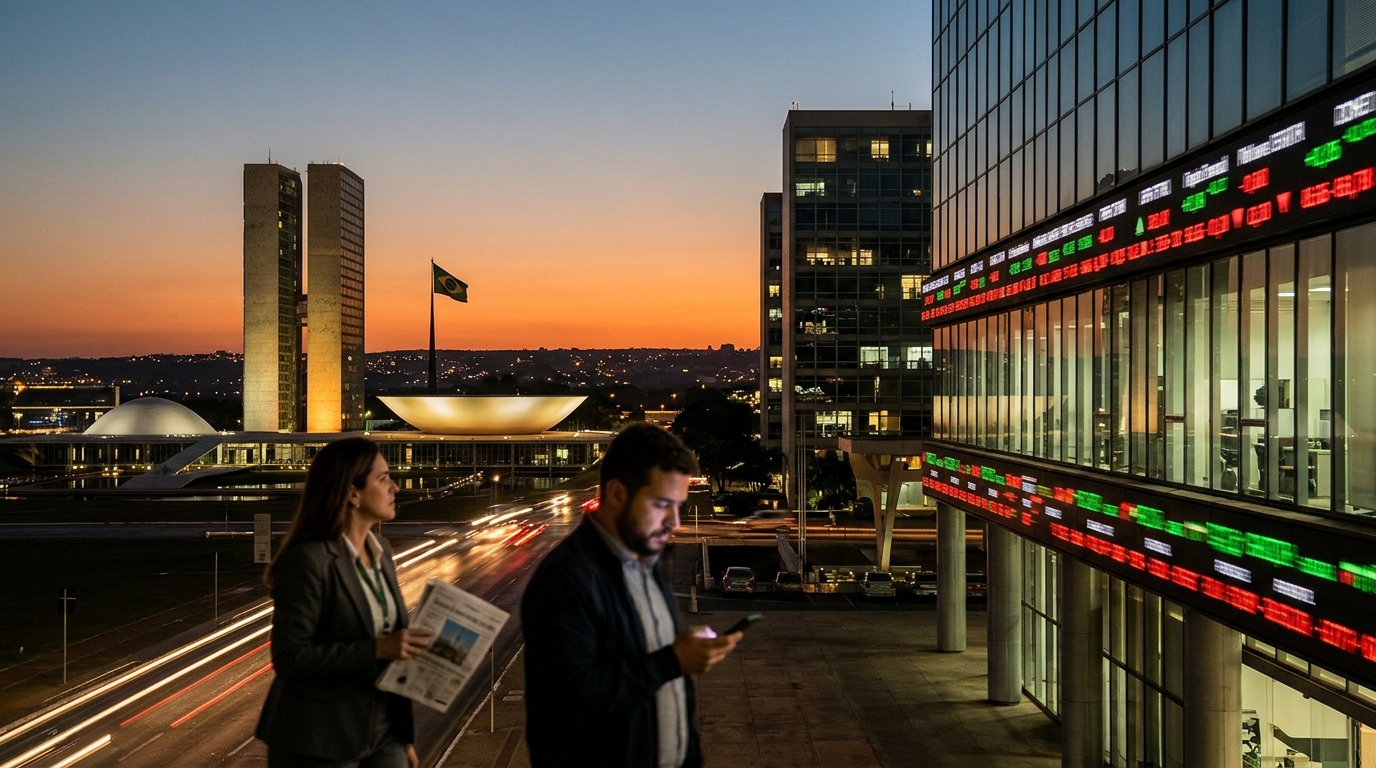
The trade was supposed to be straightforward. Weeks of optimism surrounding Flávio Bolsonaro had pushed Brazilian stocks higher after the first round, while the real strengthened against the dollar. Prediction markets agreed: the Tokyo-listed NEXT FUNDS Ibovespa ETF had been trading calmly, and Lula secured 51.79% of Sunday’s vote against Bolsonaro’s 48.21%. When that result hit, the unwinding was immediate.
November futures for the Brazilian real fell about 10% in Asian hours, while the Nomura NF Ibovespa Link ETF plunged about 15%. Petrobras fell about 21% in U.S. premarket trading, and Brazilian bank stocks were hit as well. The iShares MSCI Brazil ETF (EWZ) fell sharply in overnight trading.
Why the Market Reacted This Hard
Lula’s victory is a reversal from the first round on October 4, when Bolsonaro finished ahead. The turmoil followed investors’ expectations of a political shift toward tighter government spending that a Bolsonaro administration was expected to deliver. Lula has pledged a return to primary surpluses over time, but Brazil’s public debt is already in the low-80% range as a share of GDP, and mandatory spending on pensions and other legally protected programs limits near-term room for cuts.
Bolsonaro has refused to concede defeat, saying he would seek to have the result annulled. That overhang matters beyond the headlines. Trading desks in São Paulo expect heavy selling when local markets open. When the Ibovespa falls 10% or more from the prior close, a circuit breaker is triggered and trading is suspended for 30 minutes; if the decline widens to 15%, the market is halted for an additional hour.
The Wider Regional Read
Brazil does not stand alone this week. Lula’s win bucked a regional shift toward more conservative leaders and is being read as a setback for the right in Latin America. That political reversal arrives precisely when two neighboring central banks face their own tests.
Chile’s central bank decision is due Tuesday, October 27, with its policy rate at 4.5% and the market leaning toward no change. But the tail is growing: in the central bank’s latest financial operators survey, six respondents now expect a hike at the December meeting, up from three a month earlier, and 14 expect one at the January meeting. Colombia faces a starker situation. Banco de la República raised its benchmark rate to 12.25% on September 30, the first decision under a new leadership team, leaving the rate materially higher than it was at the end of 2025. The board convenes again on October 30, with inflation still well above the 3% target.
For investors, the read-across is not simply political. A left-leaning Brazil with a weakening real makes its commodity exports cheaper in dollar terms, pressuring Chilean copper and Colombian oil producers on price competitiveness at the exact moment their own central banks are debating whether to tighten further. The BRL at R$5.00 or beyond is not neutral for the broader EM complex.
Where the Opportunity Sits
The overnight losses in EWZ, PBR, VALE, ITUB, and Nu represent a forced unwind of crowded election positioning, not necessarily a verdict on the fundamental businesses underneath. Goldman Sachs analysts expect Lula to pursue modest measures to contain spending growth, alongside further increases in an already high tax burden, while major structural reforms remain unlikely. That is a manageable, if uninspiring, fiscal path for a state-linked name like Petrobras, whose dividend policy ultimately depends more on oil prices than on Brasília’s politics.
Long-term investors who already hold Brazilian exposure through a diversified emerging-market allocation should resist the temptation to act on overnight price swings before the B3 session settles. The circuit-breaker risk is real, but a forced halt at minus-10% would also create the clearest entry levels seen on the Ibovespa since mid-2024. Sizing matters more than timing here. Keep positions modest until Bolsonaro’s annulment bid either gains legal traction or collapses, which will likely determine whether this week’s losses deepen or partially recover.
The Wealth Builder Takeaway
Lula’s win is the headline, but the durable lesson is about prediction-market risk. Bolsonaro was priced as the favorite the morning of the vote. When that consensus breaks, assets reset 15% to 20% in hours. The investors who own Brazilian assets inside a diversified portfolio, sized appropriately, will absorb this week’s pain and retain the option to buy more at lower prices. The investors who sized up on the election thesis alone have no such cushion.