
October 26, 2026
When the market already owns the story, bigger headlines stop moving prices.
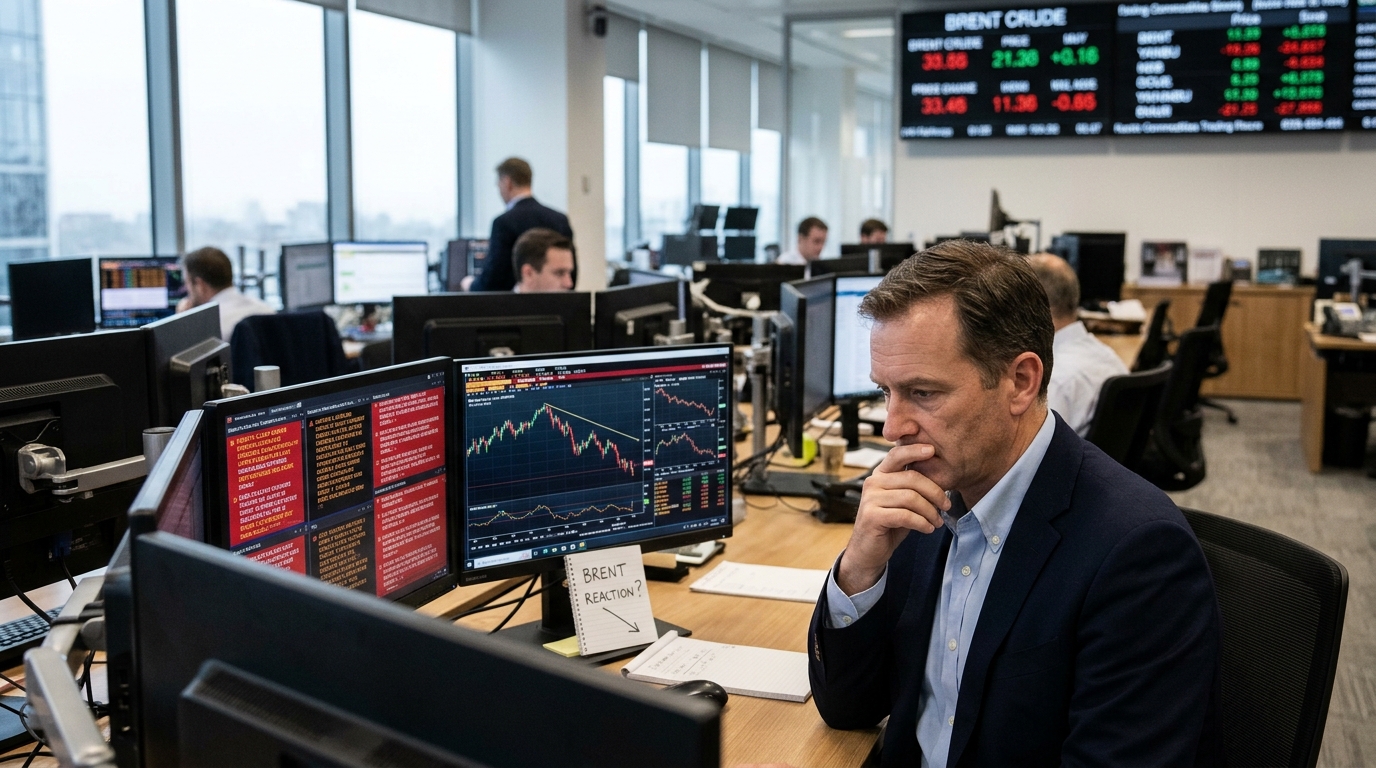
Oil traders got a masterclass this morning in the difference between a scary headline and a market-moving one. On Saturday, Houthi military spokesman Yahya Saree said the group had targeted King Khalid International Airport in Riyadh, an Aramco facility in Yanbu, the Rabigh oil refinery, crude oil pumping stations and the East-West Pipeline, as well as airports at Dammam and Najran. It was a sweeping list. WTI futures fell about 2% to roughly $101 a barrel, while Brent crude declined about 2% to about $114.6 a barrel.
‘Please, Please, Please’: OpenAI CEO Sam Altman Begs Small Company for Help
As reported by Financial Times, those are the exact words OpenAI CEO Sam Altman spoke on an open line to a small company in Arapahoe County, Colorado… which now controls what could be the most important technology in the world. Altman is desperate to get his hands on it… and he’s not alone. This tech is now backed by Elon Musk, Jensen Huang, and more.
Click here to learn how you could invest in this breakthrough alongside Sam Altman and Elon Musk.
Prices went down, not up. That outcome tells you almost everything you need to know about how markets actually process geopolitical risk.
What the Market Already Knew
Both benchmarks had settled nearly $3 a barrel higher on Friday as Houthi attacks intensified energy supply concerns, with Brent gaining about 6% over the week. By the time Saree’s Saturday statement crossed the wires, oil had already priced for a dangerous environment. The weekend claims were not a revelation; they were a continuation. Markets had absorbed the general risk of Houthi strikes on Saudi infrastructure across the prior week’s 6% rally.
Then the physical evidence undercut the claims. Saudi Aramco facilities at Yanbu and Shaybah are undamaged, Argus reported, citing sources. The Saudi-led coalition confirmed it intercepted ballistic missiles fired toward Yanbu and Taif, and no Saudi official or independent source confirmed that any facility in Yanbu was physically struck. Saudi Arabia itself offered no damage confirmation at all.
Add one more weight to the selling side: U.S. crude fell over 2% as investors weighed the threat of further attacks against concerns that elevated prices could eventually erode demand. The IEA has said global oil demand is expected to decline in 2026, not grow. At $114 Brent, demand destruction is no longer a theoretical risk.
Live… From Inside Cybercab
I’m about to get into this Cybercab… and it’s going to take me to what Elon Musk called…
“The most epic AI project ever.”
Click here and come with me on this ride…
Because this is all part of Elon Musk’s $320 trillion masterplan.
How Professionals Would Read This Session
Experienced traders distinguish between a risk premium being built and one being defended. Last week was the building phase. Brent went from roughly $109 to $116.72, pricing in the genuine possibility that a strike eventually succeeds in disrupting Yanbu’s export flows. Yanbu hosts three Aramco-linked refineries, and its export terminal became Saudi Arabia’s main crude outlet after the effective closure of the Strait of Hormuz earlier this year. The stakes are real.
But defending a premium requires new information, not repeated claims. Oil production and exports have not been materially impacted by the recent increase in attacks, but targeting of Aramco facilities is keeping a wide geopolitical risk premium in spot crude, MUFG wrote last week. Monday’s pullback is not the market dismissing the threat. It is the market saying the Friday close already paid for what Saturday’s claims described.
Monday’s dip retraced about 22% of the prior week’s gain, which reads as a market catching its breath, not changing its mind. That distinction matters for position management. Energy equities like XLE, and tanker stocks that benefit from elevated freight rates, remain tied to whether the premium holds or collapses.
The premium’s durability matters beyond crude itself. Refiners like Marathon and Valero have already tripled in 2026, and Brent at $116 reshapes whether that trade still has room.
One idea. Backed by the analysts.
Join 130,000+ self-directed investors who get one trade idea a day, sourced from top Wall Street analysts and explained in plain English. Free, and a five-minute read.
What Comes Next
Four triggers would validate the premium: confirmed damage to Abqaiq, the Petroline, Yanbu or export terminals; sustained Hormuz tanker disruption; official Saudi production cuts; or U.S. authorization of a broader Iran operation. None of those occurred this weekend. Until one does, Brent’s ceiling is being tested, not broken.
Watch loadings data from Yanbu’s export terminal and any force majeure language from Aramco more closely than the next Houthi statement. Claims are free. Missing barrels are not.
The Trader’s Lesson
A market that has already priced a risk will often sell the confirmation. The question to ask before entering any geopolitical trade is not “is this news bad?” but “how much of this has the market already paid for?” Last week’s 6% Brent rally was the answer. Monday’s roughly 2% decline was the receipt.