
October 28, 2026
Bonus Content: Phillips 66 Reports Into the Best Diesel Margins in a Generation
Below is an important message from one of our highly valued sponsors. Please read it carefully as they have some special information to share with you.
Dear reader,
Could this man with President Trump help mint the next wave of AI millionaires in America?

Even though he grew up in one of the poorest counties in Kentucky in a city with just 300 people…
And even though he’s a former dish washer at Denny’s…
He could tell you exactly what happens next with this AI boom…
And where you should put your money.
HINT: This is about a new AI industry set to grow 190,597% by 2040…
Enough to turn a small stake into life-changing money.
Regards,
James Altucher
Phillips 66 Reports Into the Best Diesel Margins in a Generation
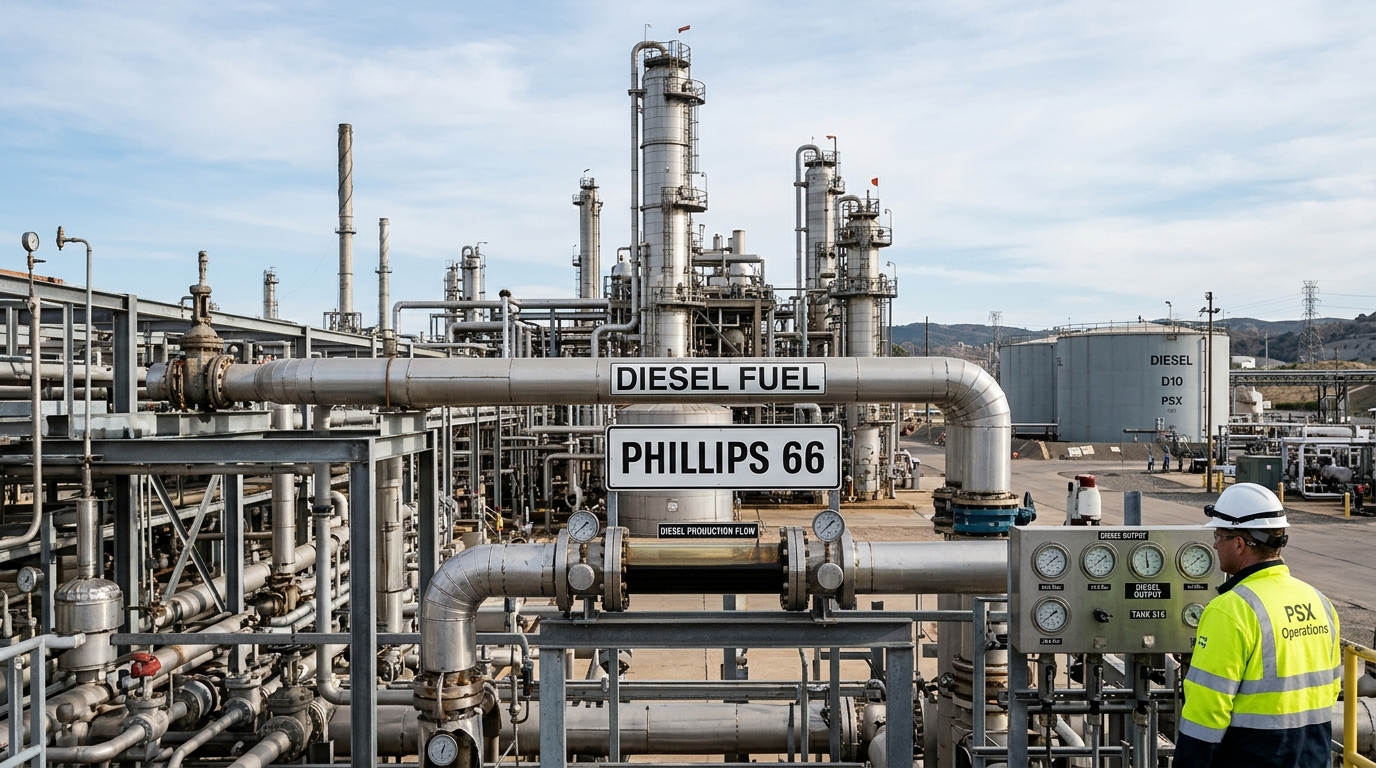
The number that matters most in Phillips 66’s Q3 report this morning is not the earnings per share. It is the $300 million.
That is what the standard two-week Gulf Coast clean products pricing lag cost PSX in Q1, wiping out most of the quarter’s adjusted profit and leaving adjusted earnings at just $200 million. Traders who missed that footnote in the Q1 release looked at a disappointing headline and drew the wrong conclusion about the underlying business. Today’s report lands in the opposite environment, and the same lag now works in the company’s favor. The discipline is the same: read the structure, not the surface.
Phillips 66 is scheduled to report third-quarter 2026 results this morning, with analysts expecting sharply higher earnings but lower revenue, as forecasts point to stronger refining margins while renewable-fuels revenue and chemicals volumes may decline. The Zacks consensus estimate for Q3 earnings stands at $12.02 per share, implying an improvement of nearly 377% from the year-ago figure. The year-on-year comparison is almost absurdly favorable. That alone should not move experienced traders.
What should is the macro context those earnings are sitting inside. NYMEX ultra-low-sulfur diesel futures hit $4.787 a gallon on October 23, putting the diesel crack over Brent near $90 a barrel, while U.S. pump diesel averaged $6.276 a gallon in the EIA survey of October 19. U.S. distillate inventories stand at 104.3 million barrels, about 9% below the five-year average, while recent IEA commentary has pointed to a year-on-year tightening in middle-distillate availability through 2026.
The supply story is structural, not seasonal. Recent IEA projections for 2026 global refinery runs have been in the low-to-mid 80 million barrels per day range, rather than the mid 80s, with refinery constraints a recurring theme leaving diesel markets vulnerable. PSX management has argued that product markets remain structurally tight and that the world needs refined products for a long time, but specific claims about profits being sustained into 2027 are forward-looking views, not settled facts.
Valero’s already-reported Q3 confirms the windfall is real. Valero reported third-quarter 2026 net income of about $6.8 billion, and it reported refining margin per barrel of throughput of $39.24 versus roughly $13 per barrel in the comparable 2025 period. Marathon Petroleum reports next week, not later this week, and will offer a third data point on whether the Gulf Coast lag reversal is as clean as it looks on paper.
The refining windfall shared across PSX, Valero, and Marathon carries a policy overhang that the earnings numbers alone do not capture. The deferred federal diesel excise tax still owed after December 31 is the clause Wall Street should be reading most carefully.
The more interesting question for PSX specifically is the Gulf Coast segment margin estimate. Analysts expect Gulf Coast refining margin per barrel to come in at $31.24, against a year-ago figure of $8.74. That is a fourfold increase in one year. But spot cracks averaged far higher than $31.24 through the quarter, which means either the realized margin will beat that estimate or the lag effect and feedstock costs are already discounting part of the windfall. Either outcome tells traders something useful about how PSX captures market conditions relative to peers.
That is the professional habit worth practicing here. Valero’s margin per barrel came in at $39.24 against a consensus around $21. The beat was so large it triggered a “sell the news” reaction in VLO shares. PSX has beaten the consensus in each of its last four quarters, with an average earnings surprise of 62.6%. Entering a report with that history in a cycle this strong, the risk is not that the number disappoints. The risk is that the number is exceptional and the stock goes nowhere because it was already priced that way.
The lesson from this morning’s report is straightforward: the highest absolute earnings number in a cycle rarely marks the best entry point. The question is not whether PSX earned a lot in Q3. It almost certainly did. The question is what the realized Gulf Coast margin, the lag adjustment, and management’s Q4 commentary reveal about where the crack goes from here. That forward read, not the backward number, is what determines whether today’s price action creates an opportunity or simply confirms what the market already knew.