

October 28, 2026
Bonus Content: The New Zealand Dollar Just Broke on a 4-3 Vote. Canada Decides in Hours.
This Is the Strangest 1,000% Investing Opportunity You’ve Ever Heard…
Dear reader,
During the height of the Cold War, the CIA pulled off one of the greatest cover stories in history.
A Soviet submarine carrying nuclear missiles and secret code books had sunk to the bottom of the ocean, and the CIA was determined to get its hands on what was inside.
So they teamed up with billionaire Howard Hughes, who told the world his giant new ship was built to mine the ocean floor for valuable metals.
The Soviets never suspected a thing.
But along with pieces of the sub, the CIA’s claw brought up something nobody expected… strange black rocks, each about the size of a potato.
In fact, one still sits in the CIA’s museum in Langley today.
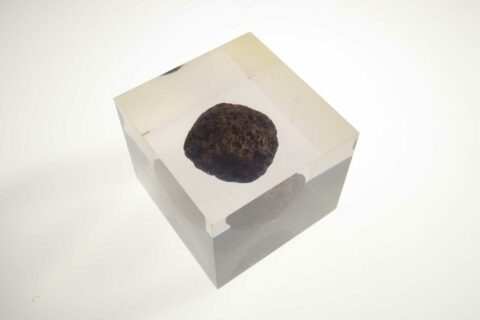
Fifty years later, these strange black rocks are part of a $16 trillion motherlode of resources… and the center of a global showdown between America and China.
This discovery could hand America control of every critical technology of the 21st century… and be life-changing for savvy investors who know the full story.
Wall Street legend Matt McCall reveals everything in his new presentation.
Yours in smart speculation,
Stephen Prior, Publisher
Monument Traders Alliance
P.S. Matt McCall is the former Fox Business analyst who uncovered 50 VERIFIED stocks that went on to return 1,000% over the past two decades. Now he believes the $5 stock at the epicenter of this story could become #FIFTY-ONE. Click here for the details.
The New Zealand Dollar Just Broke on a 4-3 Vote. Canada Decides in Hours.

When 22 of 27 economists in a Reuters poll agree on what a central bank will do, the market loads up on that view. Every swap, every position, every hedged book reflects it. That is exactly when a surprise vote does the most damage.
Early Wednesday, the Reserve Bank of New Zealand held its Official Cash Rate at 2.75% in a 4-3 vote. The Monetary Policy Committee voted 4-3 to hold, and the New Zealand dollar fell against every major currency right after the announcement. Markets had priced in roughly a 90% chance of a hike, so the hold landed as a dovish shock. Governor Anna Breman, Carl Hansen, Prasanna Gai, and Rebecca Williams voted to hold. Paul Conway, Hayley Gourley, and Karen Silk wanted a 25-basis-point hike to 3.00%.
The New Zealand dollar sank as much as 1.7% to an intraday low of $0.5583. A Reuters poll had found 22 of 27 economists expected the central bank to raise rates. New Zealand’s two-year yield fell 12 basis points to 3.82% after the hold. That is not a modest reset. That is a market caught almost entirely on the wrong side.
Why the Move Was So Large
The size of the NZD move tells you something more useful than the decision itself. When conviction is this uniformly distributed across economists and market pricing, there is no natural buyer left on the other side. The moment the outcome deviates, everyone unwinds in the same direction at the same time.
The downward pressure on NZD/USD was primarily driven by a reset of monetary policy expectations surrounding the RBNZ alongside sustained demand for the US dollar. Heading into the session, interest rate markets had aggressively priced in monetary tightening by the RBNZ to combat elevated inflation pressures. The vote being 4-3 rather than unanimous made the unwind worse: three dissenters means future hikes remain on the table, so traders could not even lean on a clean dovish pivot as cover for rebuilding positions.
The RBNZ’s monetary policy statement noted that further tightening is likely but dependent on the economic outlook. Governor Breman said the committee expected to see further OCR increases in coming meetings. The bank held, but it did not surrender the hiking cycle. That ambiguity is exactly why the kiwi found no floor quickly.
There is also a political dimension worth noting. New Zealand’s general election follows on November 7, ten days after the RBNZ’s decision. Rate decisions this close to a vote rarely go unnoticed by voters, and the committee’s caution about a hike landing in that window may have influenced the four who chose to hold.
The Bank of Canada Decides This Morning
The lesson from Wellington lands at an uncomfortable moment: the Bank of Canada announces at 9:45am ET today, and the setup going in shares the same structural tension.
The announcement is expected by a slim majority of economists to deliver a 25-basis-point hike to 2.50%, with Canadian inflation running at 3.1%. Market pricing has swung sharply toward a quarter-point rise in recent days, but economists are split. Nineteen of 34 economists surveyed in a Reuters poll, or 56%, said the Bank will hike its overnight rate by a quarter point to 2.50%.
The Bank has held at 2.25% since its last cut on October 29, 2025. In September it signalled that rising energy prices could call for a policy response, while slack in the economy argued for patience. That is not a committee singing from one sheet. A hold today would not be the shock Wellington delivered overnight, but for anyone priced heavily for a hike, the CAD move could look familiar.
The Trader’s Lesson
A 4-3 vote is not a consensus. It is a tied game that went one way. Yet the market treated it as a near-certainty and positioned accordingly.
Before any major central bank decision, the question worth asking is not just “what does the market expect?” but “how much of the possible surprise is still in the price?” When consensus reaches 80 or 90 percent in one direction and the vote turns out to be 4-3, the answer is: almost none. That gap between perceived certainty and the actual narrowness of the margin is where the real risk lives. Watch the Bank of Canada at 9:45am with that in mind.