
Back in the 1860s, settlers from France, Italy, and Germany built grand Parisian boulevards…
…neoclassical facades…

… and cobblestone Bavarian villages halfway across the globe.
Then the rest of the world largely forgot about them.
Today, expats are uncovering a European standard of living…
… Lakefront rental homes for $721 a month…
… private chauffeur service…
… and elite healthcare – completely free from tourist crowds and inflated European price tags.
Infineon Reports Tuesday. Its Chips Power AI, Not GPUs.
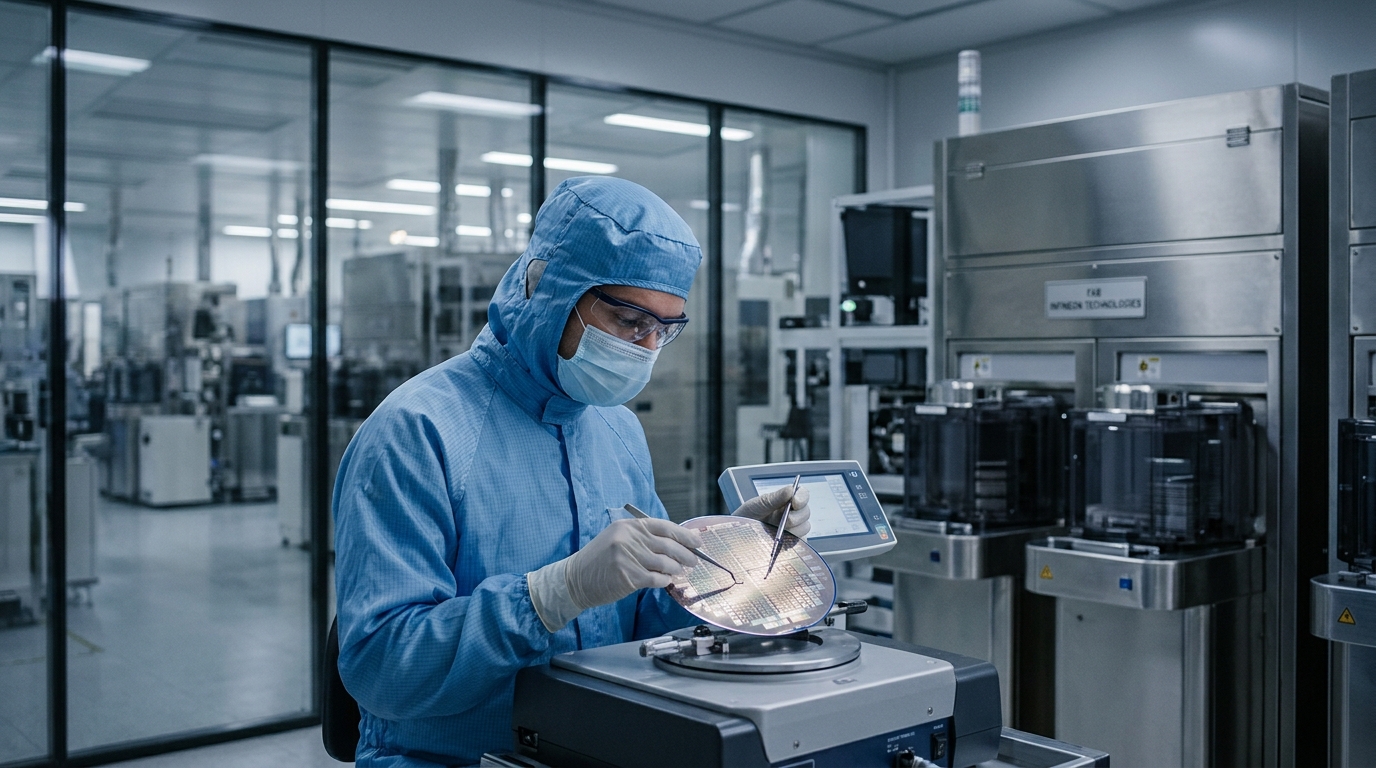
When semiconductor stocks collapsed on November 5, the market did not distinguish much between the companies involved. The Philadelphia Semiconductor Index sank about 12%. Nvidia fell about 9% and AMD fell about 13%. Infineon’s IFX.DE closed Thursday at €45.95 and ended the week near €45.76, down about 28% over the past month. That broad-brush selling sets up an interesting question heading into Tuesday’s results: does Infineon actually belong in that trade?
The selloff was driven by weak guidance from Qualcomm, plus post-election fears that a Democrat-controlled Congress and state-level pushback could slow AI data center construction. Candidates campaigning against data center expansion, including on moratoriums, also secured victories in Texas and Georgia. The fear, in short, was about GPU demand and data-center construction timelines. Infineon sells neither GPUs nor the servers that house them.
Unlike Nvidia and AMD, Infineon does not sell the chips that train AI models, and it does not participate directly in the GPU race driving Nvidia’s valuation. Its angle is power conversion and power management, the electrical infrastructure around compute, not the compute itself. Accelerator demand can shift between Nvidia products, AMD systems, and custom chips from cloud operators. Power components remain necessary across all those architectures.
That distinction matters enormously when reading Tuesday’s numbers. Infineon’s fiscal Q3 2026 produced record revenue of €4.172 billion, a segment result of €797 million, and a segment result margin of 19.1%. Management then guided Q4 to around €4.7 billion in revenue. The Q4 segment result margin target sits around 23%.
Infineon has said it expects around €1.5 billion in AI data-center revenue for fiscal 2026, and around €2.5 billion in AI-related revenue during fiscal year 2027. The FY2027 target is precisely what traders will watch Tuesday, not the quarterly beat or miss, but whether management upgrades that forward projection in a week when the AI capex assumption itself is being questioned.
The guidance dynamic is not unique to Infineon. Markets have already shown they will sell AI chip stocks that post strong results but decline to raise long-term targets.
The other development that deserves attention is last week’s factory announcement. Infineon is building what it calls the world’s first high-volume manufacturing facility for gallium nitride power semiconductors on 300-millimeter wafers in Europe, backed by €319 million in European Chips Act funding. The company is investing around €1.1 billion in its Villach, Austria site, with production scheduled to start by the end of 2027. Gallium nitride enables significant efficiency gains in AI data centers, energy infrastructure, e-mobility, robotics, and consumer electronics. The 300-millimeter wafer diameter enables the production of 2.3 times more chips than the current 200-millimeter standard.
Infineon is not the only industrial company building a structural position around data center power demand. Eaton’s electrical division posted 65% organic data center revenue growth and carries a U.S. pipeline management describes as 15 years of construction at 2025 build rates.
Peers STMicroelectronics, NXP, and onsemi all share exposure to automotive and industrial end markets, and all sold off in the same wave. But none has the same concentrated positioning in AI data-center power chains that Infineon now carries.
The trader’s lesson from this week: when a sector sells off on a single theme, the market tends to price every company as if they face the same risk. Disciplined analysis asks whether the revenue driver being questioned is actually the same across names. For Infineon, the AI concern was about GPU demand and data-center construction pace. Its revenue comes from the electricity conversion hardware that every data center, built or unbuilt, requires. That is a different risk profile. Tuesday’s FY2027 guidance will confirm whether the business supports that argument or demands a rethink.