
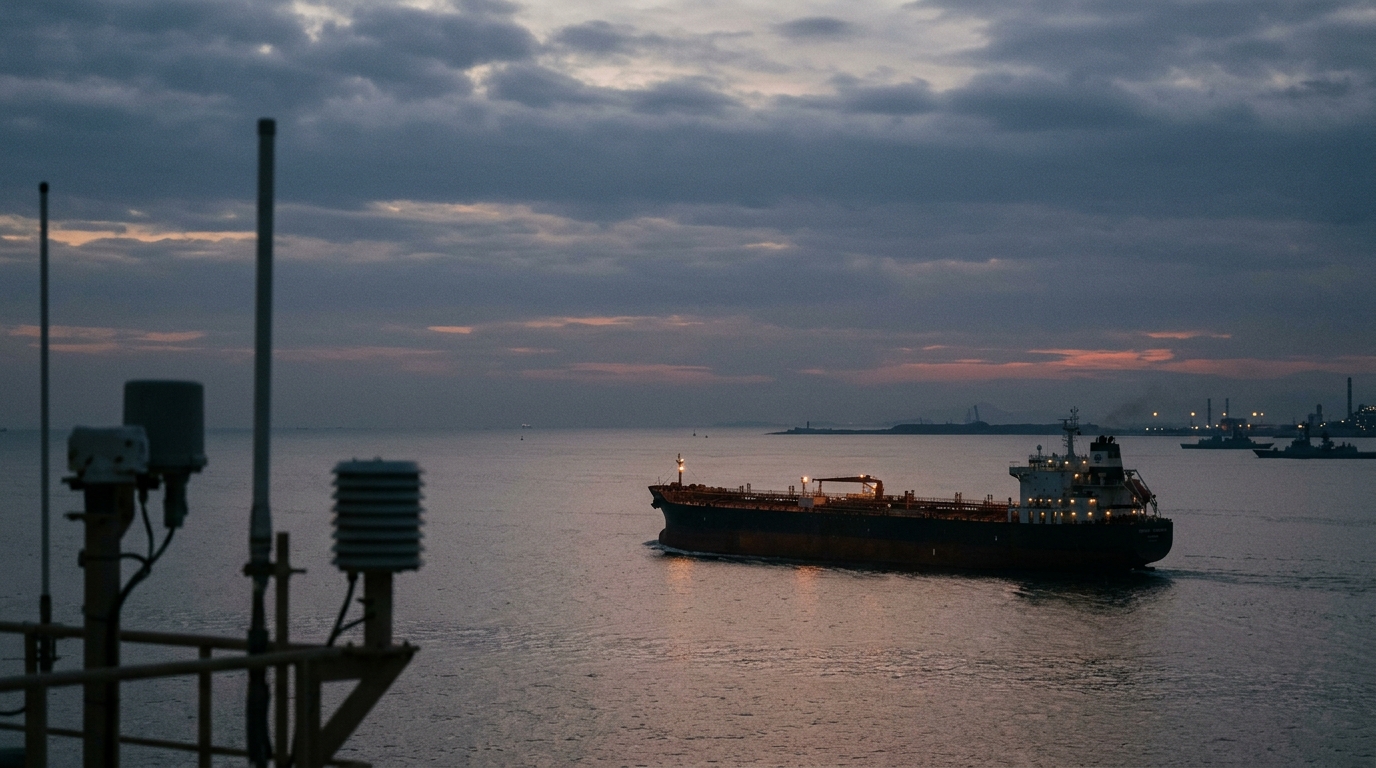
The floor under Brent crude just got steeper. Brent rose to about $106.65 a barrel on Monday, up from roughly $100.20 as recently as October 7, and the bid this morning carries a different quality than last week’s recovery. What changed is not the oil market. It is the assumption traders built their positions on.
Trump and Netanyahu discussed launching a major new operation against Iran ahead of upcoming elections in both countries, according to Axios. The discussions took place before Trump publicly stated that he would not strike Iran before the U.S. midterms. A U.S. official said Trump has been going back and forth on the issue. That is not a denial. That is a live option.
Then, overnight, the president sharpened his language. Trump said Tuesday he would make a decision on Iran “very soon,” as fresh attacks hit commercial shipping in the Strait of Hormuz and Yemen’s Iran-backed Houthis intensified attacks on Saudi Arabia. At a campaign rally in Wasilla, Alaska hours later, Trump said, “Wait till you see what we do to Iran,” adding that Washington has “sort of had it” with Tehran. This is not posturing for a crowd; it is the president contradicting his own stated policy with both U.S. and Israeli militaries still at high readiness.
Hormuz Is Already Bleeding
The geopolitical option premium in crude was suppressed because traders believed Washington would hold off until after November 3. That premise is eroding quickly. Recent reporting has described a sharp increase in attacks and attempted disruptions against commercial shipping in and around the Strait of Hormuz, including vessels linked to ship-to-ship oil transfers.
Iran is stepping up pressure on tankers in the Strait of Hormuz and the Persian Gulf in an effort to restore its leverage over the critical waterway, and possibly goad the United States into retaliating. That last clause matters for traders. A provocation designed to draw a U.S. response is more dangerous than one designed to slow traffic. Iranian messaging has also framed the pressure campaign as tied to oil prices and the U.S. political calendar.
On land, the Saudi energy complex is absorbing strikes at a pace not seen since 2019. Saudi Arabia and the Houthis traded fresh strikes on energy infrastructure, with the Iran-backed group again targeting the Saudi capital and threatening more attacks on airports and oil sites in the coming days.
How to Carry the Exposure
Brent near $106.50 with an active Strait of Hormuz closure risk is not the same trade it was when the no-strike pledge looked firm. The asymmetry now favors energy longs. A full Hormuz closure would threaten roughly 20% of seaborne oil, a supply shock the market is nowhere near discounting at current levels. Even a partial interruption that lifted insurance and rerouting costs through October would support prices well above $110.
For equity exposure, RTX and Lockheed Martin are the clearest beneficiaries of resumed operations. Lockheed Martin’s next earnings call is scheduled for October 22. LMT is trading near $507, roughly 27% below its 52-week high, which means the market has not yet rewarded the defense backlog that an extended campaign would accelerate. RTX closed Monday near $186.66.
While Trump has said publicly that he will not resume attacks on Iran before the U.S. midterms, U.S. and Israeli military planning has continued in the background, and readiness remains the key variable. A White House denial bought two weeks of calm. The Axios sourcing, combined with Trump’s own language Tuesday, suggests the denial was incomplete.
Action Plan
The no-strike assumption is no longer a safe base case. Traders carrying energy underweights built on that premise should reassess. Brent at $106.50 is not expensive against a Hormuz escalation scenario; it is cheap. The first serious test is whether CENTCOM responds to the next major shipping strike or absorbs it. Watch the UKMTO warning flow and time-late incident reporting; it has been active over the past week. Watch LMT into October 22 earnings. And watch whether Trump’s “very soon” language shifts from rhetorical to operational in the next 48 hours before the Israeli election window on October 27 closes.