
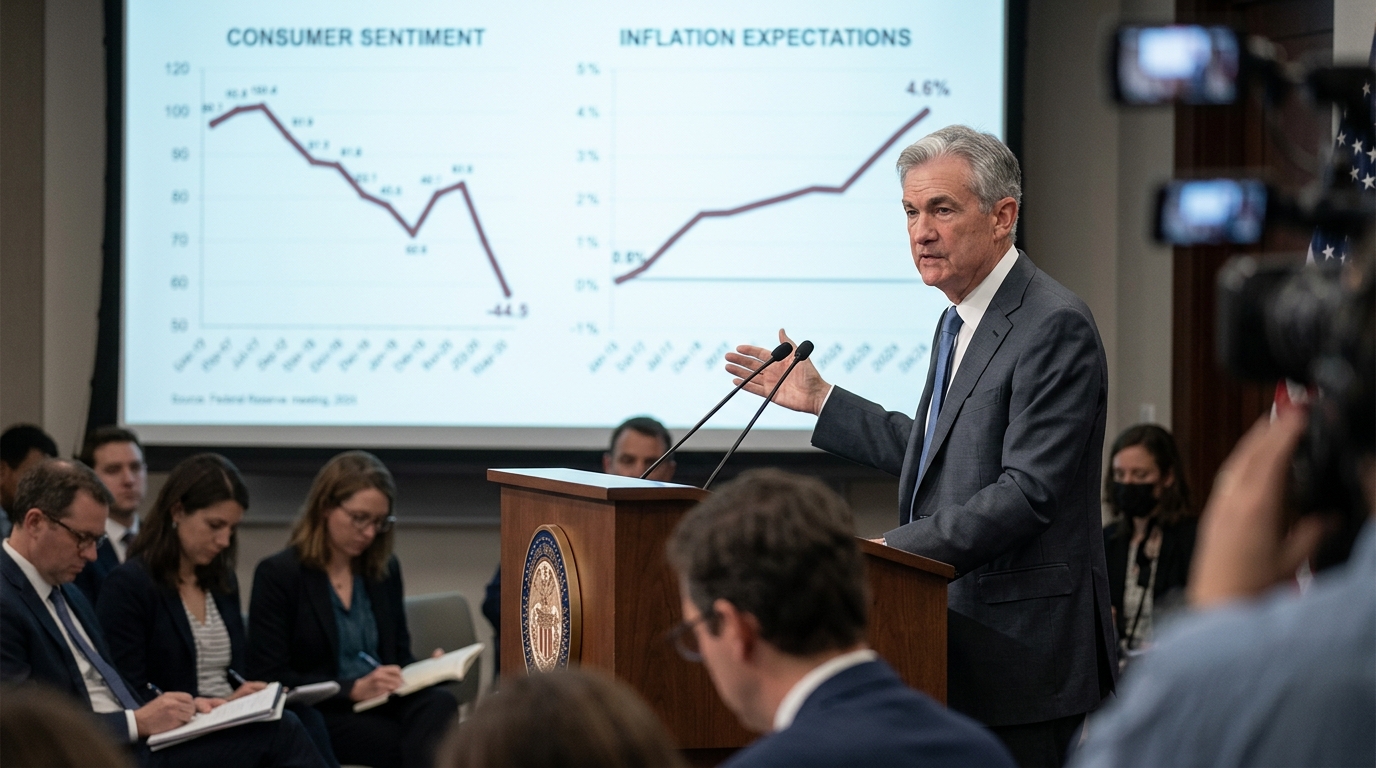
Friday’s University of Michigan data was weak in the way that makes central bankers uncomfortable. The consumer sentiment index fell to 47.8 in early September 2026, down for a second consecutive month and well below market expectations of 51.0. That alone would register as a soft number. What made it genuinely complicated was the inflation component sitting right beside it.
Year-ahead inflation expectations jumped from 4.0% last month to 4.6%, the highest reading since June. The five-year inflation outlook edged up to 3.4% from 3.3%. That combination, falling confidence alongside rising inflation expectations, is not a signal markets should read as permission for the Fed to ease. It is the opposite.
Why This Reading Is Hawkish
The reflex interpretation of miserable consumer sentiment is dovish: people feel bad, spending slows, the economy cools, the Fed gets room to cut. That logic breaks down when the reason people feel bad is that they expect prices to keep rising. In the University of Michigan’s summary, expectations for personal finances and for business conditions worsened, with consumers pointing to higher fuel costs and trade-related concerns as key pressures.
Bureau of Labor Statistics data released last week showed gasoline prices rose 3.9% in August and were up 27.4% from a year ago. Fuel oil prices rose 10.1% and were up 52% annually. This is an energy-driven expectations shock, not a demand collapse. The Fed draws a hard distinction between the two.
Those inflation expectations numbers will further tilt the Fed toward hiking rates at a meeting that was already skewed that way. As of Tuesday, September 15, 2026, the market is heavily leaning toward a 25-basis-point hike on Wednesday. With the labor market steady and energy prices keeping inflation elevated, many economists expect the Federal Reserve to raise the federal funds rate for the first time since 2023.
What Comes Next: Wednesday’s Retail Sales
The August Advance Monthly Retail report is scheduled for release on September 16, 2026 at 8:30 a.m. EDT, the same morning the FOMC wraps its two-day meeting. That timing creates a collision worth preparing for.
Traders should resist treating a weak retail number as a straightforward positive for XLY. Sentiment surveys and spending data answer different questions: surveys capture how consumers view prices, jobs, and the outlook, while retail and transaction data show what households actually buy. Those two readings can diverge for months. Consumer sentiment has remained historically disconnected from actual spending patterns during this cycle, and a soft August print will not resolve the inflation expectations problem that the Michigan survey just flagged.
For XLY specifically, sustained depressed sentiment, especially below historical averages, signals potential headwinds for consumer discretionary ETFs. The more durable trade is the divergence between XLY and XLP. When consumers feel squeezed by energy costs and expect inflation to stay elevated, they cut wants before needs. Staples tend to hold; discretionary tends to erode. Overall sentiment is now 16% below February, prior to the start of the Iran conflict, and 13% lower than a year ago, a sustained enough deterioration that the rotation thesis deserves serious weight.
The Trader’s Lesson
A weak data point can be hawkish or dovish depending on why it is weak. Before deciding how to trade any economic release, ask what caused the miss and whether it gives the Fed more flexibility or less. Friday’s Michigan survey gave them less. Soft sentiment driven by inflation fear is not a green light for risk assets, it is a reminder that the Fed’s credibility problem and the consumer’s budget problem are, right now, the same problem.