
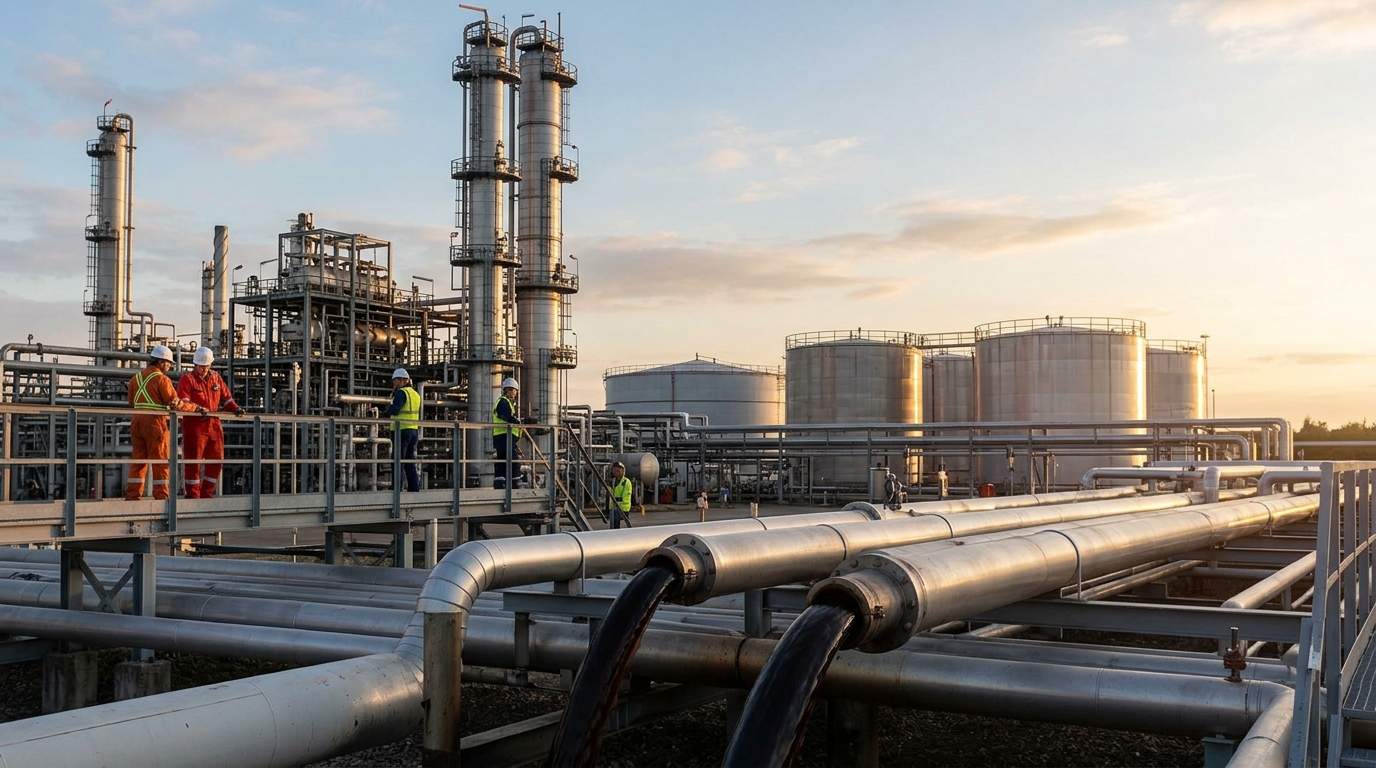
Crude oil sat near $96 a barrel on October 6, easing on ceasefire headlines out of the Middle East. Diesel told a different story entirely. The ULSD crack spread versus WTI averaged $105.57 per barrel in the final two weeks of September, with a single-day record of $117.92 on September 16. From 2010 through 2021, the 3-2-1 crack spread was generally in the low double digits, not triple digits. That context matters. The distillate market has not just diverged from crude; it has entered territory without a meaningful historical comparison.
Why Wall Street Cares
When crude and product prices move together, refining is a pass-through business. When they decouple at this magnitude, the economics of physical conversion capacity become a macro trade in their own right. Marathon Petroleum, Valero, and Phillips 66 generated a combined $12.6 billion in profits during Q2 2026, their highest combined result since 2022. The three distributed $6.3 billion through dividends and buybacks during the quarter, more than double the amount returned a year earlier. That pace of capital return, running alongside a crack spread still near record levels in October, is what has energy desks re-examining the refiner thesis from scratch.
The Bull Case
The structural argument starts with inventory. East Coast distillate fuel inventories fell 32% below their five-year seasonal average in September. The EIA expects East Coast distillate inventories to remain below the 2021-2025 average through the outlook period, and expects East Coast importers to face difficulty boosting imports enough to bring inventory levels closer to normal during the winter heating season.
Supply constraints compound the problem. A $100-per-barrel diesel crack spread is an incredibly strong market signal, but it does not translate to higher refinery output because most U.S. refiners already operate at or near their practical limits. As global supply disruptions drain inventories and foreign buyers pull more barrels from the U.S., diesel prices have surged even as domestic refinery runs remain near historic highs. More capacity simply does not exist to chase the margin.
Marathon posted a Q2 2026 refining margin of $36.33 per barrel versus $17.58 a year earlier, while Valero’s refining segment operating income rose to about $4.5 billion from about $1.3 billion. HF Sinclair (DINO) followed a similar arc: the company reported that its adjusted refinery gross margin expanded 57% to $25.95 per produced barrel sold in Q2 2026, and that refining segment adjusted EBITDA reached $1.023 billion in Q2 2026 compared to $476 million in the prior-year period.
The Bear Case
The bears have one powerful argument: every force driving the crack wider is, by definition, temporary. Crack spreads at elevated levels are the product of a geopolitical disruption that is subject to reversal. Normalization of Hormuz transit flows, a ceasefire in the regions attacking Russian infrastructure, or demand destruction at sustained high product prices could all accelerate mean reversion.
The G7 reserve release adds a direct policy ceiling. The world’s wealthiest countries announced they would release 100 million barrels of diesel, gasoline, and crude oil from their emergency reserves over the next four months. Markets already priced in some relief: crude eased on the announcement. But some analysts warned the release might offset only part of the diesel move, with structural limits including refinery lag on crude volumes and ongoing Russian export restrictions keeping the ceiling on relief low.
Stillwater Associates put it plainly: prices are likely near their ceilings given available supply, and a step change up in crude prices would not lead to a corresponding increase in product prices but instead squeeze refining margins. That asymmetry favors the bears if geopolitics shift faster than inventory rebuilds.
What Investors Are Missing
The debate is framed as a binary: own refiners or don’t. The overlooked question is which refiners carry the most crack leverage without the most headline risk. PBF Energy’s Q2 gross refining margin hit $23.40 per barrel, up from $8.38 a year earlier, according to its earnings materials and SEC filing. Every $1 per barrel move in refining margin is worth approximately $304 million annually to PBF before costs, making it a high-beta expression of the crack spread among the major independents. The flip side: it is also the most exposed if margins compress faster than consensus expects heading into winter.
Stocks to Watch
- Valero (VLO): The largest independent refiner in the U.S. by throughput. Refining segment operating income rose to about $4.5 billion in Q2 2026. Preferred by institutional buyers seeking scale and liquidity in the crack trade.
- Marathon Petroleum (MPC): Q2 2026 margin reached $36.33 per barrel, the highest among U.S. major refiners. Complex assets maximize diesel yield, making it the most direct beneficiary if the ULSD crack holds.
- PBF Energy (PBF): Highest earnings sensitivity per barrel of crack movement among mid-cap peers. Best positioned for a crack overshoot; highest risk in a reversal.
- HF Sinclair (DINO): Refining segment adjusted EBITDA reached $1.023 billion in Q2 2026 compared to $476 million in the prior-year period. Renewables segment adds a margin-of-safety component that pure-play refiners lack.
- Phillips 66 (PSX): Investor focus has turned to questions about the sustainability of elevated refining margins after PSX shares dipped despite a 34% earnings beat in Q2. That skepticism creates an entry for those who believe the crack holds through winter.