
October 13, 2026
Bonus Content: A Hedge Fund Lost a 44% Lead in One Quarter. The S&P 500 Barely Moved.
Hey,
I’m going to do something that may seem a little out of the “norm” these days…
I’m going to give you my #1 trade setup. For free.
It’s the same one I used to find winners like:
- 113% on GOOGL in under 2 hours.
- 240% on META in a single session.
I call it the “Opening Bell Breakout.”
It’s one simple setup I look for every morning. When it shows up…
I simply take the trade. And by 10 AM, I’m done.
I’ve put all the details on how it works in a simple, no-fluff guide.
No credit card required. No strings attached.
>> Get Your FREE “Opening Bell Breakouts” Trade Guide Here
This guide shows you the exact 15-minute window I trade, and how to spot the same setups the big funds are watching.
It’s yours for free.
Thomas Wood
P.S. This isn’t a 100-page novel. It’s a short, actionable guide you can read in about 10 minutes and put into action by tomorrow morning. Get it here.
A Hedge Fund Lost a 44% Lead in One Quarter. The S&P 500 Barely Moved.
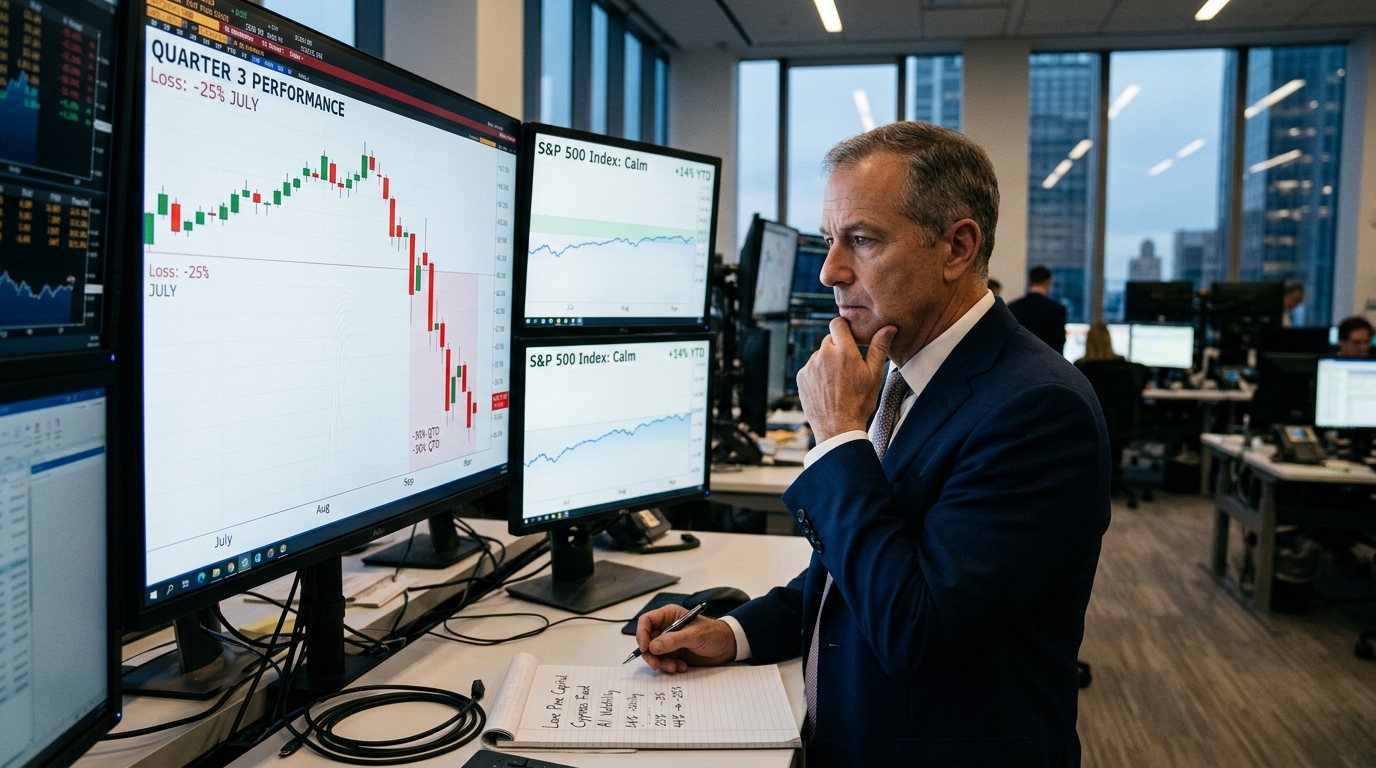
The S&P 500 is up roughly 14% this year, sitting within a whisker of its record high. That number tells you almost nothing about what happened to some of the sharpest stock-pickers on Wall Street between July and September.
Lone Pine Capital’s Cypress fund was up 44% through June, then tumbled nearly 25% in July alone, before posting additional losses in subsequent months, producing a roughly 30% decline in the third quarter. The fund is now up just 0.6% for the year through September. One quarter erased nine months of exceptional work. That is the story the index won’t tell you.
What Happened
Lone Pine had bought five of its seven largest US stock positions during the second quarter, which together accounted for about 40% of its US portfolio. The largest holding, Nebius Group, an Amsterdam-headquartered company listed on Nasdaq that sells AI cloud computing capacity, represented about $1.18 billion of the fund and fell nearly a third in July. Applied Materials dropped 29%, while ASML, AppLovin, Corning, and Home Depot also declined. Cypress’s short positions, which bet on certain stocks falling, also lost money.
A sharp July selloff in AI and tech, layered on top of tensions involving Iran and a spike in oil prices, set off a wider market downdraft that stung many hedge funds. Other hedge funds founded by former employees of Julian Robertson’s Tiger Management also recorded setbacks during the third quarter, although the impact on full-year returns varied. Lone Pine’s damage was among the worst.
Why It Happened
Concentration is a compounding force. It amplifies wins on the way up and accelerates losses on the way down. Lone Pine substantially reshaped its portfolio during the second quarter, establishing five of its seven largest US-listed long positions during the period, with those seven holdings representing approximately 40% of its US portfolio at the end of June. That kind of portfolio construction, built for a specific market environment, leaves little room for error when the environment shifts.
Lone Pine’s largest US-listed position was Nebius Group. The stock fell by almost one-third in July after reaching a peak at the end of June. Although it subsequently recovered some ground, it ended the third quarter approximately 15% lower. Wrong-way shorts compounded the problem: the fund lost money on both sides of the book simultaneously, which is the most punishing outcome a long-short manager can face.
How Professionals Might View It
The broader lesson is about position sizing relative to conviction, and the danger of building peak conviction at peak prices. Lone Pine, which manages about $19 billion, had posted double-digit annual gains for three consecutive years before the reversal. That run of success may itself have encouraged a level of concentration that rational risk management would otherwise resist. Strong recent performance is one of the most reliable contributors to oversized bets.
Experienced traders also recognize what this episode illustrates about crowded trades. When many skilled funds hold the same names, the exit becomes disorderly. Nebius and ASML were not obscure positions. The Tiger Cubs remain heavily concentrated in tech and AI, with Nvidia, Taiwan Semiconductor, and Amazon ranking among their consensus holdings. Shared conviction creates shared vulnerability.
What Comes Next
The S&P 500 reached its first record high since August in early October, buoyed by resilient corporate profits and easing oil prices. The index calm is real. The turbulence beneath it is also real. ASML reports Q3 earnings on October 14, a catalyst that could move the stock meaningfully in either direction. How those results land will say something about whether the Q3 AI rotation was a correction or a more durable shift in leadership.
The Trader’s Lesson
The index level is not your risk. Lone Pine’s experience this quarter is a precise illustration of how a calm benchmark can mask violent destruction inside crowded positions. When a fund goes from up 44% to up 0.6% in a single quarter, the index barely registers it. Your portfolio will. Before sizing into any high-conviction theme, ask how many other skilled funds are already there and what the exit looks like if they all decide to leave at once.